By Sangeeta Waldron
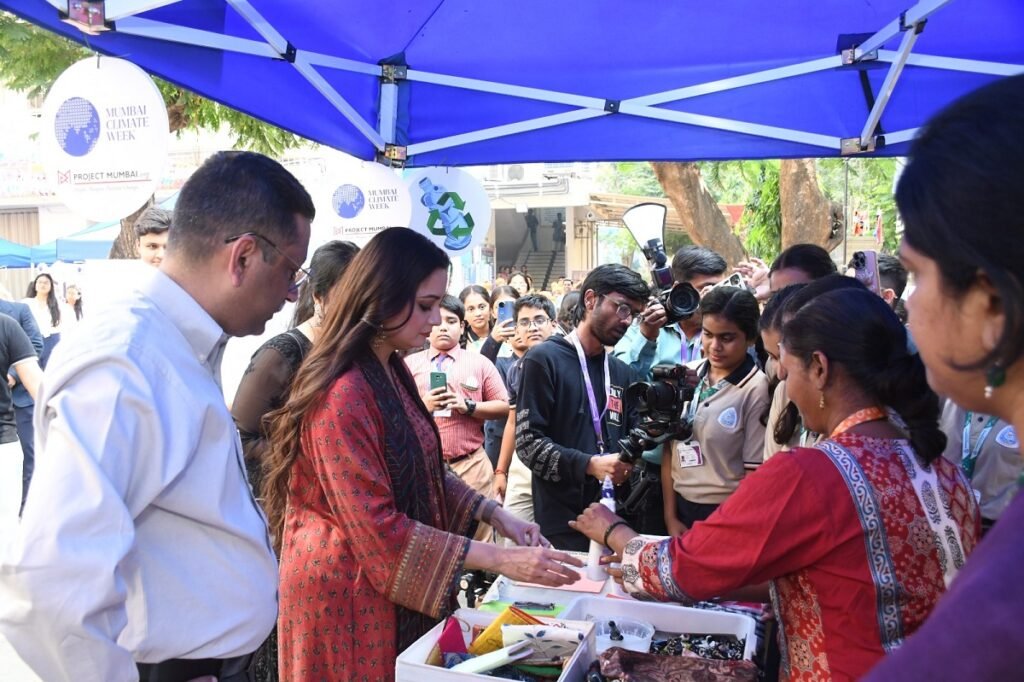
MUMBAI (India CSR): Mumbai is India’s ‘city of dreams’, a hub for opportunity in business, finance, and the Bollywood film industry, attracting millions who arrive with ambition and belief in upward mobility. It is a fast-paced metropolis that has long symbolised the possibility of turning dreams into reality, and it is now beginning to apply that same spirit to climate action. This February (17–19), Mumbai will host the inaugural Mumbai Climate Week (MCW) at the Jio World Convention Centre.This will be India’s first city‑led climate week, organised by Project Mumbai with the Government of Maharashtra’s Environment & Climate Change Department and supported by Brihanmumbai Municipal Corporation.
Climate Weeks are popular and have become a global movement, and are already hosted in London, Sydney, New York, Stockholm and other places around the world. These city-led events are transforming how we think about local‑level climate action and by Mumbai joining this momentum, it shows how climate progress accelerates when it’s driven locally and scaled globally.
As an added bonus, during MCW, Mumbai will also host the Earthshot Prize, which will further position the city as a global hub for climate solutions and action. The Earthshot Prize, a leading global environmental award, set up by the Prince of Wales, seeks to annually award five winners for their innovative solutions to crucial environmental challenges facing the earth;and Mumbai’s geography makes it one of India’s most climate-vulnerable megacities.

Where recent increases in tropical cyclones along the coast, coupled with projected sea-level rise over the next three decades, pose critical risks to infrastructure, livelihoods, and communities. Other challenges include intense flooding and rainfall, extreme heatwaves, air pollution, water-management pressures, and the loss of green spaces. Mitigation and adaptation therefore need to sit at the centre of urban governance and this first MCW arrives at a moment when there is much to discuss and confront.
To be effective, Mumbai cannot approach climate action only through national targets or technocratic roadmaps. It must position itself on the real frontlines of innovation, resilience, and citizen-led problem-solving, particularly because so many of its residents live in informal settlements that are the most exposed to climate risk. Dharavi, one of the world’s largest slums, houses an estimated one million people, many without reliable access to sanitation or clean water. These communities are often from lower-income, marginalised, or minority groups that are highly vulnerable to flooding, heat stress, and health impacts. The city’s indigenous fishing community, the Kolis, face growing uncertainty as climate change reshapes the coastline and threatens traditional livelihoods.
Without credible adaptation plans, the consequences for Mumbai could be severe. India’s climate transition cannot be defined in conference rooms alone but include how its major urban centres are learning from one another, adapting solutions to local contexts, and converting ambition into bankable, scalable action.Delhi’s long-running air-pollution crisis is a reminder of what happens when ineffective governance, public health, and environmental risk collide and why city-level innovation, accountability, and financing matter as much as national policy. It is in this context that MCW must be more than a showcase; it needs to signal intent, collaboration, and readiness to shape theclimate narrative on its own terms.
Speaking to India CSR Network, Shishir Joshi, Founder & CEO of Project Mumbai and Mumbai Climate Week says, “Mumbai is already living the climate crisis through floods, heatwaves, and toxic air. We do not have the luxury of waiting for the perfect global agreement. Now is the moment to align state ambition, private capital, young people and community leaders, so we turn scattered efforts into a coordinated response before the next shock hits.Mumbai Climate Week is about proving that climate action in a megacity is possible when government, markets, and citizens pull in the same direction.”
MCW is signalling a growing confidence that climate leadership in the Global South can and will be shaped from the ground up. Across India, this shift is already visible, from Gujarat’s renewable-energy corridors to Pune’s electric-mobility transition. Much of India’s corporate climate leadership now depends on whether ambitious plans can be converted into finance-ready projects in sectors such as energy transition, mobility, waste systems, and resilience infrastructure.
In the state of Maharashtra, where Mumbai is located, the conversation is shifting from intention to implementation, identifying credible projects, clarifying risk-sharing models, and deepening collaboration between government, investors, corporates, and innovators. Therefore, initiatives associated with MCW will have the real potential to help to shape solutions that are technically sound, commercially viable, and socially aligned.

Mumbai’s emerging climate agenda is increasingly being framed through a business and corporate social responsibility lens, and MCW signals a maturing phase, where climate action is tied to investment decisions, governance systems, and social impact, not simply corporate communication. Plus, MCW’s emphasis on community groups, youth networks, and local institutions shows how climate programmes benefit when residents are treated as partners and knowledge-holders rather than beneficiaries.
Joshi, adds, “My expectation is that we leave with concrete collaborations, not just communiqués, but pilots that can scale, investments that move, and grassroots voices shaping the agenda alongside policymakers.This is a week that matters because it brings everyone who shapes Mumbai’s future into one frame, from the secretariat to the street, from boardrooms to college campuses. It is a chance to move from panel discussions to practical coalitions, and to show that a city like Mumbai can design solutions that speak not just to India, but to the wider Global South.”
In the wider national context, this will be a week that will reflect how India’s cities, supported by forward-thinking companies and financial actors, are beginning to shape models of climate leadership that are economically credible, socially grounded, and globally relevant. Climate responsibility is integral to how urban India competes, thrives, and delivers value to its people.
About the Author

(Sangeeta Waldron, Global Contributing Editor, India CSR Network, Waldron is a Media Commentator and Author.)
You May Also Like:
- Gulbenkian Prize for Humanity Are Winners From Indonesia, Cameroon & Brazil
- Khadi In The Spotlight At London Fashion Week
- Why Corporate Social Responsibility in India Is Now More Important Than Ever
- Sanskruti-Veekshanam: Special London Dance Show Promoting India’s Rich Cultural Diversity