• India CSR Awards 2025
  • India CSR Leadership Summit
  • Guest Posts
  • Login
Sunday, March 15, 2026
India CSR
  • Home
  • Corporate Social Responsibility
    • Art & Culture
    • CSR Leaders
    • Child Rights
    • Culture
    • Education
    • Gender Equality
    • Around the World
    • Skill Development
    • Safety
    • Covid-19
    • Safe Food For All
  • Sustainability
    • Sustainability Dialogues
    • Sustainability Knowledge Series
    • Plastics
    • Sustainable Development Goals
    • ESG
    • Circular Economy
    • BRSR
  • Corporate Governance
    • Diversity & Inclusion
  • Interviews
  • SDGs
    • No Poverty
    • Zero Hunger
    • Good Health & Well-Being
    • Quality Education
    • Gender Equality
    • Clean Water & Sanitation – SDG 6
    • Affordable & Clean Energy
    • Decent Work & Economic Growth
    • Industry, Innovation & Infrastructure
    • Reduced Inequalities
    • Sustainable Cities & Communities
    • Responsible Consumption & Production
    • Climate Action
    • Life Below Water
    • Life on Land
    • Peace, Justice & Strong Institutions
    • Partnerships for the Goals
  • Articles
  • Events
  • हिंदी
  • More
    • Business
    • Finance
    • Environment
    • Economy
    • Health
    • Around the World
    • Social Sector Leaders
    • Social Entrepreneurship
    • Trending News
      • Important Days
        • Festivals
      • Great People
      • Product Review
      • International
      • Sports
      • Entertainment
    • Case Studies
    • Philanthropy
    • Biography
    • Technology
    • Lifestyle
    • Sports
    • Gaming
    • Knowledge
    • Home Improvement
    • Words Power
    • Chief Ministers
No Result
View All Result
  • Home
  • Corporate Social Responsibility
    • Art & Culture
    • CSR Leaders
    • Child Rights
    • Culture
    • Education
    • Gender Equality
    • Around the World
    • Skill Development
    • Safety
    • Covid-19
    • Safe Food For All
  • Sustainability
    • Sustainability Dialogues
    • Sustainability Knowledge Series
    • Plastics
    • Sustainable Development Goals
    • ESG
    • Circular Economy
    • BRSR
  • Corporate Governance
    • Diversity & Inclusion
  • Interviews
  • SDGs
    • No Poverty
    • Zero Hunger
    • Good Health & Well-Being
    • Quality Education
    • Gender Equality
    • Clean Water & Sanitation – SDG 6
    • Affordable & Clean Energy
    • Decent Work & Economic Growth
    • Industry, Innovation & Infrastructure
    • Reduced Inequalities
    • Sustainable Cities & Communities
    • Responsible Consumption & Production
    • Climate Action
    • Life Below Water
    • Life on Land
    • Peace, Justice & Strong Institutions
    • Partnerships for the Goals
  • Articles
  • Events
  • हिंदी
  • More
    • Business
    • Finance
    • Environment
    • Economy
    • Health
    • Around the World
    • Social Sector Leaders
    • Social Entrepreneurship
    • Trending News
      • Important Days
        • Festivals
      • Great People
      • Product Review
      • International
      • Sports
      • Entertainment
    • Case Studies
    • Philanthropy
    • Biography
    • Technology
    • Lifestyle
    • Sports
    • Gaming
    • Knowledge
    • Home Improvement
    • Words Power
    • Chief Ministers
No Result
View All Result
India CSR
No Result
View All Result
Home Health

Hyderabad Records India’s Highest Breast Cancer Rates: Dr. Sainath Bhethanabhotla Calls for Urgent Screening and Awareness

Rapid urbanization has changed women’s lifestyles and reproductive patterns, increasing breast cancer risk.

India CSR by India CSR
October 31, 2025
in Health
Reading Time: 5 mins read
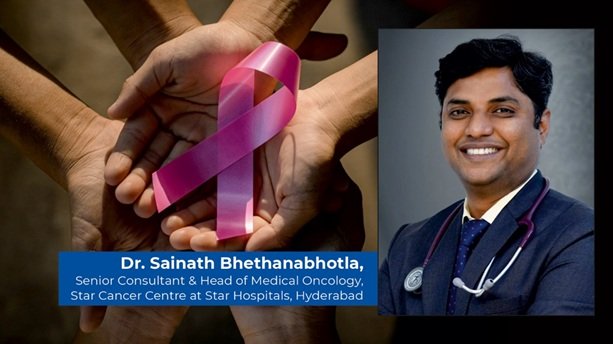
Dr. Sainath Bhethanabhotla, Senior Consultant & Head of Medical Oncology, Star Cancer Centre at Star Hospitals, Hyderabad

Dr. Sainath Bhethanabhotla, Senior Consultant & Head of Medical Oncology, Star Cancer Centre at Star Hospitals, Hyderabad

Share Share Share Share
WhatsApp icon
WhatsApp — Join Us
Instant updates & community
Google News icon
Google News — Follow Us
Get our articles in Google News feed

Only 2% of women in Hyderabad and 1.3% in India undergo mammography, compared to 70–84% in the U.S.

HYDERABAD (India CSR): Breast cancer has emerged as the most common cancer among women in India, with Hyderabad recording the highest incidence rate—54 cases per 100,000 women. The national average stands at 26.6, marking a 21 percent rise over two decades. According to Dr. Sainath Bhethanabhotla, Senior Consultant & Head of Medical Oncology, Star Cancer Centre at Star Hospitals, Hyderabad, this sharp increase reflects a growing public-health challenge for urban India.

“The alarming rise in Hyderabad’s breast cancer rates highlights the urgent need for structured screening, awareness, and early intervention,” said Dr. Sainath Bhethanabhotla.

A Concerning Urban Trend

While the USA continues to report stable incidence rates of around 130–134 per 100,000 women—supported by widespread screening—India’s rates are climbing steadily. Hyderabad has now overtaken other major metros like Bengaluru (46.7), Chennai (45.4), Delhi (38.6), and Mumbai (34.4).

Book Launch Ceremony
ADVERTISEMENT

Dr. Bhethanabhotla explains that the difference lies not just in lifestyle but also in early detection. “In the US, almost 70–80 percent of cases are diagnosed early, ensuring over 90 percent survival. In India, nearly 60 percent of women reach hospitals only in advanced stages, where survival drops drastically,” he noted.

Changing Urban Lifestyle and Reproductive Patterns

Rapid urbanization has altered women’s reproductive and lifestyle patterns—one of the strongest risk factors behind rising breast cancer cases.

  • Late Childbirth: Women having their first child after the age of 30 face a significantly higher risk. Each year’s delay raises the likelihood of developing hormone-driven breast cancers.
  • Nulliparity (no childbirth): Women who never conceive lose the natural protective benefit of early pregnancy and extended breastfeeding.
  • Declining Breastfeeding: Although India’s national breastfeeding rate remains 58 percent, urban areas like Hyderabad report far lower numbers—sometimes below 40 percent. Breastfeeding helps reduce lifetime estrogen exposure, lowering cancer risk.
  • Obesity and Physical Inactivity: NFHS-5 data shows 30 percent of women in Telangana are overweight or obese. Obesity elevates estrogen levels, worsens cancer progression, and is linked to late-stage detection.
  • Circadian Rhythm Disruption: Increasing numbers of women in IT and service sectors work late or night shifts. “Disturbed sleep patterns and reduced melatonin levels are now proven biological risk factors,” Dr. Bhethanabhotla pointed out.

Environmental and Dietary Impact

Hyderabad’s growing pollution levels also play a role. Studies show an 8 percent increase in breast cancer incidence for every 10 µg/m³ rise in PM2.5 exposure. With Hyderabad consistently crossing safe limits, women face prolonged exposure to carcinogens from traffic, industrial emissions, and biomass burning.

Dietary transitions—shifting from traditional fiber-rich foods to high-fat, processed diets—further compound the risk. “Urban diets rich in refined sugars, fats, and alcohol not only contribute to obesity but directly increase circulating estrogen levels,” said Dr. Sainath Bhethanabhotla. Even moderate alcohol use (one drink per day) raises breast-cancer risk by up to 10 percent, while heavier use can increase it by 20 percent.

Genetic and Molecular Factors

Genetic susceptibility adds another layer of risk. Studies indicate a higher prevalence of BRCA1 and BRCA2 mutations in Indian populations—sometimes up to 29 percent in high-risk families—compared to Western nations. Women with these mutations face up to a 70 percent lifetime risk of developing breast cancer.

In addition, Triple-Negative Breast Cancer (TNBC)—an aggressive subtype that does not respond to hormone therapy—accounts for nearly 30 percent of Indian cases, compared to 10–15 percent in Western countries. “We often see younger women in India affected by TNBC, which progresses faster and has fewer targeted treatment options,” added Dr. Bhethanabhotla.

Estrogen: The Double-Edged Hormone

Estrogen plays a critical role in normal breast-tissue growth, but prolonged or excessive exposure can be harmful. Early onset of menstruation, late menopause, delayed childbirth, obesity, and hormone-replacement therapy all increase lifetime estrogen exposure.

“Estrogen doesn’t just promote tumor growth—it can also trigger genetic mutations in breast cells,” explained Dr. Sainath Bhethanabhotla, emphasizing the importance of hormonal balance through healthy diet, exercise, and preventive screening.

The Screening Gap: A Missed Lifeline

Perhaps the most concerning gap lies in screening and early detection. Only 2 percent of women in Hyderabad and 1.3 percent nationally undergo mammography, compared to 70–84 percent in the USA. This lack of early diagnosis results in late-stage detection for 50–70 percent of Indian women.

“Screening is the single most effective tool to save lives,” said Dr. Bhethanabhotla. “The five-year survival for breast cancer decreases from 95 percent in Stage 1 to just 21 percent in Stage 4 — and most of these advanced-stage cases become incurable. Regular mammograms after 40 can make all the difference.”

Multiple barriers hinder screening in India—limited facilities, high costs, cultural stigma, and fear of diagnosis. Many women delay visiting doctors even after noticing lumps, leading to poorer outcomes.

From Awareness to Action

While prevention is complex, awareness is achievable. Dr. Sainath Bhethanabhotla urges a collective response:

  • Individuals: Understand risk factors, perform monthly self-breast exams, maintain a healthy weight, and prioritize regular check-ups.
  • Communities: Build awareness through schools, offices, and local women’s networks.
  • Government: Invest in mobile screening units, subsidize mammography, and train female health workers to conduct preliminary screenings.

“Ignorance is no longer an option. Hyderabad’s data should serve as a wake-up call for the nation. Awareness is the foundation of survival,” said Dr. Bhethanabhotla.

About Star Hospitals: Star Hospitals, Hyderabad, is one of South India’s premier tertiary-care centers, offering advanced diagnostics, comprehensive cancer care, and multi-specialty services. Under the leadership of Dr. Sainath Bhethanabhotla, the hospital’s oncology program focuses on early detection, personalized treatments, and holistic support for patients and their families. Star Hospitals continues to drive awareness and preventive-health initiatives across Telangana, ensuring more women detect breast cancer early and live healthier lives.

(India CSR)

India Responsible Education & AI Summit 2026
ADVERTISEMENT
Ambedkar Chamber
ADVERTISEMENT
ESG Professional Network
ADVERTISEMENT
India Sustainability Awards 2026
ADVERTISEMENT
India CSR Image 1 India CSR Image 2
Tags: Breast CancerDr. Sainath BhethanabhotlaHyderabadReproductive PatternsWomen

CSR, Sustainability, and ESG success stories hindustan zinc
ADVERTISEMENT
India CSR

India CSR

India CSR is the largest media on CSR and sustainability offering diverse content across multisectoral issues on business responsibility. It covers Sustainable Development, Corporate Social Responsibility (CSR), Sustainability, and related issues in India. Founded in 2009, the organisation aspires to become a globally admired media that offers valuable information to its readers through responsible reporting.

Related Posts

Women Lead the Way in Emergency Care at Bharati Hospital in Pune
Health

Women Lead the Way in Emergency Care at Bharati Hospital in Pune

2 weeks ago
Bile Duct Cancer
Health

Early Warning Signs of Gallbladder and Bile Duct Cancer

3 weeks ago
Cracking Cachexia: How Brain–Liver Miscommunication Drives Severe Weight Loss in Cancer
Health

Cracking Cachexia: How Brain–Liver Miscommunication Drives Severe Weight Loss in Cancer

3 weeks ago
Understanding the Brain-Glucose Connection: What Alzheimer’s, Diabetes, and CGM Have in Common
Health

Understanding the Brain-Glucose Connection: What Alzheimer’s, Diabetes, and CGM Have in Common

4 weeks ago
Fertility Treatment Accessibility & Health Equity in India: A Ground-Level Reality Check
Health

Fertility Treatment Accessibility & Health Equity in India: A Ground-Level Reality Check

1 month ago
nipah virus
Health

What is Nipah Virus? Symptoms, Spread, and Risk Explained

1 month ago
Load More
India Responsible Education & AI Summit 2026
ADVERTISEMENT
Ambedkar Chamber
ADVERTISEMENT
ADVERTISEMENT
India Sustainability Awards 2026
ADVERTISEMENT

LATEST NEWS

Global Experts Discuss Future of GST Reforms at Graphic Era University Conference

हिन्दुस्तान जिंक द्वारा संचालित समाधान परियोजना के तहत् पशुपालन को बढ़ावा देने के लिए काॅफ रैली का आयोजन

Chennai Startup Motherly Is Building What Indian Maternal Care Has Always Lacked

Rungta University and India CSR to Offer Academic Programs in CSR and Sustainability

Amethyst Wellness: Where Luxury Ayurveda Meets Scientific Well-Being in Surat & Ahmedabad

Child Labour Busted in Raipur Urla Industrial Area; Cases Filed Against Factory Operators

Economy India Largest Media on Indian Economy and Business
ADVERTISEMENT
Ad 1 Ad 2 Ad 3
ADVERTISEMENT
ESG Professional Network
ADVERTISEMENT

TOP NEWS

Energy-Efficient HVAC Solutions for Residential and Commercial Spaces

DBS Bank’s Sustainable Financing Reaches SGD 102 billion in 2025, Up 14% Year-on-Year

What’s Cooking: Is it Oil or Politics in India?

Former Union Minister Suresh Prabhu to Launch ‘India@100 Resurgent Bharat: Road Map for 2047’ on March 24, 2026 in New Delhi

आईआरसीई 2026 में हिंदुस्तान जिंक ने रेल इंफ्रास्ट्रक्चर में जिंक की भूमिका को रेखांकित किया

De Beers Group Partners with Abhishek Sharma to Champion Natural Diamonds in India

Load More
STEM Learning STEM Learning STEM Learning
ADVERTISEMENT

Interviews

Kayana Monga, a student at Shiv Nadar School, Noida, Founder - Project Muskan
Interviews

An Interview with Student Changemaker Kayana Monga Working on Rural Mental Health

by India CSR
March 12, 2026

Student-led Project Muskan brings mental health awareness and care to rural children across India.

Read moreDetails
Meha Patel, Vice Chairperson of Zydus Foundation

Interview: Meha Patel on Zydus Foundation’s Vision for Sustainable Social Impact

March 11, 2026
Prachi Kaushik, Founder and Director of Vyomini Social Enterprise

Menstrual Hygiene Awareness Must Go Beyond Pad Distribution: Prachi Kaushik, Vyomini Social Enterprise

March 8, 2026
Prerrit Mansingh, Secretary, Aayom Welfare Society

Scaling Compassion into Structured Social Change: An Interview with Prerrit Mansingh

February 28, 2026
Load More
Facebook Twitter Youtube LinkedIn Instagram
India CSR Logo

India CSR is the largest tech-led platform for information on CSR and sustainability in India offering diverse content across multisectoral issues. It covers Sustainable Development, Corporate Social Responsibility (CSR), Sustainability, and related issues in India. Founded in 2009, the organisation aspires to become a globally admired media that offers valuable information to its readers through responsible reporting. To enjoy the premium services, we invite you to partner with us.

Follow us on social media:


Dear Valued Reader

India CSR is a free media platform that provides up-to-date information on CSR, Sustainability, ESG, and SDGs. We need reader support to continue delivering honest news. Donations of any amount are appreciated.

Help save India CSR.

Donate Now

Donate at India CSR

  • About India CSR
  • Team
  • India CSR Awards 2025
  • India CSR Leadership Summit
  • India Responsible Education & AI Summit 2026
  • Partnership
  • Guest Posts
  • Services
  • ESG Professional Network
  • Content Writing Services
  • Business Information
  • Contact
  • Privacy Policy
  • Terms of Use
  • Donate

Copyright © 2025 - India CSR | All Rights Reserved

Welcome Back!

Login to your account below

Forgotten Password?

Retrieve your password

Please enter your username or email address to reset your password.

Log In
No Result
View All Result
  • Home
  • Corporate Social Responsibility
    • Art & Culture
    • CSR Leaders
    • Child Rights
    • Culture
    • Education
    • Gender Equality
    • Around the World
    • Skill Development
    • Safety
    • Covid-19
    • Safe Food For All
  • Sustainability
    • Sustainability Dialogues
    • Sustainability Knowledge Series
    • Plastics
    • Sustainable Development Goals
    • ESG
    • Circular Economy
    • BRSR
  • Corporate Governance
    • Diversity & Inclusion
  • Interviews
  • SDGs
    • No Poverty
    • Zero Hunger
    • Good Health & Well-Being
    • Quality Education
    • Gender Equality
    • Clean Water & Sanitation – SDG 6
    • Affordable & Clean Energy
    • Decent Work & Economic Growth
    • Industry, Innovation & Infrastructure
    • Reduced Inequalities
    • Sustainable Cities & Communities
    • Responsible Consumption & Production
    • Climate Action
    • Life Below Water
    • Life on Land
    • Peace, Justice & Strong Institutions
    • Partnerships for the Goals
  • Articles
  • Events
  • हिंदी
  • More
    • Business
    • Finance
    • Environment
    • Economy
    • Health
    • Around the World
    • Social Sector Leaders
    • Social Entrepreneurship
    • Trending News
      • Important Days
      • Great People
      • Product Review
      • International
      • Sports
      • Entertainment
    • Case Studies
    • Philanthropy
    • Biography
    • Technology
    • Lifestyle
    • Sports
    • Gaming
    • Knowledge
    • Home Improvement
    • Words Power
    • Chief Ministers

Copyright © 2025 - India CSR | All Rights Reserved

This website uses cookies. By continuing to use this website you are giving consent to cookies being used. Visit our Privacy and Cookie Policy.