

• India CSR Awards 2026
  • India CSR Leadership Summit
  • Guest Posts
Thursday, July 9, 2026
India CSR
  • Home
  • Corporate Social Responsibility
    • Art & Culture
    • CSR Leaders
    • Child Rights
    • Culture
    • Education
    • Gender Equality
    • Around the World
    • Skill Development
    • Safety
    • Covid-19
    • Safe Food For All
  • Sustainability
    • Sustainability Dialogues
    • Sustainability Knowledge Series
    • Plastics
    • Sustainable Development Goals
    • ESG
    • Circular Economy
    • BRSR
  • Corporate Governance
    • Diversity & Inclusion
  • Interviews
  • SDGs
    • No Poverty
    • Zero Hunger
    • Good Health & Well-Being
    • Quality Education
    • Gender Equality
    • Clean Water & Sanitation – SDG 6
    • Affordable & Clean Energy
    • Decent Work & Economic Growth
    • Industry, Innovation & Infrastructure
    • Reduced Inequalities
    • Sustainable Cities & Communities
    • Responsible Consumption & Production
    • Climate Action
    • Life Below Water
    • Life on Land
    • Peace, Justice & Strong Institutions
    • Partnerships for the Goals
  • Articles
  • Events
  • हिंदी
  • More
    • Business
    • Finance
    • Environment
    • Economy
    • Health
    • Around the World
    • Social Sector Leaders
    • Social Entrepreneurship
    • Trending News
      • Important Days
        • Festivals
      • Great People
      • Product Review
      • International
      • Sports
      • Entertainment
    • Case Studies
    • Philanthropy
    • Biography
    • Technology
    • Lifestyle
    • Sports
    • Gaming
    • Knowledge
    • Home Improvement
    • Words Power
    • Chief Ministers
No Result
View All Result
  • Home
  • Corporate Social Responsibility
    • Art & Culture
    • CSR Leaders
    • Child Rights
    • Culture
    • Education
    • Gender Equality
    • Around the World
    • Skill Development
    • Safety
    • Covid-19
    • Safe Food For All
  • Sustainability
    • Sustainability Dialogues
    • Sustainability Knowledge Series
    • Plastics
    • Sustainable Development Goals
    • ESG
    • Circular Economy
    • BRSR
  • Corporate Governance
    • Diversity & Inclusion
  • Interviews
  • SDGs
    • No Poverty
    • Zero Hunger
    • Good Health & Well-Being
    • Quality Education
    • Gender Equality
    • Clean Water & Sanitation – SDG 6
    • Affordable & Clean Energy
    • Decent Work & Economic Growth
    • Industry, Innovation & Infrastructure
    • Reduced Inequalities
    • Sustainable Cities & Communities
    • Responsible Consumption & Production
    • Climate Action
    • Life Below Water
    • Life on Land
    • Peace, Justice & Strong Institutions
    • Partnerships for the Goals
  • Articles
  • Events
  • हिंदी
  • More
    • Business
    • Finance
    • Environment
    • Economy
    • Health
    • Around the World
    • Social Sector Leaders
    • Social Entrepreneurship
    • Trending News
      • Important Days
        • Festivals
      • Great People
      • Product Review
      • International
      • Sports
      • Entertainment
    • Case Studies
    • Philanthropy
    • Biography
    • Technology
    • Lifestyle
    • Sports
    • Gaming
    • Knowledge
    • Home Improvement
    • Words Power
    • Chief Ministers
No Result
View All Result
India CSR
No Result
View All Result
Home Business

How does America’s education system work?

India CSR by India CSR
August 30, 2021
in Business, Education
Reading Time: 7 mins read
India CSR
Share Share Share Share
WhatsApp icon
WhatsApp — Join Us
Instant updates & community
Google News icon
Google News — Follow Us
Get our articles in Google News feed

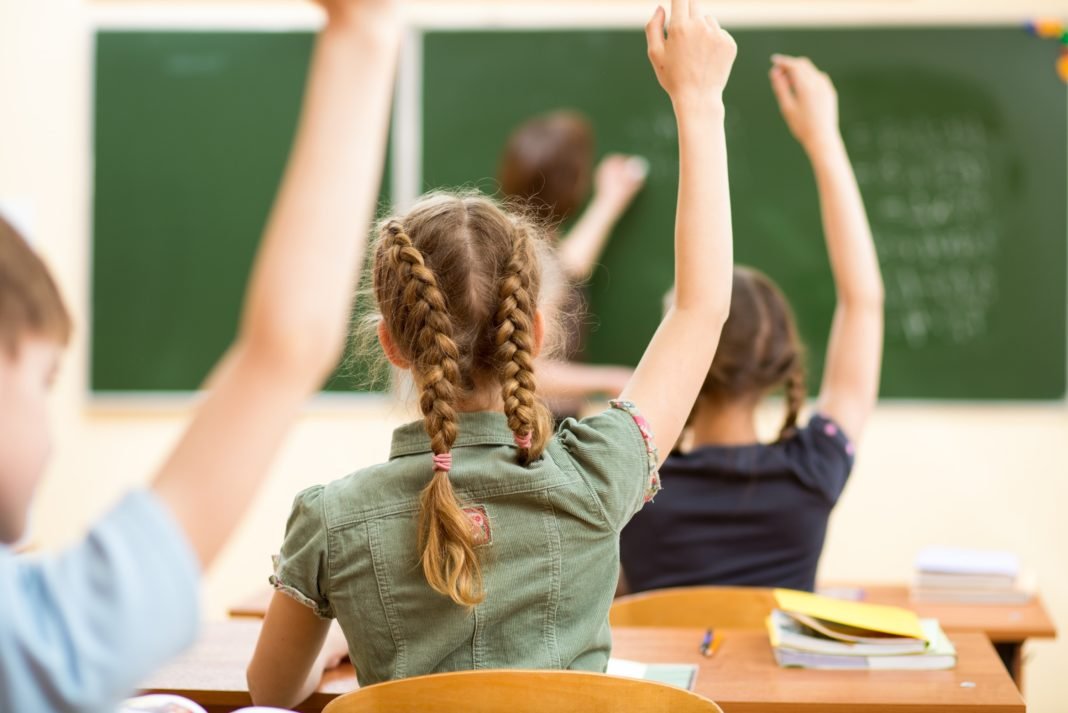
The U.S. education system has four levels: preschool, elementary, secondary, and higher education. The educational process at each of them is flexible, practice-oriented, and individualized for students.

Features of education in the U.S.

Autonomy

There are government-approved subjects: science, math, English, and social studies. Some states impose compulsory lessons in first aid and sex education. But otherwise, schools establish their own programs and schedules. They can add courses in foreign languages, art, environmental studies, and so on. Universities also enjoy wide autonomy in choosing their faculty and research topics.

K-12

This is the common name of the U.S. school system. There are 13 years of schooling in America: one year of kindergarten (K) + 12 years of secondary education (elementary and middle school together). Sometimes people also speak of K-14 (kindergarten + two-year college) and K-16 (kindergarten + bachelor’s degree).

Conditions for foreign nationals

Most foreigners study in private schools. This is because by law they can enter the public school only from 9 to 12 grade (high school period) and only for one year. Higher education institutions often set different prices for foreign students. Tuition for international students and those from other states is 2 to 3 times higher than for locals.

Practice-oriented

The U.S. education system provides students with practical knowledge that can help them in real life. This includes lessons on health, nutrition, sex education, and other topics.

Changing Schools

Many American schools correspond to only one level of education. That is, one building houses a primary school, another — a middle school, and a third — a high school. Students may change from two to three schools in 12 years.

Early Childhood Education in the United States

Preschool is not a required part of education and thus is not funded by the federal government. But many states provide funding themselves and offer preschool education at low (or no) cost.

Primary education in the United States

Kindergarten

The first year of elementary school is called kindergarten. They are a regular full-day program for American children. Children spend only one year in these kindergartens. The program here is already more serious than in preschools and prepares them for entry into elementary school.

Unlike preschools, the kindergarten stage is mandatory in the U.S. education system. Therefore each state has an approved schedule and a required list of subjects.

Primary School

After kindergarten children finally enter a primary (elementary) school. It lasts from first grade to sixth grade.

The grading system in the first two years is simple:

  • E (excellent);
  • S (satisfactory – good);
  • N (needs improvement);
  • U (unsatisfactory).

Then gradually the standard American school grades A, B, C, D, and F are introduced, where A is excellent and F is a failure. Already in elementary school children take their first standardized tests. They determine students’ progress and prepare them for the future entrance exam for universities – the SAT. There are no final exams from elementary school.

Secondary education in the USA

Middle School/Junior High School

Many people use these terms interchangeably, even though they were originally created as different types of high school. Middle school lasts from sixth to eighth grade, while junior high school lasts from seventh to ninth. Junior high also has more of a focus on required subjects, test preparation, a fixed schedule, and is generally similar to high school.

U.S. high school classes are taught by a variety of teachers, each of whom is an expert in their subject area. The emphasis is on English, science, and math. These three subjects plus history and sports are required. But students choose their own level: basic or advanced. Also, all students must take 1-2 additional subjects. They can be very different: from debates to STEM. That is why there are no permanent classes in American schools – all students are mixed up because of the individual schedule.

Tests and quizzes are given regularly. A student’s final grade in high school depends on them. There are no final examinations here. It is sufficient to have satisfactory grades in all subjects.

Senior High School

Senior High School is the final level of secondary education. In America, there are mixed junior/senior high schools, where people study for six years up to graduation. And there are separate ones, which are in different buildings. High school lasts from ninth to twelfth grade. And this is the only opportunity for foreigners to study at a public exchange school (only one year). The rest of the time only private institutions are available to them. But even in public institutions, foreign students must pay from 3000 to 10,000 USD for one year of study.

In high school, all studies focus on college admissions: students pull up their GPA and prepare for the SAT/ACT. In addition to the basic subjects, students can optionally enroll in Honors or Advanced Placements (AP). The former is advanced placements in subjects, and the latter are university-level courses. There are a total of 33 courses in six academic fields. There’s even Japanese, macroeconomics, and mechanics. At the end of the course, students take an oral or written exam. Excellent grades in AP subjects increase the chances of admission to a prestigious university. It is a common practice among students to turn to a cheap writing company USA. Such a service will help in preparing an admissions essay or any other student assignment.

High schools do not administer final exams. Instead, students take standardized tests such as the SAT (Scholastic Aptitude Test) or the ACT (American College Testing). These tests are required for admission to U.S. universities. In 2021, many U.S. universities, including the Ivy League, made the SAT/ACT an optional requirement because of the COVID-19 pandemic. It is possible that this decision will continue in the future. Standardized tests in the U.S. have long been criticized.

Higher Education in the US

Higher education in the U.S. is one of the most prestigious. Five American universities are among the top ten in the world according to the QS ranking. Every year thousands of foreigners choose America for their university studies. In 2019-2020, there were more than one million.

Vocational Education

High school graduates can get a quick vocational education at community colleges. Education in them lasts for two years. They have a slightly lower course load than universities, with an emphasis on practical skills. The students get associate degrees and may get jobs in their field of study.

Another option after community college is to transfer directly to the third year of university. To do this you need to have a GPA of 3.5 out of 4, with all the marks in the core subjects must be excellent. Foreigners sometimes need a TOEFL and SAT score.

You cannot transfer to Harvard or Yale from a community college, but other intermediate colleges are available. Many community colleges sign agreements with universities to guarantee admission.

University Studies

The U.S. university system has three levels:

  • Bachelor’s degree – 4 years;
  • Master’s degree is two years;
  • Doctoral studies take 4 to 6 years.

The study process at U.S. universities is flexible. Students plan their schedules themselves. And instead of hours of lectures, they lead seminars and discussions. When applying, students choose a major and then add a minor. The latter may be a useful adjunct to the major. Both are natural for American universities.

Master’s and doctoral programs are taught in special graduate and professional schools. The former brings together several fields of study, and the latter are more specialized. They impart knowledge in specific fields: nursing, law, business, etc. The training process includes not only research and theory but also regular practice and works on the topic of the dissertation. Ph.D. graduates are most often awarded a Ph.D. degree. For professional programs, there are DBA, JD, MD, and so on.

It costs 20,000-50,000 USD/year to study in the States. Plus living expenses are about 10,000 USD/year more. Fortunately, many universities in the US award scholarships and grants to students. Some, like the Ivy League, cover up to 100% of tuition costs.

To be admitted to a U.S. university, an international applicant must have a high GPA, TOEFL or IELTS certification, pass the SAT/ACT, write a letter of motivation, and receive recommendations.


XXXXXXXXXXXXXXXXXXXXXXXXXXXXXXXXXXXXXXXXXXXXXXXXXX
India CSR Image 1 India CSR Image 2
Source: India CSR/August 30, 2021
Tags: Early Childhood Education in the United StatesFeatures of education in the U.S.Higher Education in the USPrimary education in the United StatesSecondary education in the USA

CSR, Sustainability, and ESG success stories hindustan zinc
ADVERTISEMENT
India CSR

India CSR

India CSR® is the largest media on CSR and sustainability offering diverse content across multisectoral issues on business responsibility. It covers Sustainable Development, Corporate Social Responsibility (CSR), Sustainability, and related issues in India. Founded in 2009, the organisation aspires to become a globally admired media that offers valuable information to its readers through responsible reporting.

Related Posts

MAMS Hospitals Completes Over 100 Free Total Knee Replacement Surgeries on Dr. Puvvada Nayan Raj’s Birthday
Business

MAMS Hospitals Completes Over 100 Free Total Knee Replacement Surgeries on Dr. Puvvada Nayan Raj’s Birthday

5 hours ago
BharatPreneurs MSME Conference 2026 to Bring Together India’s Business Leaders
Business

BharatPreneurs MSME Conference 2026 to Bring Together India’s Business Leaders

5 hours ago
What After B.Tech? Start in JNTU Hyderabad, Graduate in Germany, and Build a Global Career
Business

What After B.Tech? Start in JNTU Hyderabad, Graduate in Germany, and Build a Global Career

5 hours ago
Sustainable Chemical Plants
Business

Reliable Valve Selection for Sustainable Water Treatment and Industrial Wastewater Systems

10 hours ago
DriftProxy Debuts Platform Covering Proxies, VPNs and Privacy Solutions
Business

DriftProxy Debuts Platform Covering Proxies, VPNs and Privacy Solutions

11 hours ago
The B2B Marketer’s AI Reckoning: Own the Disruption or Fall Behind
Business

The B2B Marketer’s AI Reckoning: Own the Disruption or Fall Behind

11 hours ago
Load More
BBA - CSR, Sustainability and ESG, Rungta International Skills University Bhilai
ADVERTISEMENT
FKCCI
ADVERTISEMENT

Interviews

Dr. Vikas Garg, Chairman, Ebix Group
Interviews

CSR: Compliance Gives You a Floor, But Purpose Gives You a Legacy: Dr. Vikas Garg, Chairman, Ebix Group

by India CSR
June 29, 2026

Ebix Group aligns CSR with technology, financial inclusion and digital literacy.

Read moreDetails
Harkirat Kaur, CEO, Hartek Foundation

Building Resilient Communities Through Sustainable Development: Harkirat Kaur, CEO, Hartek Foundation

June 22, 2026
Indu Mehta, Chief Sustainability Officer (CSO) at Bhilwara Energy Limited @IndiaCSR

ESG in India Has Moved Beyond Storytelling: Bhilwara Energy’s Indu Mehta on Sustainability as an Operating Discipline

May 30, 2026
Sourabh Lohtia, Chief Marketing & Communications Officer, PNB MetLife

Targeted Skilling Can Build Confident Futures for Underprivileged Women: Sourabh Lohtia, PNB MetLife

May 29, 2026
Load More
Ad 1 Ad 2 Ad 3 Ad 4 Ad 5 Ad 6
ADVERTISEMENT

CSR UPDATES

Marico CSR Spending Report FY26

Marico Advances Purpose-Led Growth, ESG Roadmap and Community Impact in FY26

CSR: HCL Foundation and UP Govt. to Collaborate for Sustainable Cities

CSR: Honeywell Advances Future-ready Skills Through STEM-led School Transformation Program

PRAGATI Initiative to Empower 20,000 Rural Agri-Entrepreneurs

BIMTECH Advances Zero-Plastic Waste Campus movement with Bisleri International ‘s ‘Bottles for Change’ CSR Initiative

STEM Learning STEM Learning STEM Learning
ADVERTISEMENT
Facebook Twitter Youtube LinkedIn Instagram
India CSR Logo

India CSR is the largest tech-led platform for information on CSR and sustainability in India offering diverse content across multisectoral issues. It covers Sustainable Development, Corporate Social Responsibility (CSR), Sustainability, and related issues in India. Founded in 2009, the organisation aspires to become a globally admired media that offers valuable information to its readers through responsible reporting. To enjoy the premium services, we invite you to partner with us.

Follow us on social media:

Subscribe to Our Newsletter

Don't miss out on the latest updates in corporate social responsibility. Subscribe to our newsletter at indiacsr.in and be part of the positive change.
Please enable JavaScript in your browser to complete this form.
Loading

  • About India CSR
  • Team
  • India CSR Awards 2026
  • India CSR Leadership Summit
  • Partnership
  • Guest Posts
  • Services
  • ESG Professional Network
  • Content Writing Services
  • Business Information
  • Contact
  • Privacy Policy
  • Terms of Use
  • Donate

Copyright © 2026 - India CSR | All Rights Reserved

No Result
View All Result
  • Home
  • Corporate Social Responsibility
    • Art & Culture
    • CSR Leaders
    • Child Rights
    • Culture
    • Education
    • Gender Equality
    • Around the World
    • Skill Development
    • Safety
    • Covid-19
    • Safe Food For All
  • Sustainability
    • Sustainability Dialogues
    • Sustainability Knowledge Series
    • Plastics
    • Sustainable Development Goals
    • ESG
    • Circular Economy
    • BRSR
  • Corporate Governance
    • Diversity & Inclusion
  • Interviews
  • SDGs
    • No Poverty
    • Zero Hunger
    • Good Health & Well-Being
    • Quality Education
    • Gender Equality
    • Clean Water & Sanitation – SDG 6
    • Affordable & Clean Energy
    • Decent Work & Economic Growth
    • Industry, Innovation & Infrastructure
    • Reduced Inequalities
    • Sustainable Cities & Communities
    • Responsible Consumption & Production
    • Climate Action
    • Life Below Water
    • Life on Land
    • Peace, Justice & Strong Institutions
    • Partnerships for the Goals
  • Articles
  • Events
  • हिंदी
  • More
    • Business
    • Finance
    • Environment
    • Economy
    • Health
    • Around the World
    • Social Sector Leaders
    • Social Entrepreneurship
    • Trending News
      • Important Days
      • Great People
      • Product Review
      • International
      • Sports
      • Entertainment
    • Case Studies
    • Philanthropy
    • Biography
    • Technology
    • Lifestyle
    • Sports
    • Gaming
    • Knowledge
    • Home Improvement
    • Words Power
    • Chief Ministers

Copyright © 2026 - India CSR | All Rights Reserved

This website uses cookies. By continuing to use this website you are giving consent to cookies being used. Visit our Privacy and Cookie Policy.
