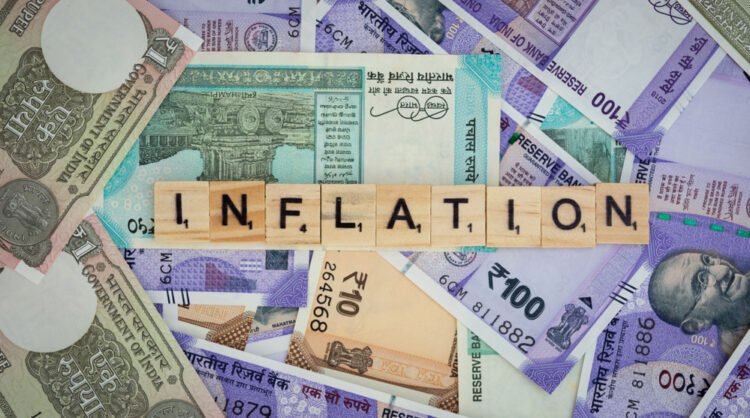


The article traces the evolution of FIT, examines the challenges faced, and outlines the possible road ahead for India’s monetary policy.
Over nine years, FIT has brought inflation under greater control, improved transparency, and strengthened institutional credibility. It has also demonstrated resilience during unprecedented shocks like the pandemic and global supply disruptions.
Inflation has always been a central concern for economic management in India. For households, it directly impacts purchasing power; for businesses, it influences investment and pricing decisions; and for governments, it shapes fiscal policy choices. To bring predictability and credibility to monetary policy, India formally adopted the Flexible Inflation Targeting (FIT) framework in 2016. This was a landmark reform that gave the Reserve Bank of India (RBI) a statutory mandate: maintain price stability while keeping in mind the objective of growth.
As India prepares for the next review of its monetary policy framework in 2026, the RBI has released a detailed discussion paper (August 2025), reflecting on nine years of experience with FIT.
The Evolution of Flexible Inflation Targeting
From High Inflation to a Credible Framework
Before the adoption of FIT, India faced a prolonged phase of double-digit inflation coupled with weak growth in the aftermath of the global financial crisis. This period exposed the limitations of existing monetary tools and sparked debates on adopting a new framework.
In 2014, the Urjit Patel Committee recommended inflation targeting as the nominal anchor for monetary policy. The committee suggested a 4% target with a tolerance band of +/- 2%, achievable over a two-year horizon to balance the output cost of disinflation against the credibility of policy commitments.
The framework was institutionalised through an amendment to the RBI Act in 2016. The Act mandated the Government and the RBI to set a consumer price index (CPI)-based inflation target every five years. It also created the Monetary Policy Committee (MPC), a six-member body entrusted with setting policy rates to meet the inflation target.
Institutional Transformation
The FIT framework marked a shift from governor-centric decisions to collegial decision-making. The MPC, comprising three RBI officials and three external experts, ensured diversity of views, greater accountability, and transparency. The RBI was also required to submit a report to the Government if inflation breached the 2-6% tolerance band for three consecutive quarters, strengthening institutional credibility.
FIT in Action: Performance and Impact
Inflation Moderation
Since its adoption, FIT has helped moderate inflation levels. Average CPI inflation during 2016–2025 was 4.9%, compared to 6.8% in the pre-FIT period. For much of 2016–2019, inflation remained close to the 4% target, demonstrating the credibility of the new framework.
However, the framework was severely tested during external shocks. The COVID-19 pandemic disrupted supply chains, pushing inflation above the tolerance band. Similarly, the Russia-Ukraine conflict caused global commodity price surges, leading to India’s inflation peaking at 7.8% in April 2022. Despite these shocks, inflation eventually moderated, aided by monetary tightening, government interventions, and falling international prices.
The Balancing Act: Growth vs Stability
A distinctive feature of FIT is its flexibility. During the pandemic, the RBI chose to prioritise growth over strict inflation control, tolerating higher inflation to support economic recovery. Conversely, during the 2022–23 global price surge, the focus shifted decisively back to inflation control. This adaptability has allowed FIT to remain credible while responding to extraordinary circumstances.
Enhanced Transparency
FIT also transformed RBI’s communication practices. Policy decisions are now explained through MPC resolutions, minutes, the Monetary Policy Report, and the Governor’s statements. This improved transparency has been noted as a significant step forward in India’s monetary policy credibility.
Key Debates in India’s FIT Framework
Headline vs Core Inflation
One of the central debates is whether India should target headline inflation (which includes food and fuel) or core inflation (which excludes them).
- Arguments for headline inflation:
- Food and fuel form nearly half of India’s consumption basket.
- Ignoring them would reduce the framework’s credibility and overlook the cost of living, especially for the poor.
- Persistent food inflation can spill over to core inflation through wages and production costs.
- Arguments for core inflation:
- Food and fuel prices are volatile and often driven by supply shocks beyond the RBI’s control.
- Targeting core inflation would prevent overreaction to temporary price fluctuations.
Globally, almost all inflation-targeting countries, except Uganda, focus on headline inflation. Given India’s socio-economic structure, the debate continues, but the RBI has so far favoured headline CPI.
Is 4% Still the Right Target?
The current 4% target is based on empirical research suggesting it balances growth and stability. Many advanced economies use a 2% target, while emerging markets prefer higher ranges of 3-6%.
For India, reducing the target below 4% may not be appropriate due to:
- The Balassa-Samuelson effect, which suggests higher inflation in fast-growing economies.
- Productivity differentials with advanced economies, which justify a higher inflation anchor.
- Trend inflation estimates by RBI staff that still place India’s underlying inflation close to 4%.
Rethinking the Tolerance Band
India’s +/- 2% tolerance band has provided room to manoeuvre during shocks. Narrowing the band could improve credibility but reduce flexibility; widening it could help manage volatility but risks de-anchoring expectations.
The ongoing review may re-examine whether this band remains appropriate or needs recalibration.
Point Target vs Range
India currently has a point target with a band (4% +/- 2%). Some argue for adopting a simple range, such as 2-6%, which could reduce the rigidity of the system. Critics, however, worry that this would weaken the clear inflation anchor necessary for guiding expectations.
Challenges for the Future
The road ahead is not without challenges, but the foundations laid since 2016 provide India with a credible framework to navigate uncertainty—anchoring inflation expectations while fostering growth. According to RBI, In the years ahead, the conduct of inflation targeting as a monetary policy framework may face even greater challenges due to emerging geo-economic uncertainties, volatility of commodity prices, climate change and innovations in payment systems that can change the nature of policy trade-offs.
The discussion paper notes that FIT will face new and evolving challenges:
- Global Uncertainty – Geopolitical tensions, protectionism, and volatile capital flows can disrupt inflation dynamics.
- Commodity Price Volatility – Energy and food prices remain vulnerable to global shocks and climate disruptions.
- Climate Change – Increasingly frequent weather extremes can cause persistent food inflation.
- Digital Innovations – Fintech, e-commerce, and new payment systems could alter monetary transmission and inflation dynamics.
- Welfare Considerations – Targeting inflation must continue to safeguard the cost of living, particularly for low-income households.
Inflation Target Framework
Following a Monetary Policy Framework Agreement with the Government of India in 2015, India formally adopted the inflation targeting framework in 2016 by amending the RBI Act, 1934. The preamble to the amended Act defined the primary objective of the monetary policy as “to maintain price stability while keeping in mind the objective of growth” The Act mandated the Reserve Bank to maintain a Consumer Price Index (CPI) inflation target of 4.0 per cent with the Government notifying a tolerance band of +/- 2 per cent around it on August 5, 2016 for the period 2016-2021.
These features of the monetary policy framework coupled with the accountability criteria that defined failure as three consecutive quarters of deviation of inflation from the tolerance band, came to be characterised as flexible inflation targeting (FIT) (RBI, 2021). Section 45ZB of the RBI Act provides for the constitution of a six-member Monetary Policy Committee (MPC) to determine the policy rate required to achieve the inflation target. Thus, India adopted the FIT framework and joined the large and growing list of inflation targeters.
The Road Ahead
As India heads into the 2026 review, the RBI has opened the debate for wider public consultation. Four critical questions dominate this review:
- Should the RBI continue to target headline CPI, or move toward core inflation?
- Is 4% still the optimal target for India?
- Should the +/- 2% tolerance band be narrowed, widened, or removed?
- Should India retain a point target with a band, or shift to a range-only target?
The answers will shape the next decade of India’s monetary policy. Whatever the final decision, the goal remains clear: to ensure price stability without undermining growth.
Feedbak
The Discussion Paper poses the following questions for feedback:
- Whether headline inflation or core inflation would best guide the conduct of monetary policy, given evolving relative dynamics of food and core inflation and the continuing high weight of food in the CPI basket?
- Whether the 4 per cent inflation target continues to remain optimal for balancing growth with stability in a fast growing, large emerging economy like India?
- Should the tolerance band around the target be revised in any way including whether the tolerance band be narrowed or widened or fully done away with?
- Should the target inflation level be removed, and only a range be maintained within the overall ambit of maintaining flexibility without undermining credibility?