

Focus on Policy Reforms, Compliance, and Sustainable Governance in Evolving ESG Landscape
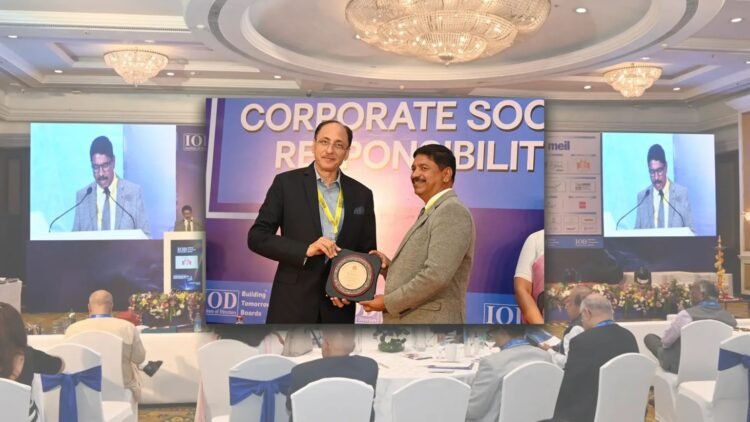
NEW DELHI (India CSR): Essar Foundation underscored the growing importance of robust corporate social responsibility (CSR) and environmental, social, and governance (ESG) frameworks at the 20th International Conference on Corporate Social Responsibility, organised by the Institute of Directors (IOD), India.
The global forum brought together policymakers, corporate leaders, ESG practitioners, and governance experts from across India and abroad to deliberate on emerging trends, regulatory challenges, and opportunities in sustainable development.
Representing Essar Foundation, Dominic D’Souza, Chief Operating Officer – CSR, participated in a high-level panel discussion on “Policy, Compliance & Next-Gen Regulation: Navigating an Evolving CSR and ESG Governance Landscape.”
Global Platform for Policy Dialogue
The IOD conference is regarded as one of the leading platforms for dialogue on CSR and governance, attracting participation from senior government officials, industry leaders, and international experts.
The panel discussion featured distinguished speakers including Gaurav Dayal, IAS, Chairman of Jawaharlal Nehru Port Authority (JNPA); Shwetali Thakare, Chairperson of Maharashtra Water Resources Regulation Authority; Anil Wankhede, Deputy CEO of MHADA; Nitin Mahajan, Deputy Managing Director at SICOM; and Chandni Khosla, Board Advisor at Synergos, UAE.
The session focused on navigating regulatory complexities and aligning corporate strategies with evolving ESG expectations.
Evolving Regulatory Landscape in Focus
During his address, D’Souza highlighted key regulatory developments shaping the CSR and ESG ecosystem in India. He pointed to recent updates under the Companies Act’s CSR Rules, as well as the growing significance of Business Responsibility and Sustainability Reporting (BRSR) and BRSR Core frameworks.
He also referred to global regulatory shifts influencing Indian companies, particularly in areas such as climate governance, sustainability disclosures, and responsible business conduct.
According to him, companies must remain agile and proactive in adapting to these evolving requirements to ensure compliance and maintain stakeholder trust.
Need for Streamlined Compliance and Governance
Emphasising the role of governance, D’Souza called for streamlined compliance mechanisms that can reduce complexity while improving transparency and accountability.
He noted that stronger governance practices can not only enhance ease of doing business but also help organisations manage emerging ESG risks more effectively, particularly in areas related to climate change and social impact.
“Robust governance frameworks are essential to ensure that CSR and ESG initiatives deliver measurable and sustainable outcomes,” he indicated during the discussion.
Call for Greater Collaboration and Harmonisation
D’Souza also stressed the need for greater regulatory harmonisation across industries to avoid duplication and ensure consistency in compliance standards.
He advocated for stronger collaboration between corporates and government agencies to enable scalable and impactful CSR initiatives. Such partnerships, he said, are critical for addressing complex social and environmental challenges.
In addition, he highlighted the importance of strengthening disclosure and assurance frameworks, supported by active board-level oversight, to enhance the credibility of ESG reporting.
Board-Level Integration of ESG Priorities
The panel discussion underscored the increasing alignment between policy frameworks, corporate governance, and sustainable development goals.
Experts agreed that integrating CSR and ESG considerations into board-level strategy and decision-making is no longer optional but essential for long-term business resilience and value creation.
The deliberations reflected a broader shift in corporate India towards embedding sustainability into core business practices, driven by regulatory expectations, investor demand, and societal priorities.
The conference concluded with a strong consensus on the need for continuous dialogue, policy innovation, and leadership commitment to advance the CSR and ESG agenda in India and globally.
(India CSR)