• India CSR Awards 2025
  • India CSR Leadership Summit
  • Guest Posts
  • Login
Wednesday, March 18, 2026
India CSR
  • Home
  • Corporate Social Responsibility
    • Art & Culture
    • CSR Leaders
    • Child Rights
    • Culture
    • Education
    • Gender Equality
    • Around the World
    • Skill Development
    • Safety
    • Covid-19
    • Safe Food For All
  • Sustainability
    • Sustainability Dialogues
    • Sustainability Knowledge Series
    • Plastics
    • Sustainable Development Goals
    • ESG
    • Circular Economy
    • BRSR
  • Corporate Governance
    • Diversity & Inclusion
  • Interviews
  • SDGs
    • No Poverty
    • Zero Hunger
    • Good Health & Well-Being
    • Quality Education
    • Gender Equality
    • Clean Water & Sanitation – SDG 6
    • Affordable & Clean Energy
    • Decent Work & Economic Growth
    • Industry, Innovation & Infrastructure
    • Reduced Inequalities
    • Sustainable Cities & Communities
    • Responsible Consumption & Production
    • Climate Action
    • Life Below Water
    • Life on Land
    • Peace, Justice & Strong Institutions
    • Partnerships for the Goals
  • Articles
  • Events
  • हिंदी
  • More
    • Business
    • Finance
    • Environment
    • Economy
    • Health
    • Around the World
    • Social Sector Leaders
    • Social Entrepreneurship
    • Trending News
      • Important Days
        • Festivals
      • Great People
      • Product Review
      • International
      • Sports
      • Entertainment
    • Case Studies
    • Philanthropy
    • Biography
    • Technology
    • Lifestyle
    • Sports
    • Gaming
    • Knowledge
    • Home Improvement
    • Words Power
    • Chief Ministers
No Result
View All Result
  • Home
  • Corporate Social Responsibility
    • Art & Culture
    • CSR Leaders
    • Child Rights
    • Culture
    • Education
    • Gender Equality
    • Around the World
    • Skill Development
    • Safety
    • Covid-19
    • Safe Food For All
  • Sustainability
    • Sustainability Dialogues
    • Sustainability Knowledge Series
    • Plastics
    • Sustainable Development Goals
    • ESG
    • Circular Economy
    • BRSR
  • Corporate Governance
    • Diversity & Inclusion
  • Interviews
  • SDGs
    • No Poverty
    • Zero Hunger
    • Good Health & Well-Being
    • Quality Education
    • Gender Equality
    • Clean Water & Sanitation – SDG 6
    • Affordable & Clean Energy
    • Decent Work & Economic Growth
    • Industry, Innovation & Infrastructure
    • Reduced Inequalities
    • Sustainable Cities & Communities
    • Responsible Consumption & Production
    • Climate Action
    • Life Below Water
    • Life on Land
    • Peace, Justice & Strong Institutions
    • Partnerships for the Goals
  • Articles
  • Events
  • हिंदी
  • More
    • Business
    • Finance
    • Environment
    • Economy
    • Health
    • Around the World
    • Social Sector Leaders
    • Social Entrepreneurship
    • Trending News
      • Important Days
        • Festivals
      • Great People
      • Product Review
      • International
      • Sports
      • Entertainment
    • Case Studies
    • Philanthropy
    • Biography
    • Technology
    • Lifestyle
    • Sports
    • Gaming
    • Knowledge
    • Home Improvement
    • Words Power
    • Chief Ministers
No Result
View All Result
India CSR
No Result
View All Result
Home SDGs Gender Equality

Digital Gender Atlas for Girls Education in India Launched

India CSR by India CSR
March 9, 2015
in Gender Equality, More
Reading Time: 3 mins read
Share Share Share Share
WhatsApp icon
WhatsApp — Join Us
Instant updates & community
Google News icon
Google News — Follow Us
Get our articles in Google News feed

genderc atlas-baner1India CSR News Network

NEW DELHI :The Ministry of Human Resource Development, Department of School Education and Literacy, presented the Digital Gender Atlas for Advancing Girls’ Education in India to the media in New Delhi today. The Secretary, School Education and Literacy, Ms. Vrinda Sarup was also present on the occasion. The tool, which has been developed with the support of UNICEF, will help identify low performing geographic pockets for girls, particularly from marginalized groups such as scheduled castes, schedule tribes and Muslim minorities, on specific gender related education indicators.

The Atlas is placed on the MHRD website and available and ready to use by States/Districts/Blocks education administrators or any other interested group. In order to plan and execute educational interventions, the purpose of the Gender Atlas is to help identify and ensure equitable education with a focus on vulnerable girls, including girls with disabilities. To ensure this is feasible, the Gender Atlas has been developed as a hands-on management tool to enable critical decisions and actions in pockets where gaps are to be met.

The Atlas provides comparative analysis of individual gender related indicators over three years and that enables a visual assessment of the change and an understanding of whether some intervention introduced in a geography at a particular point in time has worked or not. It is constructed on an open source platform with an inbuilt scope of updating data by authorized persons to retain its dynamic character.

Book Launch Ceremony
ADVERTISEMENT

Using available Government data such as the Unified District Information System for Education (U-DISE) data (2011-2014), Census 2011 data and District Level Health Survey (DLHS) 2007-08, the Gender Atlas enables the user to navigate between geographical representation and numeric data at state, district and block levels and gives information on key indicators for girls’ education at primary, upper primary and secondary level. No primary data has been generated for the development of the atlas.

India has achieved high enrollment rates for girls at primary and upper primary levels of schooling. However, at the secondary level girls’ enrollment remains lower. While in upper primary the representation of girls in the total enrollment is 48.66%, the percentage in secondary is 47.29%. Girls comprise half the population of school age children, and therefore, it is important to understand the multiple vulnerabilities they face in different areas in order to plan and prioritize inclusive interventions. Also present on the occasion were Additional Secretary (School Education and Literacy), and other senior officers and dignitaries from the Ministry of HRD as well as the UNICEF. The Media persons from various newspapers organizations also attended the event.

components of the Digital Gender Atlas

1. The main components of the Gender Atlas are : (i) Composite Gender Ranking (ii) Trend Analysis of Gender Indicators (iii) Vulnerabilities based on educational indicators in districts with substantial tribal, schedule caste, minority population in educationally backward blocks and in left wing extremist districts, and the low sex ratio districts selected under Beti Bachao Beti Padhao programme.

2. Composite Gender Ranking: Selected gender related indicators have been identified for primary, upper primary and secondary education. A composite gender index has been developed using the formulae that are used for calculating the EDI in DISE. But for gender elated indicators. Accordingly, the selected gender indicators have been grouped into four – Access, Infrastructure, Teachers and Outcomes.  The Atlas provides an aggregated picture of performance through a comparative visualization of composite gender index based quartile ranking of gender related indicators at National, State, District and Block levels.

3.Trend Analysis for Gender Related Indicators: The Atlas enables a trend analysis and tracking of performance of individual gender related indicators (that have been used for the composite gender ranking) across a period of three years

4.Spatial Display of Pockets with Multiple Disadvantages Related to Education: Spatial identification of pockets in states or blocks in districts where juxtaposition of key relevant gender indicators reveal maximum disadvantages, viz., education development

5.Vulnerabilities: This component of the Atlas visualizes the vulnerability status of an area based on a composite index of three broad indicators (i) rural female literacy – from Census 2011 (ii) percentage girls/boys married below the legal age of marriage – DLHS and (iii) working children (bifurcated by gender and age groups of 5-14 years and 15-19 years – Census of India 2011. These maps are available up to the district level.

6. Children with Disabilities: This part of the Atlas visualizes the performance status of a single indicators related to children with disabilities, particularly girls, based on quartile ranking across three years i.e. 2011-12, 2012-13 and 2013-14.  The performance status of an individual indicator can be visualized at state and district level.


PIB
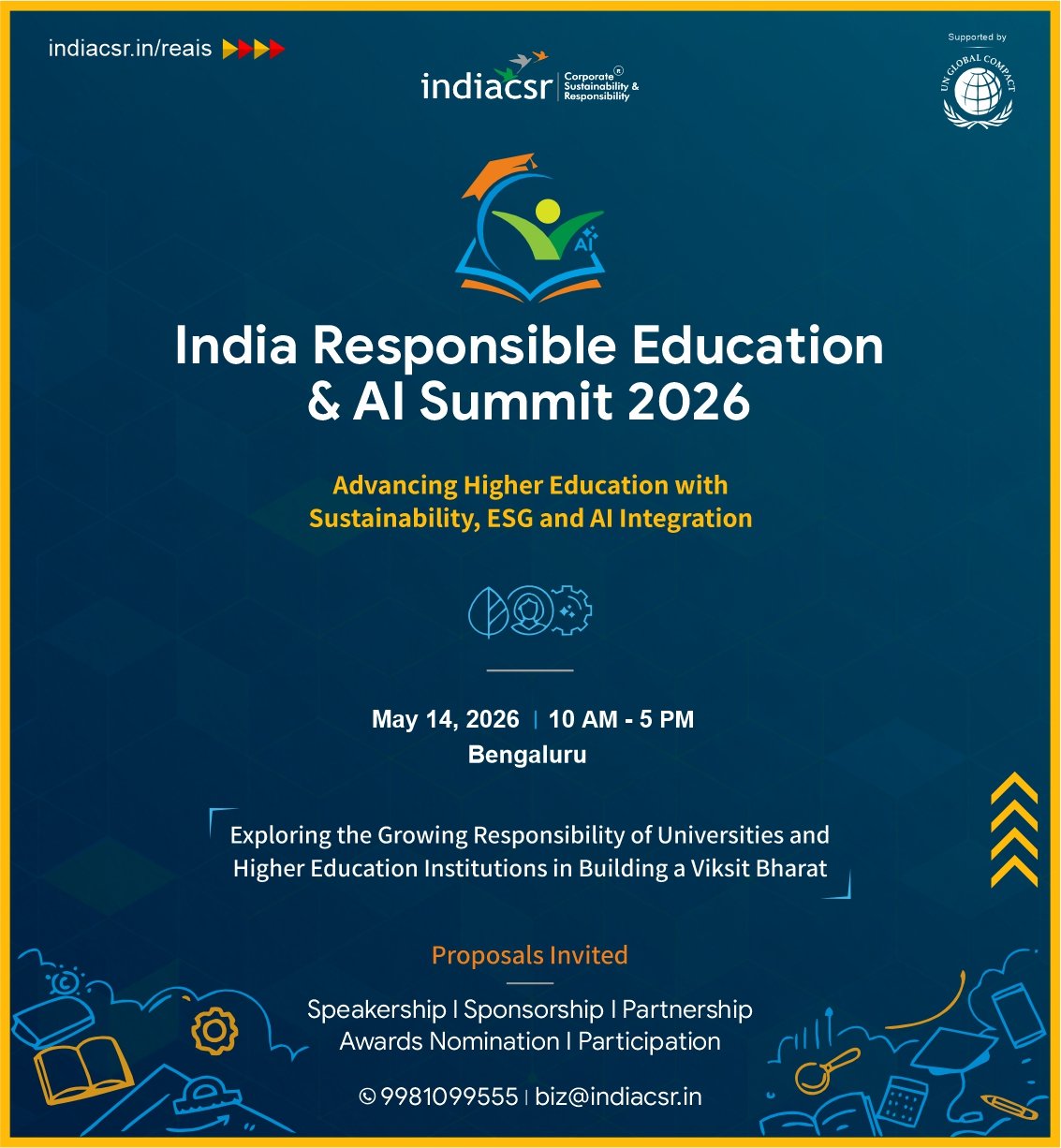
India Responsible Education & AI Summit 2026
ADVERTISEMENT
Ambedkar Chamber
ADVERTISEMENT
ESG Professional Network
ADVERTISEMENT
India Sustainability Awards 2026
ADVERTISEMENT
India CSR Image 1 India CSR Image 2

CSR, Sustainability, and ESG success stories hindustan zinc
ADVERTISEMENT
India CSR

India CSR

India CSR is the largest media on CSR and sustainability offering diverse content across multisectoral issues on business responsibility. It covers Sustainable Development, Corporate Social Responsibility (CSR), Sustainability, and related issues in India. Founded in 2009, the organisation aspires to become a globally admired media that offers valuable information to its readers through responsible reporting.

Related Posts

Alleima India’s CSR initiative under Damini Sakhi empowers women, aligning with SDG 5 by fostering safety and equality in Pune.
Gender Equality

CSR Drives Women’s Safety: Alleima India Expands Initiative in Pune

12 months ago
India’s Veteran journalist Vinod Dua passes away
More

India’s Veteran journalist Vinod Dua passes away

4 years ago
Diageo India introduces 26-week Paternity Leave under Family Leave Policy
Gender Equality

Diageo India introduces 26-week Paternity Leave under Family Leave Policy

5 years ago
India CSR
Gender Equality

Gates Foundation Commits $2.1 Billion to Advance Gender Equality Globally

5 years ago
Women farmers- the backbone of India’s agrarian economy, yet the unnoticed lot
Articles

Women farmers- the backbone of India’s agrarian economy, yet the unnoticed lot

5 years ago
India CSR
Gender Equality

P&G investing Rs.300 cr to work with women-owned businesses

5 years ago
Load More
India Responsible Education & AI Summit 2026
ADVERTISEMENT
Ambedkar Chamber
ADVERTISEMENT
India Sustainability Awards 2026
ADVERTISEMENT

LATEST NEWS

4Square Estates Targets 10 Million Sq Ft Development Pipeline in FY 2026–27

CSR: MSD India, Smile Foundation Award 50 Pharmacy Scholarships

CSR: HDFC Bank Parivartan Skilling Centre to Train 850 Youth in Bareilly

EAU LAA LAA: A Fragrance Brand Built on Emotion, Memory, and Identity

CSR: L&T Finance Empowers 100+ Women with Riding Skills Program

CSR: NIIT Foundation, Mahindra Finance Mark Financial Literacy Milestone Drive

Economy India Largest Media on Indian Economy and Business
ADVERTISEMENT
Ad 1 Ad 2 Ad 3
ADVERTISEMENT
ESG Professional Network
ADVERTISEMENT

TOP NEWS

What is the Future of Daughters from Red-Light Areas in India?

Why Traditional Brass Cookware Is Making a Comeback — And How Royal Stuffs Is Leading the Shift

Vedanta Power Achieves Zero Fatalities Across Plants in FY26

Energy Security in an Age of Conflict—The Case for Accelerating the Transition

Rapidx Car Rental Announces Launch of Self Drive Car Rentals in Manali

Interview: Meha Patel on Zydus Foundation’s Vision for Sustainable Social Impact

Load More
STEM Learning STEM Learning STEM Learning
ADVERTISEMENT

Interviews

Kayana Monga, a student at Shiv Nadar School, Noida, Founder - Project Muskan
Interviews

An Interview with Student Changemaker Kayana Monga Working on Rural Mental Health

by India CSR
March 12, 2026

Student-led Project Muskan brings mental health awareness and care to rural children across India.

Read moreDetails
Meha Patel, Vice Chairperson of Zydus Foundation

Interview: Meha Patel on Zydus Foundation’s Vision for Sustainable Social Impact

March 11, 2026
Prachi Kaushik, Founder and Director of Vyomini Social Enterprise

Menstrual Hygiene Awareness Must Go Beyond Pad Distribution: Prachi Kaushik, Vyomini Social Enterprise

March 8, 2026
Prerrit Mansingh, Secretary, Aayom Welfare Society

Scaling Compassion into Structured Social Change: An Interview with Prerrit Mansingh

February 28, 2026
Load More
Facebook Twitter Youtube LinkedIn Instagram
India CSR Logo

India CSR is the largest tech-led platform for information on CSR and sustainability in India offering diverse content across multisectoral issues. It covers Sustainable Development, Corporate Social Responsibility (CSR), Sustainability, and related issues in India. Founded in 2009, the organisation aspires to become a globally admired media that offers valuable information to its readers through responsible reporting. To enjoy the premium services, we invite you to partner with us.

Follow us on social media:


Dear Valued Reader

India CSR is a free media platform that provides up-to-date information on CSR, Sustainability, ESG, and SDGs. We need reader support to continue delivering honest news. Donations of any amount are appreciated.

Help save India CSR.

Donate Now

Donate at India CSR

  • About India CSR
  • Team
  • India CSR Awards 2025
  • India CSR Leadership Summit
  • India Responsible Education & AI Summit 2026
  • Partnership
  • Guest Posts
  • Services
  • ESG Professional Network
  • Content Writing Services
  • Business Information
  • Contact
  • Privacy Policy
  • Terms of Use
  • Donate

Copyright © 2025 - India CSR | All Rights Reserved

Welcome Back!

Login to your account below

Forgotten Password?

Retrieve your password

Please enter your username or email address to reset your password.

Log In
No Result
View All Result
  • Home
  • Corporate Social Responsibility
    • Art & Culture
    • CSR Leaders
    • Child Rights
    • Culture
    • Education
    • Gender Equality
    • Around the World
    • Skill Development
    • Safety
    • Covid-19
    • Safe Food For All
  • Sustainability
    • Sustainability Dialogues
    • Sustainability Knowledge Series
    • Plastics
    • Sustainable Development Goals
    • ESG
    • Circular Economy
    • BRSR
  • Corporate Governance
    • Diversity & Inclusion
  • Interviews
  • SDGs
    • No Poverty
    • Zero Hunger
    • Good Health & Well-Being
    • Quality Education
    • Gender Equality
    • Clean Water & Sanitation – SDG 6
    • Affordable & Clean Energy
    • Decent Work & Economic Growth
    • Industry, Innovation & Infrastructure
    • Reduced Inequalities
    • Sustainable Cities & Communities
    • Responsible Consumption & Production
    • Climate Action
    • Life Below Water
    • Life on Land
    • Peace, Justice & Strong Institutions
    • Partnerships for the Goals
  • Articles
  • Events
  • हिंदी
  • More
    • Business
    • Finance
    • Environment
    • Economy
    • Health
    • Around the World
    • Social Sector Leaders
    • Social Entrepreneurship
    • Trending News
      • Important Days
      • Great People
      • Product Review
      • International
      • Sports
      • Entertainment
    • Case Studies
    • Philanthropy
    • Biography
    • Technology
    • Lifestyle
    • Sports
    • Gaming
    • Knowledge
    • Home Improvement
    • Words Power
    • Chief Ministers

Copyright © 2025 - India CSR | All Rights Reserved

This website uses cookies. By continuing to use this website you are giving consent to cookies being used. Visit our Privacy and Cookie Policy.