

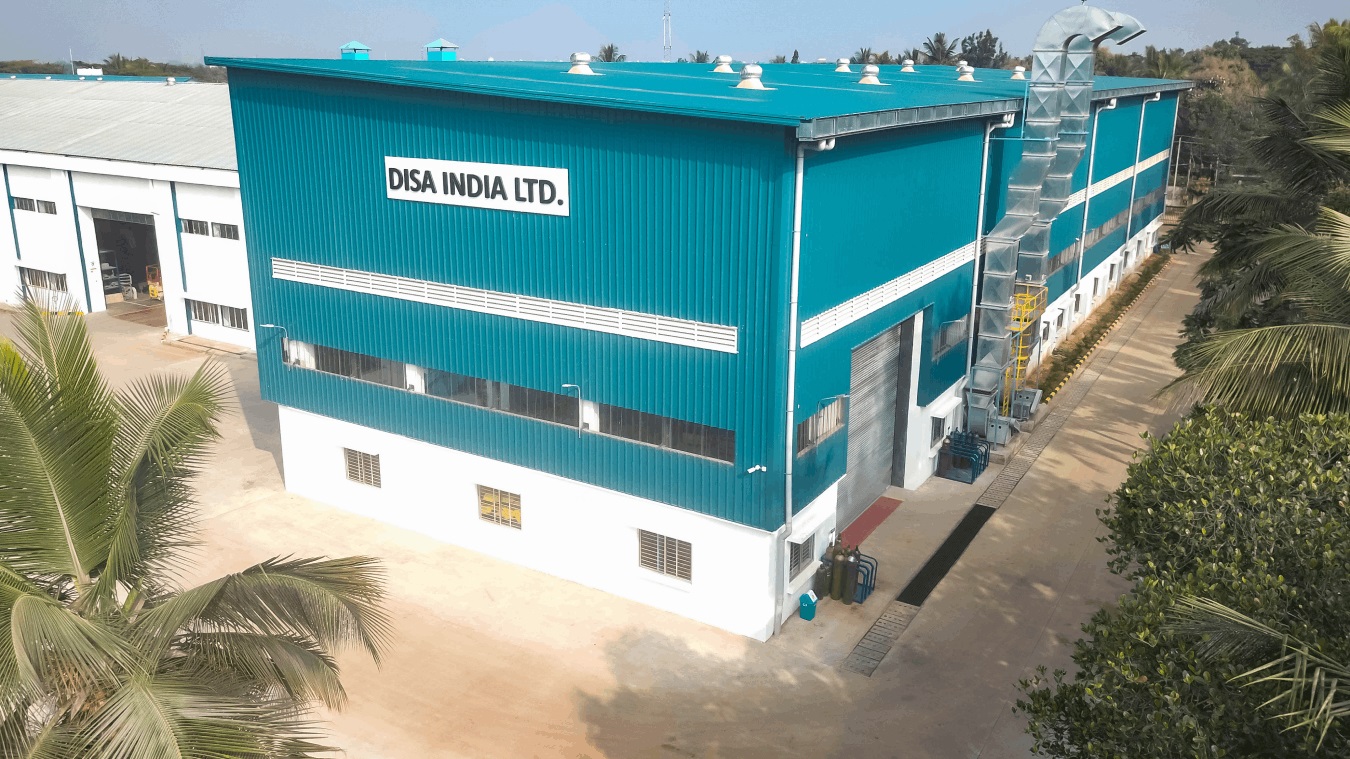


The foundry equipment manufacturer fully utilised its CSR obligation on education, school infrastructure and environmental initiatives in Karnataka.
NEW DELHI (India CSR): DISA India Limited, a foundry equipment and industrial machinery manufacturer, spent Rs 1.13 crore on Corporate Social Responsibility (CSR) activities in FY 2025-26, supporting 501 students through scholarships, upgrading school infrastructure near Tumkur and planting 2,000 native saplings in Karnataka, according to the company’s annual report.
The company reported an average net profit of Rs 56.29 crore for the three immediately preceding financial years for the purpose of calculating its CSR obligation under Section 135 of the Companies Act, 2013.
Based on the statutory 2% requirement, DISA India’s prescribed CSR obligation for FY 2025-26 stood at Rs 1,12,62,500, or about Rs 1.13 crore.
The company reported spending the entire amount during the year, with no unspent CSR balance and no administrative overheads charged against the CSR budget.
The main focus areas were education, scholarships, school infrastructure and environmental sustainability.
CSR Spending
Under Section 135 of the Companies Act, 2013, eligible companies are required to spend at least 2% of the average net profits of the three preceding financial years on approved CSR activities.
For DISA India Limited, the average net profit for this purpose stood at Rs 56.29 crore.
The resulting CSR obligation for FY 2025-26 was Rs 1.13 crore.
The company reported that the full amount was spent during the year.
No amount remained unspent at the end of the financial year, and no transfer to an Unspent CSR Account was required.
The source material also states that no administrative overheads were charged to the CSR budget.
In the previous financial year, FY 2024-25, the company had reported CSR expenditure of about Rs 98 lakh.
The increase in FY 2025-26 therefore reflects a higher statutory obligation linked to the company’s average profitability.
ALSO READ | Blue Star Spends Rs 10.21 Cr on CSR in FY 2025-26, Exceeds Net Obligation
Key Facts: DISA India Ltd. CSR Spending Report 2026
| Particulars | Details |
|---|---|
| Company | DISA India Limited |
| Financial Year | FY 2025-26 |
| Business Sector | Foundry Equipment and Industrial Machinery |
| Average Net Profit for CSR | Rs 56.29 Cr |
| Prescribed CSR Obligation | Rs 1.13 Cr |
| Actual CSR Spending | Rs 1.13 Cr |
| Unspent CSR Amount | Nil |
| Administrative Overheads | Nil |
| Previous-Year CSR Spend | Rs 98 lakh |
| Total Scholarship Beneficiaries | 501 students |
| Local Scholarship Beneficiaries | 441 students |
| FFEIT Engineering Students | 50 |
| Jan Johansen Scholarship Beneficiaries | 10 |
| Jan Johansen Scholarship Spend | Rs 7.5 lakh |
| Schools Upgraded | 8 |
| Saplings Planted in FY 2025-26 | 2,000 |
| Cumulative Trees Planted | 6,000 |
| Main CSR Geography | Karnataka |
| Key Operating Location | Tumkur |
| CSR Committee Chair | Ranjan Sen |
Scholarship Support
Education remained the main focus of DISA India’s CSR programme.
The company awarded scholarships to 501 needy and meritorious students during FY 2025-26.
Of these, 441 students were identified through educational institutions near the company’s Tumkur manufacturing facility.
The scholarships supported students up to Class XII as well as diploma students in engineering-related courses.
The company’s approach combined local outreach with institutional partnerships, allowing it to support students from both school and higher education backgrounds.
According to the report, the Norican Scholarship Programme has supported 4,888 students since inception.
Engineering Education
DISA India also partnered with the Foundation for Excellence India Trust, or FFEIT, under a Career Excellence Programme.
Through this initiative, 50 engineering students received financial assistance.
The programme focused on students from economically weaker backgrounds pursuing graduate engineering education.
The report states that the partnership with FFEIT has cumulatively supported 642 engineering undergraduates.
The available disclosure does not provide details on graduation rates, academic performance, job placement or post-course income.
Such information would help assess the long-term impact of the scholarship programme.
Technical Scholarships
The company also continued the Jan Johansen DISAMATIC Scholarship in partnership with the National Institute of Advanced Manufacturing Technology, formerly NIFFT, in Ranchi.
The programme supported 10 meritorious engineering students during FY 2025-26.
DISA India allocated Rs 7.5 lakh to the scholarship.
The programme is focused on students pursuing technical education in areas linked to metallurgy, foundry technology and advanced manufacturing.
This reflects a closer connection between the company’s industrial sector and its education-focused CSR initiatives.
However, scholarship outcomes such as employment, higher studies and retention in the foundry sector were not disclosed in the supplied material.
School Upgrades
DISA India also supported infrastructure improvements in eight educational institutions near its Tumkur facility.
The interventions included drinking water systems, sanitation facilities, digital learning equipment and classroom infrastructure.
Schools received items such as audio-visual projectors, computers, laboratory equipment, desks and benches.
The company also supported sanitation infrastructure, including toilet facilities for boys and girls.
These interventions were aimed at improving the physical learning environment for students in schools near the company’s operating location.
The annual report does not provide the exact expenditure for each school or the number of students benefiting from the infrastructure improvements.
A school-wise breakdown would provide clearer evidence of project reach.
Environmental Action
Environmental sustainability formed the second major pillar of DISA India’s CSR programme.
The company partnered with That’s Eco Foundation in Bengaluru for tree plantation and urban forestry activities.
During FY 2025-26, 2,000 native saplings were planted under the programme.
The initiative used dense plantation approaches, including the Miyawaki method, to create compact native forests in urban and peri-urban locations.
According to the report, DISA India has planted a cumulative 6,000 trees in Karnataka over the past four years.
Of these, 4,000 trees were planted between FY 2022-23 and FY 2024-25, while another 2,000 were added in FY 2025-26.
Miyawaki Forests
The Miyawaki method involves planting native species at relatively high density to create rapidly developing forest patches.
The approach can be useful in areas where land availability is limited and biodiversity restoration is a priority.
DISA India’s programme reportedly included different ecological settings such as wetland areas, native forest patches and grassland environments.
For evaluating long-term environmental impact, plantation numbers should ideally be supported with survival rates, species diversity, canopy growth and maintenance data.
The supplied disclosure does not provide these indicators.
Future reporting could include survival percentages, area restored and biodiversity outcomes.
CSR Governance
DISA India’s CSR programme was overseen by a dedicated board-level CSR Committee.
The committee was chaired by Ranjan Sen, a Non-Executive Independent Director.
Other members included Lokesh Saxena, Managing Director and Chief Executive Officer, and Ulla Hartvig Plathe Tønnesen, Non-Executive Director.
The committee held a formal meeting on February 4, 2026.
According to the information provided, all members attended the meeting.
The committee is responsible for reviewing the CSR policy, recommending expenditure, selecting projects and monitoring implementation.
The company reported that all CSR spending was directed towards activities permitted under Schedule VII of the Companies Act.
Financial Context
DISA India reported standalone revenue from operations of Rs 424.70 crore in FY 2025-26.
This was higher than the Rs 384.69 crore reported in the previous financial year.
Consolidated revenue stood at Rs 425.10 crore.
The company’s standalone profit after tax was reported at Rs 53.92 crore.
These figures provide broader context for the company’s financial position but are separate from the statutory calculation used to determine CSR obligations.
The company’s CSR obligation is based on the prescribed average net profit methodology under the Companies Act, rather than current-year revenue or profit alone.
Dividend Context
The company’s board also recommended a final dividend of Rs 200 per equity share of Rs 10 face value.
The total proposed dividend outlay was reported at Rs 29.08 crore.
Dividend distribution and CSR obligations are governed separately and should not be directly compared as measures of social responsibility.
The CSR requirement remains a statutory obligation calculated independently under Section 135.
Impact Evidence
DISA India’s FY 2025-26 CSR disclosure provides clear information on expenditure and several project-level outputs.
These include 501 scholarship recipients, infrastructure improvements at eight educational institutions and 2,000 saplings planted.
The company also provides cumulative figures for its scholarship and plantation programmes.
However, most of the reported indicators measure programme reach rather than long-term outcomes.
For scholarships, useful future indicators would include course completion, academic progression and employment.
For school infrastructure, attendance, enrolment and facility utilisation would be relevant.
For plantation projects, survival rates and biodiversity outcomes would provide stronger evidence of environmental impact.
Such information would make the CSR report more useful for researchers, policymakers and corporate sustainability professionals.
Frequently Asked Questions
How much did DISA India spend on CSR in FY 2025-26?
DISA India reported CSR expenditure of about Rs 1.13 crore.
What was DISA India’s prescribed CSR obligation?
The company’s prescribed CSR obligation was Rs 1,12,62,500, or about Rs 1.13 crore.
Was any CSR amount left unspent?
No. The company reported that the full CSR obligation was utilised during the year.
How many students received scholarships?
DISA India supported 501 students through different scholarship programmes.
How many schools received infrastructure support?
The company reported infrastructure upgrades at eight educational institutions near Tumkur.
How many saplings were planted?
DISA India planted 2,000 native saplings during FY 2025-26.
Copyright@India CSR®



