

• India CSR Awards 2026
  • India CSR Leadership Summit
  • Guest Posts
Monday, August 17, 2026
India CSR
  • Home
  • Corporate Social Responsibility
    • Art & Culture
    • CSR Leaders
    • Child Rights
    • Culture
    • Education
    • Gender Equality
    • Around the World
    • Skill Development
    • Safety
    • Covid-19
    • Safe Food For All
  • Sustainability
    • Sustainability Dialogues
    • Sustainability Knowledge Series
    • Plastics
    • Sustainable Development Goals
    • ESG
    • Circular Economy
    • BRSR
  • Corporate Governance
    • Diversity & Inclusion
  • Interviews
  • SDGs
    • No Poverty
    • Zero Hunger
    • Good Health & Well-Being
    • Quality Education
    • Gender Equality
    • Clean Water & Sanitation – SDG 6
    • Affordable & Clean Energy
    • Decent Work & Economic Growth
    • Industry, Innovation & Infrastructure
    • Reduced Inequalities
    • Sustainable Cities & Communities
    • Responsible Consumption & Production
    • Climate Action
    • Life Below Water
    • Life on Land
    • Peace, Justice & Strong Institutions
    • Partnerships for the Goals
  • Articles
  • Events
  • हिंदी
  • More
    • Business
    • Finance
    • Environment
    • Economy
    • Health
    • Around the World
    • Social Sector Leaders
    • Social Entrepreneurship
    • Trending News
      • Important Days
        • Festivals
      • Great People
      • Product Review
      • International
      • Sports
      • Entertainment
    • Case Studies
    • Philanthropy
    • Biography
    • Technology
    • Lifestyle
    • Sports
    • Gaming
    • Knowledge
    • Home Improvement
    • Words Power
    • Chief Ministers
No Result
View All Result
  • Home
  • Corporate Social Responsibility
    • Art & Culture
    • CSR Leaders
    • Child Rights
    • Culture
    • Education
    • Gender Equality
    • Around the World
    • Skill Development
    • Safety
    • Covid-19
    • Safe Food For All
  • Sustainability
    • Sustainability Dialogues
    • Sustainability Knowledge Series
    • Plastics
    • Sustainable Development Goals
    • ESG
    • Circular Economy
    • BRSR
  • Corporate Governance
    • Diversity & Inclusion
  • Interviews
  • SDGs
    • No Poverty
    • Zero Hunger
    • Good Health & Well-Being
    • Quality Education
    • Gender Equality
    • Clean Water & Sanitation – SDG 6
    • Affordable & Clean Energy
    • Decent Work & Economic Growth
    • Industry, Innovation & Infrastructure
    • Reduced Inequalities
    • Sustainable Cities & Communities
    • Responsible Consumption & Production
    • Climate Action
    • Life Below Water
    • Life on Land
    • Peace, Justice & Strong Institutions
    • Partnerships for the Goals
  • Articles
  • Events
  • हिंदी
  • More
    • Business
    • Finance
    • Environment
    • Economy
    • Health
    • Around the World
    • Social Sector Leaders
    • Social Entrepreneurship
    • Trending News
      • Important Days
        • Festivals
      • Great People
      • Product Review
      • International
      • Sports
      • Entertainment
    • Case Studies
    • Philanthropy
    • Biography
    • Technology
    • Lifestyle
    • Sports
    • Gaming
    • Knowledge
    • Home Improvement
    • Words Power
    • Chief Ministers
No Result
View All Result
India CSR
No Result
View All Result
Home Business

How Organizations Can Use Seedance 2.5 to Plan Responsible Public Awareness Videos

India CSR by India CSR
August 17, 2026
in Business
Reading Time: 8 mins read
India CSR
Share Share Share Share
WhatsApp icon
WhatsApp — Join Us
Instant updates & community
Google News icon
Google News — Follow Us
Get our articles in Google News feed
india csr awards
ADVERTISEMENT

Public awareness videos have a difficult job.

They need to catch attention quickly, but the issues behind them are rarely simple.

19th India CSR Leadership Summit 2026
ADVERTISEMENT

A CSR team may be encouraging water conservation. A nonprofit might be explaining a community health initiative. Another organization could be promoting digital literacy, financial awareness, safer behavior, or environmental responsibility.

Short video can make these messages easier to notice.

But making something shorter also creates risk.

Context can disappear. A visual shortcut can become a stereotype. An emotional scene can make a claim feel stronger than the evidence behind it.

For CSR teams, communication is part of the intervention. A campaign can lose trust even when its intentions are good if communities feel simplified, exaggerated, or spoken for.

So before asking how to make an awareness video more dramatic, there is a better question:

What must remain true when we make this message easier to understand?

Start With the Public-Interest Goal

Consider a water-conservation campaign.

A vague creative brief might say:

“Create an emotional video about saving water.”

That leaves too much unresolved.

A better brief defines what the audience should understand or do. Perhaps the campaign wants households to notice leaks, reduce unnecessary running water, and know where to find local guidance.

Now the creative team has boundaries.

The video can still be emotional or visually interesting, but its purpose has been decided before the visuals.

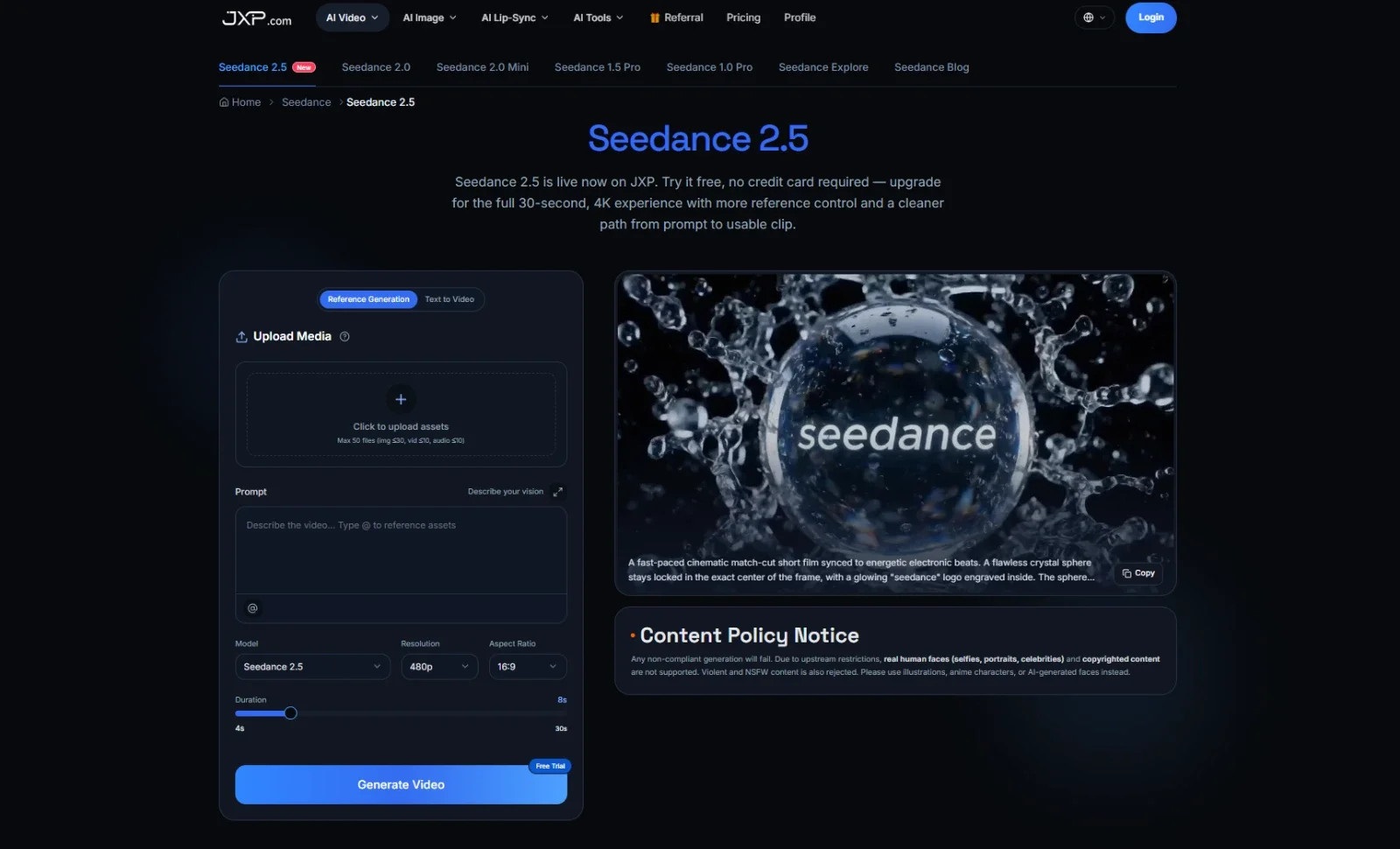
This is where Seedance 2.5 can have a practical planning role. Its multimodal reference approach gives teams room to explore scene order, environments, visual tone, audio cues, and transitions around an existing campaign brief rather than asking the model to decide what a social issue means.

The distinction matters:

AI can explore the representation. The organization must own the claim.

Separate What Is True From How It Looks

For public-interest communication, some elements should not drift.

Verified facts, dates, locations, eligibility information, official contacts, health or safety guidance, and claims about program impact should come from reliable sources.

The creative treatment has more room.

Teams can experiment with pacing, transitions, visual metaphors, scene order, abstract environments, color direction, and permitted fictional characters.

A visually convincing scene is not automatically evidence.

If an environmental campaign discusses a local water shortage, a dramatic generated landscape should not be presented as documentary footage of that location.

If a health-awareness campaign uses statistics, those numbers should come from verified sources rather than the video model.

The creative layer can support the message.

It should not quietly rewrite it.

Do Not Turn Communities Into Visual Shortcuts

Public-awareness campaigns often deal with experiences that cannot be reduced to one image.

A livelihoods campaign, for example, can unintentionally reduce a community to images of hardship while leaving out agency, work, family life, or local knowledge.

A disability campaign can fall into the same trap if every story is framed around helplessness.

Mental-health communication can become misleading when one visible behavior is presented as what a condition is supposed to look like.

The issue is not only accuracy.

It is dignity.

A useful review question is:

Would the people represented by this campaign recognize themselves fairly in the way the issue has been framed?

That question can reveal problems that a normal creative review may miss.

Permission, Privacy and Platform Eligibility Are Different Checks

Responsible planning begins with the material a team intends to use.

An organization may own a photograph or have permission to publish it without that material necessarily being appropriate for an external AI workflow.

The JXP Seedance workflow discussed here does not support real human faces, including selfies, portraits, or celebrity likenesses.

A CSR team should therefore not assume that photographs of beneficiaries, volunteers, employees, community leaders, or spokespeople can be used simply because the organization has permission to publish them.

When a planning draft needs a human-like presence, teams should work with platform-supported illustrations, synthetic characters, or other permitted fictional material. If the final campaign genuinely needs real testimony or identifiable participants, those materials should be created through an appropriate production process with proper consent.

There is another boundary that matters especially in CSR, nonprofit, health, and community work: sensitive personal information should not become generation material.

Sensitive personal data, case records, health or disability information, financial details, family records, private addresses, immigration or legal status, and images of children or vulnerable participants should not be uploaded as generation references.

Public availability or internal access does not make such material appropriate for external AI processing.

For example, a nonprofit may have legitimate internal access to beneficiary case records. A health program may hold participant information. A community organization may have photographs collected during fieldwork.

That does not mean those materials belong in an AI video workflow.

Before uploading any reference, teams should therefore ask three separate questions:

Rights: Do we have the legal and contractual rights to use this material?

Privacy: Is this material appropriate to share with an external AI system at all?

Platform eligibility: Does the selected platform permit this type of input?

The same checks apply to photographs, footage, illustrations, music, maps, sound recordings, documents, and previous campaign assets.

This is also where responsible AI video planning has to include more than the creative brief. Rights, privacy, dignity, and platform eligibility need to be considered before generation begins.

Review the Representation, Not Just the Video

Public-awareness content should not be approved only by the people who created it.

Program teams understand what happens on the ground. Subject-matter experts can verify health, environmental, educational, or financial claims. Community-facing staff may notice imagery or language that feels unrealistic.

For sensitive campaigns, people with relevant lived or community experience may also notice assumptions that an outside creative team would miss.

The review should therefore go beyond:

“Does this video look good?”

Ask instead:

Has a complex community been reduced to one visual stereotype?

Could synthetic imagery be mistaken for documentary evidence?

These questions keep responsibility with the organization rather than transferring it to the model.

Give Viewers a Path to Verified Information

A short awareness video should rarely be the only source of important information.

If a campaign covers health, safety, public services, financial decisions, eligibility, deadlines, or program access, viewers should have a clear route to complete and verified information.

The video can introduce the issue.

An official page, guide, or program resource can provide the detail.

This allows a short video to remain focused without pretending that a complex social issue can be fully explained in thirty seconds.

Responsible Does Not Mean Boring

Responsible public-awareness videos can still be creative.

They can use visual metaphors, movement, contrast, sound, and storytelling. They can make an overlooked issue feel immediate.

The difference is that creativity operates inside clear boundaries.

Facts remain verified.

Communities are represented with dignity.

Synthetic material is not confused with evidence.

Sensitive personal information stays out of generation references.

Rights, privacy, consent, and platform eligibility are considered before generation.

And the organization remains responsible for what the campaign communicates.

That is the more useful role for AI video in public-interest work.

Not to decide what an organization should say.

Not to manufacture authenticity.

But to help teams explore how an important message might be seen and understood before the final campaign is produced.

The question worth asking is simple:

Can we make this message easier to see without making it less true?
SETU Bandhan
ADVERTISEMENT
India CSR Image 1 India CSR Image 2

CSR, Sustainability, and ESG success stories hindustan zinc
ADVERTISEMENT
India CSR

India CSR

India CSR® is the largest media on CSR and sustainability offering diverse content across multisectoral issues on business responsibility. It covers Sustainable Development, Corporate Social Responsibility (CSR), Sustainability, and related issues in India. Founded in 2009, the organisation aspires to become a globally admired media that offers valuable information to its readers through responsible reporting.

Related Posts

India CSR
Business

Aether Mind Technologies Launches VentOut, Introducing the World’s First Roleplay-Based Emotional Wellness Platform

India CSR
Business

Udaipur-Based 3i Planet Completes 12 Years, Crosses 1,500 Web Design Projects for Businesses Across India

India CSR
Business

Zeus Hygia’s Metaberine® Clinical Study Published, Demonstrating Metabolic Health Benefits at just 200 mg Daily

Building Maintenance Reduces
Business

How Regular Building Maintenance Reduces Resource Waste

House in Delhi: A Smart Investment for Comfortable Urban Living
Business

House in Delhi: A Smart Investment for Comfortable Urban Living

Wind Turbines
Business

Wind Turbines Explained: Types, Technology & How They Power India

Load More
bba
ADVERTISEMENT

Interviews

Akanksha Sharma, Vice President – Sustainability, Subcontinent, Central Asia, Levant and; Egypt DP World
Interviews

DP World’s Sustainability Strategy: Building Greener, Inclusive Logistics in India

by India CSR

Responsible leadership means taking a long-term view, acting with transparency and ensuring that growth creates value for people, communities and...

Read moreDetails
Dr. V.K. Raju

Every Premature Baby Deserves the Right to Sight: Dr. V.K. Raju, Chairman, Goutami Eye Institute & Founder, Eye Foundation of America

India CSR Interview with George Muthoot George, Deputy Managing Director of Muthoot Finance

Muthoot Finance CSR Is About Empowerment, Not Dependency: George Muthoot George

Hardeep S. Brar - BMW Group India CEO

Skills Are the Starting Line, Jobs Are the Finish Line: BMW Group India CEO Hardeep S. Brar

Load More
Ad 1 Ad 2 Ad 3 Ad 4 Ad 5 Ad 6
ADVERTISEMENT

CSR UPDATES

CSR: GMRVF Skill Development Centre Aims to Train up to 1,000 Youth Annually

Bharat Forge Releases CSR Report 2025-26, Highlights Impact Across Rural India

Jindal Steel Spends Rs 175.84 Cr on CSR in FY 2025-26

Indian Overseas Bank Extends CSR Support for School Bus to Aid Economically Backward Students

We are Contributing to the Foundations of a Stronger India: Naveen Jindal, Chairman, Jindal Steel

Bank of Baroda Celebrates Independence Day with Patriotic Fervour

STEM Learning STEM Learning STEM Learning
ADVERTISEMENT
Facebook Twitter Youtube LinkedIn Instagram
India CSR Logo

India CSR is the largest tech-led platform for information on CSR and sustainability in India offering diverse content across multisectoral issues. It covers Sustainable Development, Corporate Social Responsibility (CSR), Sustainability, and related issues in India. Founded in 2009, the organisation aspires to become a globally admired media that offers valuable information to its readers through responsible reporting. To enjoy the premium services, we invite you to partner with us.

Follow us on social media:

Subscribe to Our Newsletter

Don't miss out on the latest updates in corporate social responsibility. Subscribe to our newsletter at indiacsr.in and be part of the positive change.
Please enable JavaScript in your browser to complete this form.
Loading

  • About India CSR
  • Team
  • India CSR Awards 2026
  • India CSR Leadership Summit
  • Partnership
  • Guest Posts
  • Services
  • ESG Professional Network
  • Content Writing Services
  • Business Information
  • Contact
  • Privacy Policy
  • Terms of Use
  • Donate

Copyright © 2026 - India CSR | All Rights Reserved

18th CSR Leadership Summit 2026
APPLY NOW
No Result
View All Result
  • Home
  • Corporate Social Responsibility
    • Art & Culture
    • CSR Leaders
    • Child Rights
    • Culture
    • Education
    • Gender Equality
    • Around the World
    • Skill Development
    • Safety
    • Covid-19
    • Safe Food For All
  • Sustainability
    • Sustainability Dialogues
    • Sustainability Knowledge Series
    • Plastics
    • Sustainable Development Goals
    • ESG
    • Circular Economy
    • BRSR
  • Corporate Governance
    • Diversity & Inclusion
  • Interviews
  • SDGs
    • No Poverty
    • Zero Hunger
    • Good Health & Well-Being
    • Quality Education
    • Gender Equality
    • Clean Water & Sanitation – SDG 6
    • Affordable & Clean Energy
    • Decent Work & Economic Growth
    • Industry, Innovation & Infrastructure
    • Reduced Inequalities
    • Sustainable Cities & Communities
    • Responsible Consumption & Production
    • Climate Action
    • Life Below Water
    • Life on Land
    • Peace, Justice & Strong Institutions
    • Partnerships for the Goals
  • Articles
  • Events
  • हिंदी
  • More
    • Business
    • Finance
    • Environment
    • Economy
    • Health
    • Around the World
    • Social Sector Leaders
    • Social Entrepreneurship
    • Trending News
      • Important Days
      • Great People
      • Product Review
      • International
      • Sports
      • Entertainment
    • Case Studies
    • Philanthropy
    • Biography
    • Technology
    • Lifestyle
    • Sports
    • Gaming
    • Knowledge
    • Home Improvement
    • Words Power
    • Chief Ministers

Copyright © 2026 - India CSR | All Rights Reserved

This website uses cookies. By continuing to use this website you are giving consent to cookies being used. Visit our Privacy and Cookie Policy.

