




How an innovative community ownership model inspired by “EkPedMaaKeNaam” is demonstrating a replicable pathway for India’s environmental movement.
NEW DELHI (India CSR): There are moments in a nation’s journey when a simple idea becomes a movement. Hon’ble Prime Minister Shri Narendra Modi’s call for “EkPedMaaKeNaam” is one such idea. It transformed tree plantation from an environmental activity into an emotional expression of gratitude, encouraging millions of Indians to dedicate a tree to the woman who gave them life. It reminded us that environmental conservation is most powerful when it touches the human heart.
As India moves towards the vision of Viksit Bharat 2047, environmental sustainability has emerged as one of the country’s defining priorities. National missions such as Mission LiFE (Lifestyle for Environment) call upon every citizen to become an active participant in climate action by making sustainability a way of life rather than an occasional activity. Simultaneously, India’s ambitious commitments towards carbon neutrality, ecological restoration, biodiversity conservation and land restoration demand that plantation programmes evolve from symbolic campaigns into measurable, long-term environmental solutions.
Yet a fundamental question continues to challenge governments, corporates and development practitioners alike.

What happens after the plantation drive is over?
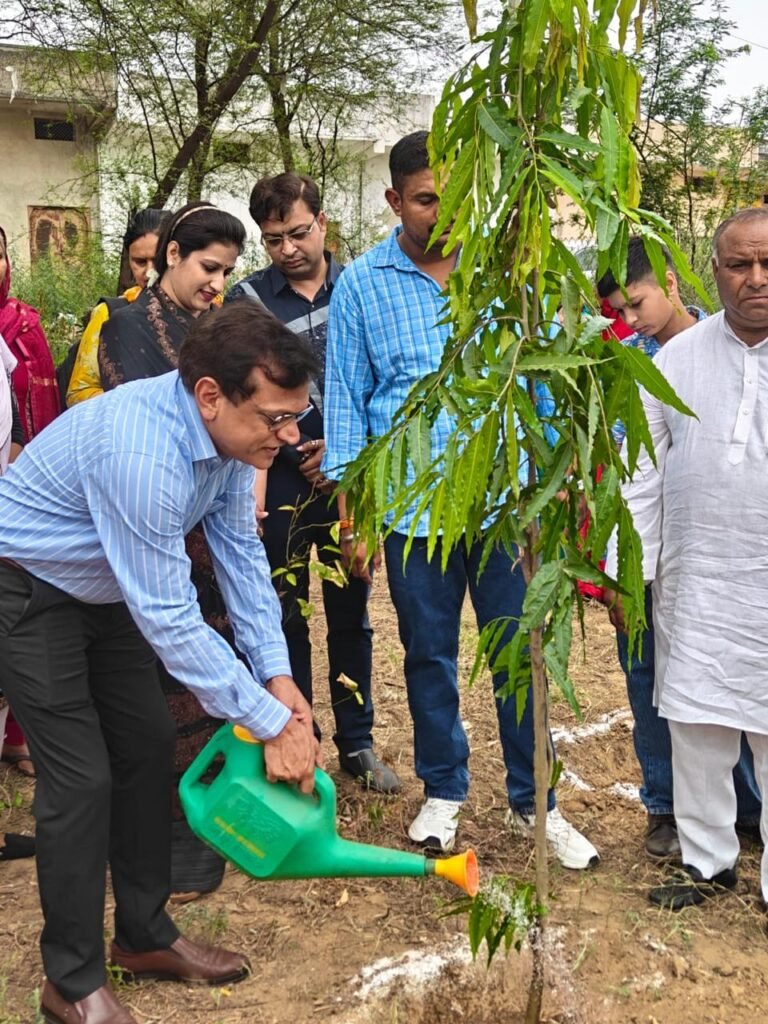
Every monsoon, millions of saplings are planted across the country under CSR initiatives, government programmes and community campaigns. Reports celebrate impressive plantation numbers, photographs capture moments of collective participation, and new targets are announced every year. However, the true measure of environmental success is not how many saplings are planted on a single day, it is how many continue to grow years later.
The answer to this question is rarely found in reports. It is found in villages, among families and within communities that quietly care for every young sapling long after the ceremonial plantation concludes.
It was this question that inspired M3M Foundation to look beyond plantation numbers and understand what truly sustains environmental conservation through its flagship environmental programme, Sankalp.The Foundation has always believed that environmental restoration is not merely an ecological challenge, it is fundamentally a social and behavioural one. Trees survive where people feel responsible for them. Conservation succeeds where ownership replaces obligation.
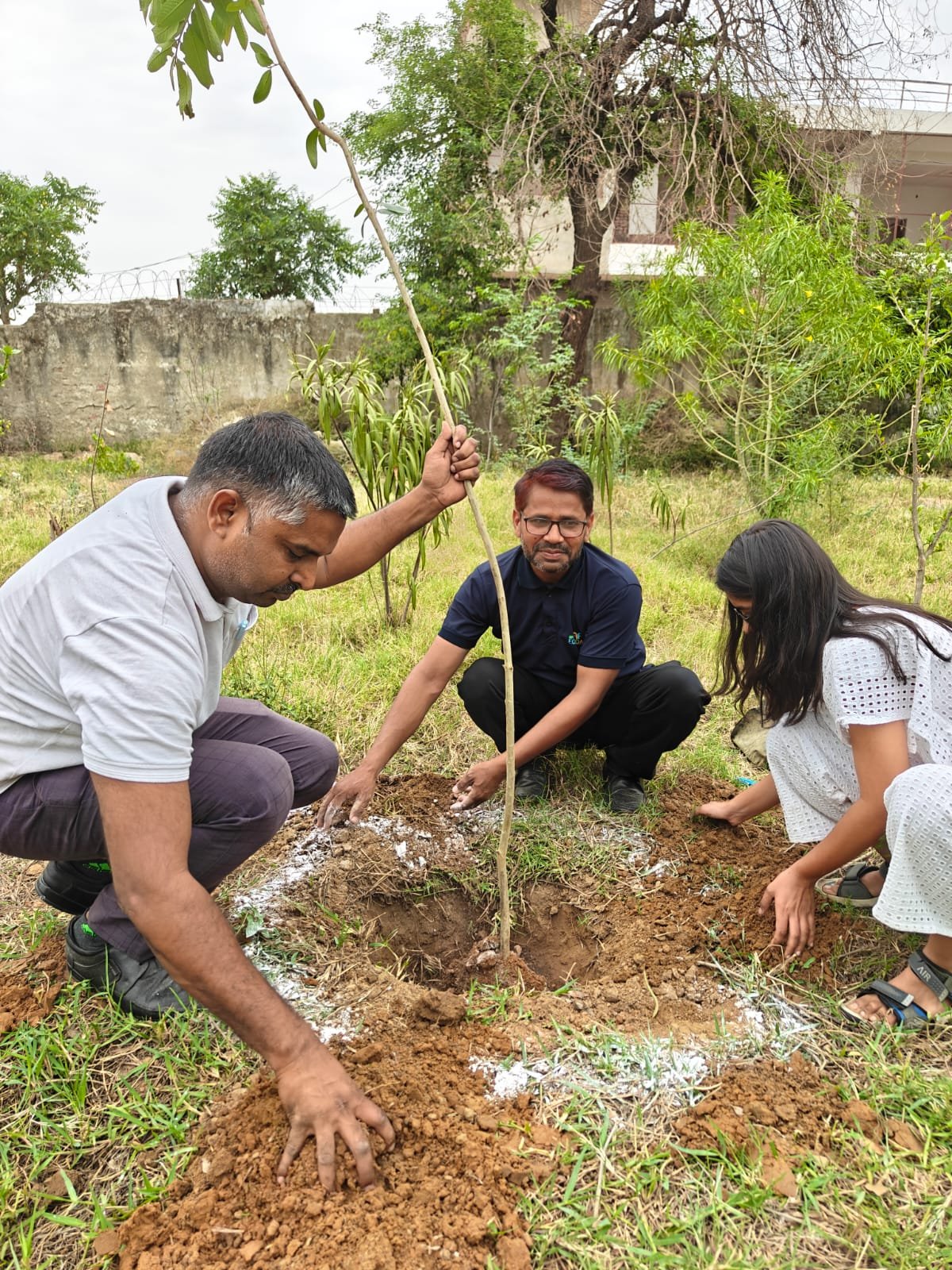
Inspired by the Prime Minister’s “Ek Ped Maa Ke Naam” campaign, M3M Foundation added an equally emotional community initiative across villages of Tavdu block of aspirational district of Nuh in Haryana under Sankalp“Ek Ped Ghar Ke Bachche Ya Bachchi Ke Naam.”The philosophy was beautifully simple. Every child born into a family deserves to grow alongside a tree.
Families were encouraged to dedicate a tree to every son or daughter in the household. As the child grows, the tree grows. As the family nurtures one, they naturally nurture the other. The sapling is no longer viewed as part of a plantation project, it becomes a living member of the family, carrying memories, emotions and responsibility.
This single behavioural shift transformed the relationship between communities and nature.The tree was no longer planted for the village.It was planted by the village.Ownership replaced supervision.Participation replaced monitoring and Conservation became culture.
To objectively assess the long-term impact of the Sankalp model, an independent field research study was undertaken by Ravinshu Harlalka of NMIMS, Mumbai, a young researcher, across villages in Tauru Block, Haryana. The study covered 1,835 trees across sixteen plantation locations, evaluating not only tree survival but also the behavioural and social factors influencing the sustainability of community-led afforestation. The findings were both encouraging and insightful. Of the trees surveyed, 1,570 were found healthy and thriving, resulting in an impressive survival rate of 83.29 per cent, substantially higher than the programme’s documented average. However, the most significant outcome of the research was not the survival percentage itself, but the deeper understanding of the factors that had enabled these plantations to flourish.
The study revealed that the success of Sankalp extended far beyond plantation activities. Across the villages, communities no longer viewed the saplings as part of an externally driven CSR intervention; they had embraced them as their own collective responsibility. Farmers spoke of watering the trees before beginning their daily work in the fields, families voluntarily protected young saplings from grazing animals, and Panchayat leaders shared how the initiative had inspired villagers to undertake additional plantation efforts independently. Children proudly identified trees dedicated in their names, while elders reflected on how once-barren spaces had gradually evolved into green community assets. The research clearly demonstrated that the programme’s success was rooted not merely in effective implementation, but in fostering a profound sense of ownership, emotional connection and shared stewardship—transforming plantation into a genuine people’s movement.
Perhaps the most powerful insight came from a farmer who quietly remarked:“Earlier, these were empty fields. Today, my grandchildren play under these trees.”In that single sentence lies the true meaning of sustainable development.
The research reinforces an important lesson for India’s CSR ecosystem. Environmental sustainability cannot be achieved through plantation drives alone. It requires long-term behavioural ownership. When communities emotionally connect with nature, maintenance is no longer dependent upon external supervision. It becomes part of everyday life.
This is where Sankalp offers an important learning for the broader development sector.
Today, the programme has facilitated the plantation of more than 6.7 lakh trees across six states, including over 1.70 lakh trees across 54 Panchayats. Alongside large-scale plantations, Sankalp has established Miyawaki forests, promoted orchard-based agroforestry, restored degraded landscapes, enhanced biodiversity, improved groundwater recharge and encouraged climate-resilient rural livelihoods. Every intervention is designed around one central principle—that environmental sustainability must simultaneously strengthen ecosystems and empower communities.
The programme also reflects the broader objectives of the United Nations Sustainable Development Goals. It contributes directly to SDG 13 (Climate Action) by strengthening climate resilience through afforestation, SDG 15 (Life on Land) by restoring ecosystems and enhancing biodiversity, and SDG 17 (Partnerships for the Goals) by bringing together communities, Panchayats, corporates and local institutions in a shared mission of environmental stewardship. Most importantly, it embodies the spirit of Mission LiFE, where sustainable lifestyles emerge not through regulation but through voluntary public participation.
As India witnesses unprecedented investments in ESG and corporate sustainability, Sankalp presents an important shift in thinking. For years, plantation programmes have largely been evaluated through the number of saplings planted. The future, however, demands a different metric.
How many trees survived?How many communities accepted responsibility for them?How many children grew up protecting nature rather than merely learning about it?How much carbon will these living landscapes continue to sequester over the coming decades?These are the questions that will define the next generation of environmental leadership.
Reflecting on this vision, Dr. Payal Kanodia, Chairperson & Trustee, M3M Foundation, said:
“Environmental sustainability is not simply about increasing green cover; it is about nurturing a culture where every citizen becomes a custodian of nature. Inspired by the Hon’ble Prime Minister’s visionary call of ‘EkPedMaaKeNaam’, we sought to deepen this emotional connection by encouraging families to dedicate a tree to every child through our initiative ‘EkPedGharKeBachcheYaBachchiKeNaam’. We believe that when a tree becomes part of a family’s story, it is protected not because someone is monitoring it, but because someone loves it. This is the spirit of Mission LiFE, where sustainable behaviour becomes a way of life. As India progresses towards Viksit Bharat 2047, community ownership will remain the strongest foundation for environmental conservation.”
Sharing the learning from the field study, Sheadded:
“The Tavdu research has reaffirmed one simple truth, trees survive where relationships survive. Plantation is only the first step; participation is the real journey. Every thriving sapling we documented represented someone’s care, someone’s commitment and someone’s hope for the future. Sankalp has shown us that lasting environmental impact is created not by institutions working alone but by communities who choose to become partners in conservation. Our role is to ignite that sense of ownership and inspire people to see every tree as part of their own legacy.”
India’s environmental future will not be secured solely through policies, budgets or plantation targets. It will be secured when environmental stewardship becomes part of everyday life—when every village celebrates its green spaces, when every family nurtures a tree as they nurture their children, and when every citizen recognises that protecting nature is both a privilege and a responsibility.
The future of afforestation in India therefore lies beyond planting trees.It lies in cultivating ownership, because every surviving tree represents far more than environmental restoration.It represents a mother whose love inspired a plantation.A child whose future is growing alongside nature.A community that chose responsibility over indifference, and a nation steadily advancing towards Viksit Bharat 2047, one family, one village and one tree at a time.
(India CSR)



