

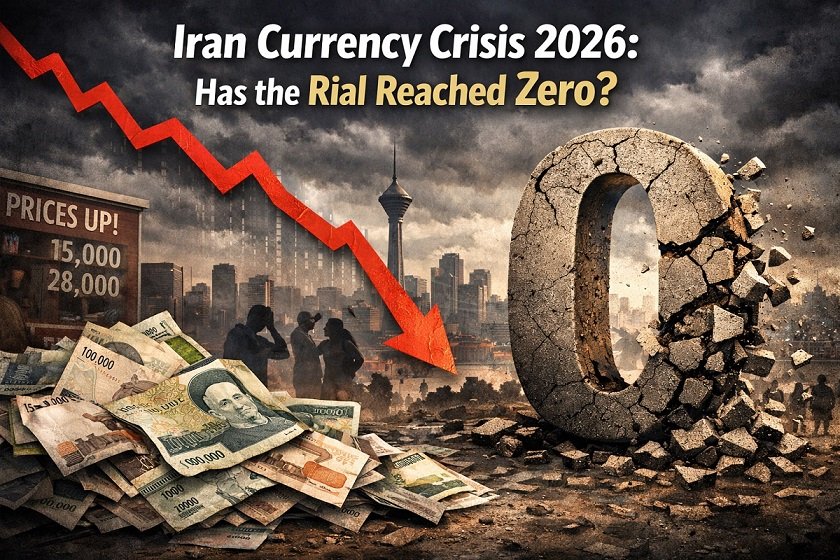



Iran’s rial plunges to record lows amid soaring inflation, sanctions pressure, and economic turmoil—here’s what “zero value” really means
Iran’s national currency, the rial, has plunged to historic lows, sparking widespread concern, economic hardship, and global attention. While reports claim the currency has “reached zero,” experts clarify that the situation is more complex—the rial has not literally become worthless, but its value has eroded so dramatically that it is nearly unusable in international terms.

The sharp depreciation reflects a deepening economic crisis driven by inflation, sanctions, and structural weaknesses, pushing millions of Iranians into financial distress.
Rial at Record Lows
The Iranian rial has collapsed to unprecedented levels in recent months. On the open market, the currency has fallen to around 1.6 million rials per US dollar, marking one of the steepest declines in its history.
This dramatic fall represents a staggering loss of value—over 90% decline since 2018—highlighting the scale of Iran’s economic challenges.
In practical terms, even modest amounts of foreign currency now translate into enormous sums in rials, distorting prices and everyday transactions.
Why People Say the Currency Has ‘Reached Zero’
The phrase “currency reaching zero” is not literal. Economists note that a functioning currency rarely becomes completely worthless.
However, in Iran’s case, the rial has effectively lost most of its international purchasing power. In some markets, it is nearly impossible to exchange the rial for major currencies like the euro, leading to the perception that its value is “zero.”
This perception is further amplified by hyperinflation-like conditions and rapidly rising prices.
Inflation and Sanctions Fuel Crisis
Iran is grappling with inflation exceeding 40%, with food and essential goods prices rising sharply.
Key factors behind the crisis include:
- International sanctions limiting access to foreign currency
- Government spending and monetary expansion
- Weak economic growth and structural inefficiencies
- Geopolitical tensions and conflicts
These pressures have created a vicious cycle—currency depreciation fuels inflation, which further weakens the currency.
Impact on Daily Life
The currency collapse has severely affected ordinary citizens:
- Prices of basic goods have surged beyond affordability
- Savings have lost value rapidly
- Businesses struggle to set prices amid volatility
- Imports have become extremely expensive
In many cases, shopkeepers and traders have shut down operations due to uncertainty, triggering protests and social unrest.
Government Response and Redenomination Plan
To manage the crisis, Iran has proposed a currency redenomination, removing four zeros from the rial and introducing a new unit (toman).
While this may simplify transactions, experts caution that it will not fix underlying issues like inflation or economic instability. The reform is largely cosmetic unless accompanied by deeper structural changes.
A Crisis Years in the Making
Iran’s current economic turmoil is not sudden—it has been building over years due to:
- Long-term sanctions
- Banking sector weaknesses
- Fiscal imbalances
- Declining investor confidence
Recent shocks, including geopolitical tensions and financial instability, have accelerated the decline, turning a slow crisis into a rapid collapse.
You Learn
The Iranian rial has not technically “reached zero,” but its collapse has made it nearly worthless in real-world terms, especially internationally. The crisis underscores deeper economic problems that go beyond currency value—affecting livelihoods, stability, and the country’s future trajectory.
Unless structural reforms address inflation, fiscal policy, and external pressures, the rial’s decline may continue, prolonging hardship for millions of Iranians.


