



HUL CSR Spending Report 2025: Full Details of Expenditure, Flagship Programmes and On-Ground Impact Across India
NEW DELHI (India CSR): For a smallholder farmer in rural India, one good monsoon can secure an entire year of income. For a woman in a remote village, the chance to run a micro-business is not just about earnings—it is about identity, confidence, and freedom. These are the human realities shaping the Corporate Social Responsibility (CSR) strategy of Hindustan Unilever Limited (HUL) in FY 2024–25.
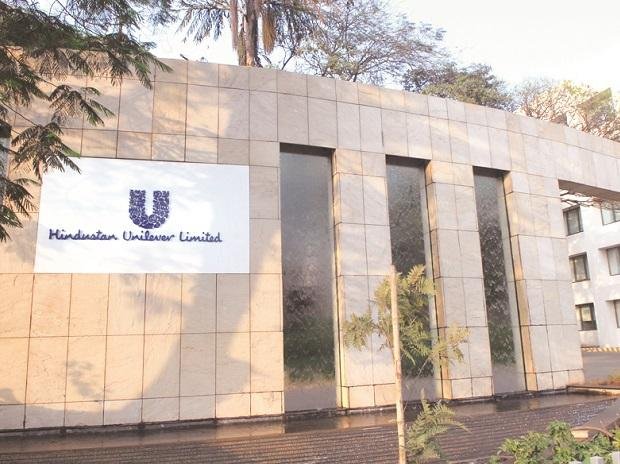
In its latest CSR disclosures, HUL positions social impact as a core part of its business direction under the theme “ASPIRE: Unlocking a billion aspirations.” The company’s programmes in climate resilience, water conservation, hygiene, plastic circularity, and livelihoods show how corporate responsibility can be scaled with the same discipline as business growth. In 2025, HUL did not merely comply with CSR law—it exceeded it, reinforcing a long-term commitment to sustainable development.
CSR Spending in FY 2024–25: The Financial Ledger
For the year ended March 31, 2025, Hindustan Unilever Limited reported a total CSR expenditure of Rs 254.02 crore on a standalone basis.
As per Section 135 of the Companies Act, 2013, the company’s mandatory CSR requirement was calculated as 2% of its average net profit over the last three years. HUL disclosed an average net profit of Rs 12,505.81 crore, resulting in a prescribed CSR obligation of Rs 250.12 crore.
Key Facts Table: Hindustan Unilever Limited (HUL) CSR Spending FY 2024–25
| Particulars | Details |
|---|---|
| Company Name | Hindustan Unilever Limited (HUL) |
| Financial Year | FY 2024–25 |
| Applicable CSR Law | Section 135, Companies Act, 2013 |
| Average Net Profit (Last 3 Years) | Rs 12,505.81 crore |
| Prescribed CSR Obligation (2%) | Rs 250.12 crore |
| Total CSR Expenditure (Actual Spend) | Rs 254.02 crore |
| Excess CSR Spend | Rs 3.90 crore |
| Excess Amount Set-off Claimed | No |
| Unspent CSR Amount | Nil |
| CSR Spend on Projects | Rs 244.55 crore |
| Administrative Overheads | Rs 6.98 crore |
| Impact Assessment Spend | Rs 2.49 crore |
| CSR Theme / Strategy | “ASPIRE: Unlocking a billion aspirations” |
| Flagship Livelihood Programme | Project Shakti |
| Women Entrepreneurs Empowered | Over 2 lakh women (“Shakti Ammas”) |
| Youth Entrepreneurship Programme | SAFAL |
| Youth Reached (Awareness) | 1 lakh youth |
| Youth Given Advanced Mentoring | 2,784 individuals |
| Reported Employment Outcome | ~70% trainees secured employment |
| Urban Hygiene Programme | Suvidha Centres |
| People Served (Mumbai) | Over 5 lakh people |
| Water Saved via Suvidha Model | Over 18 crore litres (180 million litres) |
| School Hygiene Programme | Swasthya Curriculum |
| Children Reached (Cumulative) | ~90 lakh children |
| Government Schools Covered | 80,000 schools |
| Behaviour Change Outcomes | 17% rise in hygiene habits; 25% rise in toilet usage |
| Water Conservation Platform | Hindustan Unilever Foundation (HUF) |
| Cumulative Water Potential Created | Over 3.9 trillion litres (since 2010) |
| Circular Economy Programme | Project Circular Bharat |
| Citizens Mobilised for Segregation | Over 5.45 lakh citizens |
| Waste Workers Supported (“Safai Saathis”) | 20,000 workers |
| Tea Worker Support Programme | Women Safety and Livelihoods |
| Beneficiaries (Tea Workers) | Over 3.75 lakh |
| Tea Estates Covered | 329 estates |
| Women Participation | ~80% |
| CSR Committee Chairperson (2025) | Mr. Tarun Bajaj |
| Major Recognition (2025) | Project Prabhat won SKOCH Award (Best CSR Programme) |
However, the company spent more than required:
- Prescribed CSR obligation: Rs 250.12 crore
- Actual CSR spending: Rs 254.02 crore
- Excess CSR spend: Rs 3.90 crore
Notably, HUL stated that it did not choose to set off the excess amount against CSR obligations in future years—an important signal that the company views CSR not as a regulatory burden, but as a sustained social investment.
Break-up of CSR Expenditure
HUL’s CSR spending was distributed across key categories:
- CSR project spending: Rs 244.55 crore
- Administrative overheads: Rs 6.98 crore
- Impact assessment spending: Rs 2.49 crore
This indicates a strong focus on direct programme delivery, while also investing in monitoring and evaluation to ensure accountability.
Livelihood Empowerment: Project Shakti and SAFAL
Livelihood creation remained one of the most visible and human-centred pillars of HUL’s CSR strategy.
Project Shakti: Rural Women as Entrepreneurs
HUL’s flagship programme Project Shakti continued to expand, empowering more than 2 lakh women across rural India. These women, often referred to as “Shakti Ammas,” operate as micro-entrepreneurs who distribute products while building independent income streams.
For many participants, the impact is deeper than economics—Project Shakti strengthens women’s role in household decision-making, increases confidence, and improves social standing within communities.
SAFAL: Skilling Youth for Employment
HUL’s livelihood focus also extends to youth through SAFAL (Skills Academy For Advancement of Livelihoods). In FY 2024–25:
- Entrepreneurship awareness reached 1 lakh youth
- 2,784 youth received advanced mentoring and capacity building
- HUL reported that nearly 70% of trained participants secured employment
In a country where youth employability remains a critical challenge, such programmes support long-term economic mobility.
Hygiene and Health: Suvidha and Swasthya at Scale
HUL’s CSR work in health and hygiene has long been central to its social impact agenda. In 2025, the company continued to expand programmes that address sanitation access and behavioural change.
Suvidha Centres: Clean Water and Toilets for Urban Communities
HUL’s Suvidha model—built as a public-private partnership—provides affordable access to:
- Clean toilets
- Purified drinking water
- Showers
- Laundry facilities
These centres currently serve more than 5 lakh people living in informal settlements in Mumbai. The model is also designed for climate resilience and has cumulatively saved over 180 million litres of water through recycling systems.
Swasthya Curriculum: Reaching Millions of Schoolchildren
HUL’s Swasthya Curriculum has reached nearly 9 million children across 80,000 government schools since its launch. The curriculum promotes:
- Handwashing with soap
- Safe water practices
- Nutrition awareness
HUL reports measurable behavioural improvements, including:
- 17% increase in healthy hygiene habits
- 25% increase in toilet usage among schoolchildren
To strengthen engagement, HUL introduced AI-Teacher Hippo in 2024—an augmented reality learning tool offering personalised, multilingual handwashing guidance.
Water Security: Creating Long-Term Climate Resilience
Water remains one of India’s most urgent sustainability priorities, especially in rural and drought-prone areas. Through the Hindustan Unilever Foundation (HUF), HUL has enabled a cumulative water conservation potential of over 3.9 trillion litres since 2010.
This is one of the largest corporate-supported water programmes in India, strengthening farm resilience and supporting livelihoods in water-stressed regions.
In FY 2024–25, HUF continued partnerships with grassroots organisations to build:
- Water harvesting structures
- Watershed interventions
- Regenerative agriculture support systems
These interventions improve farm productivity and reduce vulnerability to climate shocks.
Plastic Circularity: Project Circular Bharat
HUL’s CSR and sustainability agenda also strongly focuses on waste management and plastic circularity.
Behaviour Change + Inclusion of Waste Workers
Under Project Circular Bharat, HUL works on:
- Source segregation awareness
- Waste collection and recycling infrastructure
- Social inclusion of waste workers
The programme has mobilised over 5.45 lakh citizens to adopt segregation practices and supported the inclusion of 20,000 Safai Saathis (waste workers), connecting them to welfare schemes such as:
- Jan Dhan accounts
- Pradhan Mantri Suraksha Bima Yojana
In 2024, HUL also launched the Circular India – Awareness to Action Toolkit, in collaboration with three central government ministries, reinforcing a national approach to circular economy solutions.
Social Inclusion: Women, PwDs and Worker Well-being
HUL’s CSR strategy is complemented by strong internal and value-chain inclusion efforts.
Gender Diversity in Leadership and Manufacturing
HUL reported:
- 42% gender diversity in managerial roles
- Over 1,600 women employed on factory shop floors
This is significant in a manufacturing ecosystem traditionally dominated by male participation.
Saksham: Inclusion of Persons with Disabilities
Through the Saksham programme, HUL supports inclusion of persons with disabilities, with more than 100 PwDs currently part of its workforce.
Tea Worker Support: Women Safety and Livelihoods
In the agricultural value chain, HUL’s Women Safety and Livelihoods programme benefited more than:
- 3.75 lakh tea workers
Across: - 329 tea estates
With: - 80% women participation
The programme addresses both livelihood resilience and gender safety concerns—an area increasingly recognised as essential to responsible corporate practice.
CSR Governance and Integrity Oversight
HUL’s CSR programmes are governed by a dedicated CSR Committee. In 2025, the committee was chaired by Mr. Tarun Bajaj.
The company also highlighted that:
- 100% of employees were trained on HUL’s Code of Business Principles in 2024
This strengthens ethical execution, transparency, and accountability across social initiatives.
Recognition and Awards
HUL’s CSR and sustainability programmes received national recognition:
- Project Prabhat won the SKOCH Award for Best CSR Programme (2025)
- HUL was recognised as a Leading Sustainable Organisation by the Times Now Global Sustainability Alliance
These awards reinforce HUL’s position as one of India’s most visible corporate sustainability leaders.
You Learn: CSR as a National Development Partnership
Hindustan Unilever Limited’s CSR spending report for FY 2024–25 reflects the scale and ambition of a company seeking to embed purpose into performance.
By spending Rs 254.02 crore, exceeding its CSR mandate, and impacting millions through water security, hygiene, livelihoods, and circularity initiatives, HUL has positioned itself as a long-term partner in India’s development journey.
From empowering 2 lakh rural women entrepreneurs to strengthening water security worth 3.9 trillion litres, the company’s CSR strategy demonstrates that large-scale corporate responsibility can deliver both measurable outcomes and deeply human change. As HUL advances toward its long-term sustainability goals, including net-zero ambitions across its value chain, CSR will remain one of its strongest pillars for inclusive growth.
(India CSR)


