

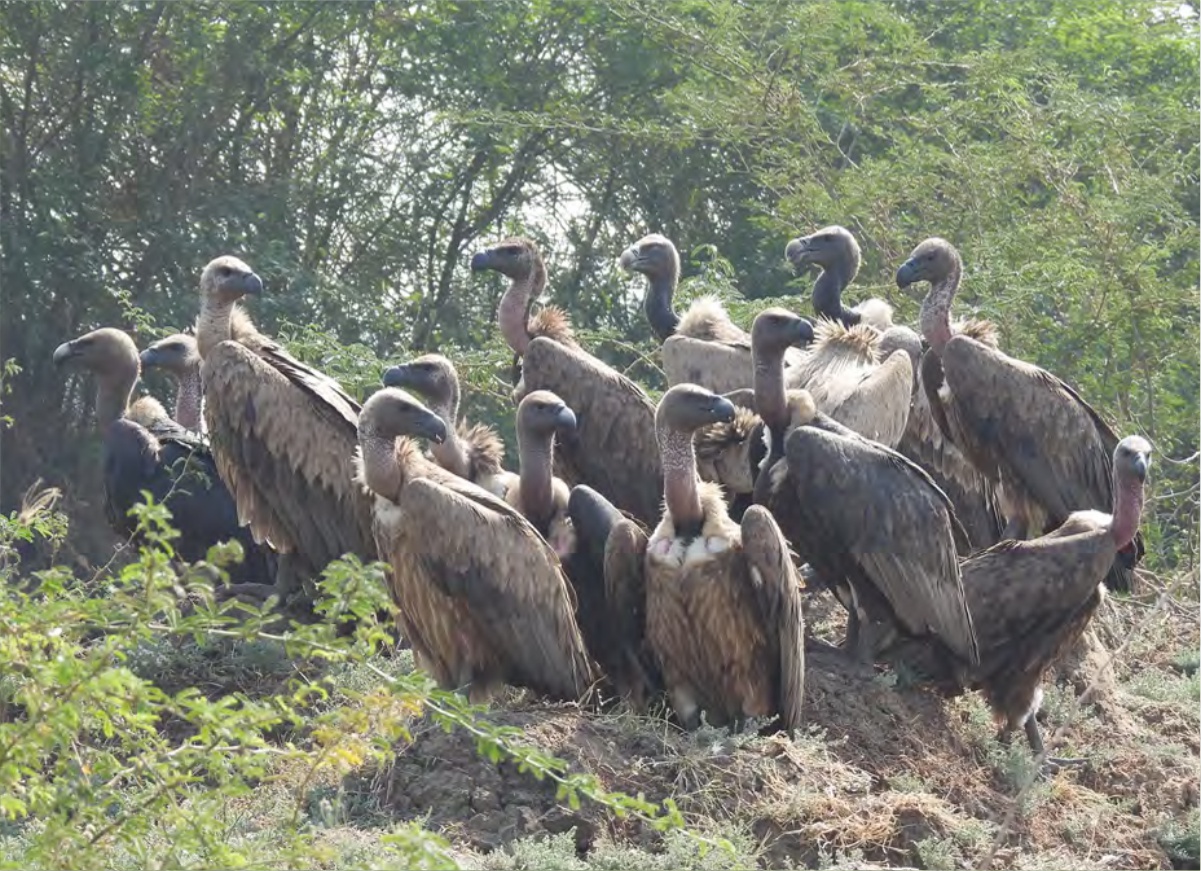



In August 2006, the Drugs Controller General of India banned the use, sale and manufacture of veterinary diclofenac.
NEW DELHI (India CSR): The Ministry of Environment, Forest and Climate Change (MoEFCC) provided a detailed account of the vulture population status in India in response to a Parliament Question raised in the Rajya Sabha on 5 December 2024. The written reply, presented by Kirti Vardhan Singh, Union Minister of State for Environment, Forest and Climate Change, highlights the estimated vulture population, conservation measures undertaken by the government, and ongoing efforts to curb the use of harmful veterinary drugs that have contributed to the species’ decline.
Recorded Species of Vultures in India
India is home to nine species of vultures, many of which are categorized as Critically Endangered by the International Union for Conservation of Nature (IUCN). These include the White-backed Vulture (Gyps bengalensis), Long-billed Vulture (Gyps indicus), and Slender-billed Vulture (Gyps tenuirostris) — species that have witnessed catastrophic declines over the past three decades.
While the Ministry noted that population assessments are not carried out at the national level, individual States and Union Territories conduct periodic surveys to estimate vulture numbers in their respective regions.

The Ministry of Environment, Forest and Climate Change and Central Zoo Authority, in collaboration with state governments have established vulture breeding centers under the species recovery programme. These facilities are dedicated to breeding critically endangered vulture species such as the Long-billed Vulture, White-backed Vulture, and Slender-billed Vulture. Notable breeding centers include the Pinjore Vulture Breeding Centre in Haryana, Rajabhatkhawa Vulture Conservation Breeding Centre in West Bengal, etc., where vultures are raised in captivity and subsequently released into natural habitats.
Estimated Population of Vultures (As of 2017)
| Name of the Species | Estimated Population (2017) |
|---|---|
| Long-billed Vulture (Gyps indicus) | 26,500 |
| Slender-billed Vulture (Gyps tenuirostris) | 1,000 |
| White-backed Vulture (Gyps bengalensis) | 6,000 |
The data reflects a modest recovery from the severe population collapse that began in the 1990s but still underscores the critical need for continued conservation interventions.
Government Initiatives and Conservation Measures
1. Establishment of Vulture Breeding Centres
Under the Species Recovery Programme, the MoEFCC and Central Zoo Authority (CZA) have partnered with various state governments to establish dedicated vulture breeding centres. These facilities focus on the captive breeding and rehabilitation of critically endangered species such as the Long-billed, White-backed, and Slender-billed vultures.
Prominent centres include:
- Pinjore Vulture Breeding Centre, Haryana
- Rajabhatkhawa Vulture Conservation Breeding Centre, West Bengal
- Other centres across Madhya Pradesh, Assam, and Gujarat
These breeding centres raise vultures in captivity and release them into natural habitats to strengthen wild populations.
2. Control on Veterinary Diclofenac Usage
One of the primary causes of vulture mortality in India was the use of the anti-inflammatory drug Diclofenac in livestock. When vultures consumed carcasses of treated animals, they suffered kidney failure leading to death.
To address this, the Government has taken several decisive steps:
- Ban on Diclofenac (2006):
The Drugs Controller General of India (DCGI) banned the use, sale, and manufacture of veterinary Diclofenac in August 2006. - Restriction on Vial Size:
The Government limited the vial size of Diclofenac to 3 ml to prevent its misuse in veterinary treatment. - Notification for Human-use Vials (2015):
Through Gazette Notification No. G.S.R. 558 (E) dated 17 July 2015, multi-dose vials of Diclofenac were restricted to single-use only for humans, closing loopholes that allowed its illegal use in livestock.
Government Actions to Control Diclofenac Use in India
| Measure | Year / Notification | Description |
|---|---|---|
| Ban on Veterinary Diclofenac | August 2006 | The Drugs Controller General of India (DCGI) banned the use, sale, and manufacture of Diclofenac for veterinary purposes to prevent vulture deaths caused by poisoning from livestock carcasses. |
| Restriction on Vial Size | Post-2006 Implementation | The Government limited the vial size of Diclofenac to 3 ml, ensuring it is used only for human treatment and not misused for animals. |
| Notification for Human-use Vials | 17 July 2015 (G.S.R. 558 (E)) | Through this Gazette Notification, multi-dose vials of Diclofenac were restricted to single-use only for humans, effectively closing loopholes that allowed its illegal veterinary use. |
3. Promotion of Safe Alternatives
The Government has actively promoted Meloxicam and Tolfenamic acid as safe veterinary alternatives to Diclofenac. These non-steroidal anti-inflammatory drugs (NSAIDs) have been scientifically tested and proven to be harmless to vultures.
4. Awareness and Regulatory Enforcement
To ensure compliance, the following measures have been implemented nationwide:
- No over-the-counter sale of veterinary NSAIDs without prescription.
- Regular pharmacy surveys to check for illegal sale or storage of Diclofenac.
- Targeted advocacy and awareness programmes for veterinarians, livestock owners, and pharmacists on the harmful effects of Diclofenac on vulture populations.
Significance of the Conservation Efforts
The vulture population crash in India has been one of the most dramatic declines of any bird species globally. Once numbering over 40 million in the 1980s, populations plummeted by more than 97% by the early 2000s, primarily due to Diclofenac poisoning.
The Government’s response, including the establishment of breeding and rehabilitation programmes, drug control policies, and community awareness campaigns, has started to yield encouraging signs. Certain regions in Gujarat, Haryana, and Madhya Pradesh have reported gradual increases in vulture sightings, suggesting a slow but steady recovery.
You Learn
The written reply in Parliament underscores the Government of India’s long-term commitment to vulture conservation and ecological balance. By integrating regulatory actions, scientific breeding initiatives, and public awareness, India has taken substantial steps toward reviving these vital scavengers.
However, the absence of comprehensive national-level population data highlights the need for a coordinated nationwide vulture census and enhanced monitoring mechanisms. Strengthening collaboration between the Centre, States, NGOs, and local communities will be key to ensuring that India’s vultures — nature’s silent sanitation workers — continue to soar in the skies once again.
Also Read: CSR: Khambhat Vulture Conservation Project: Origin, Purpose, Pillars, and Achievements on the Ground
Terms & Conditions: India CSR does not permit other Websites/agencies to copy or reproduce, or reprint the above article/feature in any form or means.



