

By Prof (Dr) Colin Coulson-Thomas
NEW DELHI (India CSR): Decisions and choices must often be made when multiple and inter-related issues are involved, stakeholders are divided, views may be contested and polarised, and uncertainties, misinformation, disinformation and lobbying by special and vested interests abound. Those who do not wish to be an outlier, may advocate doing just enough to show willing without being at a competitive disadvantage, and at the same time keeping in with whoever is in power. Has the emphasis in the changing language of corporate social responsibility (CSR) and environmental, social and governance (ESG) concerns, practices and priorities shifted from values to value, and questions relating to what value for whom and how this might be demonstrated and received and for how long (Stewart, 2025)?
This Theme Paper explores areas on the agenda of the 2026 and 20th International Conference on Corporate Social Responsibility. It suggests issues and questions that directors, speakers, and other participants might wish to consider ahead of the event and discuss with their peers, and it highlights contemporary issues and developments since last year’s convention. The paper includes references to recent investigations, reports and studies related to the event’s agenda. The relevance of workscited can depend upon their purpose, context,anymethodology used and study participants. Investigators sometimes explore aspects of problems from the perspectives of their own discipline, function and concerns rather than consider relevant questions that directors might ask in different settings, and/or explore the more holistic solutions that may be sought by some boards.
Corporate and Social Irresponsibility
CSR and ESG are likely to remain an issue for those concerned about the negative social and environmental impacts and externalities ofcorporate activities and contemporary lifestyles and the lack of effective collective responses to them (UNEP, 2025b). The social and environmental irresponsibility of major corporations who drivedemand and whose activities underpin prevailing ways of living, and their habitual ignoring of the negative externalities caused by their offerings has long been recognised (Heilbroner, 1972). Social and environmental irresponsibility can also result from decision makers ignoring negative impacts that result from collective human activity, although some enterprises may contribute much more to them than others. How aware are directors and boards of negative externalities?
Irresponsible conduct can sometimes betheconsequence of not thinking through the implications of income generation opportunities or not undertaking due diligence on the links and connections of proposed collaborators and partners. For example, thousands of university researchers may be engaged in collaborations with foreign academics with links to the military of a nation’s adversary (Yorke, 2025). The prospect of significant funding can sometimes result in few if any questions being asked. Unless moderated by CSR could income generation pressures and the profit motive increase the risk of short-termism and social harm (Bhave, 2025)? What safeguards such as donor or collaborator due diligence could be activated when there may be heightened risks of irresponsible conduct?
Certain checks and balances can exist in a competitive market and/or the international geopolitical context. For example, the extent of irresponsibility in the exercise of assumed national power in a multipolar world might be limited by vulnerabilities that have built up over time during a previous era. US attempts to use high proposed tariffs as a weapon against China failed because of America’s dependence upon Chinese rare-earth minerals and their processing for over 70% of its supply (Moussa, 2025). Boards and companies should be alert to where and when irresponsible conductpersists. For example, should they stop practices such as built-in obsolescence, the premature ending of product lines, and sales commissions that encourage over-selling, and instead drive sufficiency (Dhir, 2025)?
Given the number of issues, pressures and requirements that boards must balance in the currentand volatile business environment it may seem strange that some boards still seek to maximise certain factors such as profits. The wide range of matters on board agendas thatdifferent stakeholder groups are concerned withsuggeststhat for many companies a wider plurality of business drives, objectives and purposes could be desirable (Orts, 2023).Might the scale of unwanted externalities and other negative impacts increase where attempts are made to push profits ever higher while ignoring the social and environmental consequences and related responsibility criteria? How can boards ensure more balanced objectives?
Could following a government policy such as unsustainable growth, when not compelled to do so, be irresponsible? The policies of many governments are irresponsible in that they are environmentally damaging, socially divisive, or favour of special interests. Given the “dire future” consequences of global warming and climate change, the negative impact ofcoal, oil and gas, and fossil fuel subsidies are such that their advocates and governments that maintain them are irresponsible from a community and planetary perspective (UNEP, 2025b). The societal cost of greenhouse gas emissions coming from corporate activities, known as ‘corporate carbon damages’ are considerable. What steps should a responsible board take to avoid complicity and unthinking orthodoxy, and highlight the cost of irresponsibility?
Average corporate carbon damages have been found to amount to some 44% of firms’ operating profits (Greenstone et al, 2023). The Climate Disclosure Explorer (CDE) is an interactive web platform which examines corporate carbon damages for some 15,000 publicly traded firms, accounting for over 80 percent of global market capitalization. It shows that damages vary significantly within each sector, with a small number of high-emitting firms driving up the average costs (Greenstone et al, 2025). The same is true for sub-industries within sectors. Policy makers, regulators and boards could use CDE to assess how reducing the damages of outlying firms might move them closer to the relevant sub-industry median.
Corporate Purpose and Priorities
Whether or not board activities and decisions to drive a purpose driven economy are desirable, responsible and sustainable depends upon the purpose and outcomes being sought. Many corporate and government aspirations, policies and priorities, including for unsustainable development and growth, exacerbate global risks and existential threats, compound negative externalities, and reduce our collective prospects for survival. Increasingly, it is vital that a purpose embraces not just what an organisation is seeking to do, but also the challenges it faces (Mayer, 2016). How might a board ensure this? Could hiding the extent of negative externalities trigger a backlash when these become apparent?
A purpose can be easier to articulate in a form that becomes shared, than it may be to implement and have a beneficial impact on the environment and contribute to the collective social good (Tafuro and Piccaluga, 2025). Some boards are reluctant to risk proposing what might not be deliverable. A purpose could be responsible or irresponsible and might lead to aspects of both in intention and/or impact, whether intended or unintended. Some boards could usefully consider whether if a company ceased to exist, it would increase or decrease our chances of collective survival. Many people work for companies that may be profitable and whose offerings might be in demand, while the consequences of their activities could be hastening our demise. Should a purpose be socially beneficial (Mayer, 2016)?
In an uncertain business context corporate purpose and strategy should be integrated into each other and remain aligned as developments and events unfold and new challenges and opportunities emerge (Steller and Björck, 2025). Many corporate purposes have proved less fundamental and entrenched than many may have expected or might have hoped. Some previous positions of major companies once considered responsible were quickly abandoned or reversed following the election of climate change denying and fossil fuel favouring US President Donald Trump. Boards vary in the extent to which they might share and entrench a corporate purpose with stakeholders through advocacy, engagement and influence andseek legitimacy (Klettner et al, 2025; Patacconi et al, 2025). How explicit and shared is a corporate purpose and a board’s expectations of socially and environmentally responsible conduct?
Boards can also vary in the extent to which they take account of social and environmental responsibility, ethical and legitimacy considerations and values, and a wider public good and shared interests when initiating or undertaking a review of corporate purpose. What emerges is more likely to be shared and entrenched if stakeholders, and especially the employees of organisations, are involved and a purpose evolves after repeated interactions with them (Durand and Asmar, 2025). Psychological ownership and the internalisation of a corporate purpose increase the likelihood that people will go the extra mile and beyond their roles to support or implement it (Brosch, 2025). What more should directors and boards do to entrench CSR principles, practices and values?
Corporate Purpose and Stakeholder Engagement
Dialogue with other stakeholders, including customers, investors and suppliers, and their participation in the discussion and review of corporate purpose and the extent to which it is responsible, is further evidence of a board’s commitment to social and environmentally responsible ambitions and outcomes, building understanding and trust, and establishing them as differentiators. Stressing the social and environmental dimensions of a corporate strategy derived from a responsible corporate purpose can deepen engagement with both internal and external stakeholders (Pardo-Jaramillo et al, 2025). How can boards better align CSR considerations across purpose, strategy, and stakeholder communication and engagement?
Stakeholder engagement can help the identification of common values and a shared identity and moral direction, which may be especially helpful in crisis situations (Menghwar et al, 2025). Multiple stakeholders might share a commitment to support the achievement of UN sustainable development goals. Where do these feature within a corporate purpose and a corporate strategy derived from it (Sasaki et al, 2023 and 2025)? How can boards avoid the risk of a gulf between articulated responsibility ambitions and realised achievements that may lead to cynicism, disappointment and charges of hypocrisy? In firms undergoing sustainability transitions, a shift toward a duty-based purpose fosters internal legitimacy and stakeholder support for innovation (Schupfer& Soppe, 2025). How might assessments of stakeholder commitment to responsible and sustainable practices be improved?
Geopolitical and Contextual Pressures
Changing social and environmental responsibility perspectives, positions and priorities can reflect external geopolitical and disruptive political developments in the wider contexts in which companies operate. A transition may be underway, as multilateral cooperation based upon international institutions and common rules gives way to deals between an oligopoly of major powers or multipolar competition between groups of states (Stubb, 2025). To what extent will boards compromise on values, change their positions on what is considered responsible, and modify their actions and responses to developments and events? Multipolarity could lead to smaller countries being sidelined as bigger powers make deals over their heads.In commercial markets, are smaller companies similarly being excluded as US tech giants consolidate their influence on President Donald Trump? How should boardsreact to greater pressure to conform and accommodate changing exercises of power?
Challenges, risks and threats facing companies and countries are inter-related. As global temperatures, the world’s population and consequential food security concerns increase, so too may the competition to acquire agricultural land, safeguard food supplies and weaponisation of access to food supplies as has happened with rare earth metals (Rose, 2025). China controls processing, supply and market for certain minerals such as lithium and has been working for 50 years to entrench its position following the setting up of an initial entity concerned with raw earths in 1975. What compromises on views of what is responsible should boards make in a more transactional era to accommodate realities and vulnerabilities?
When discussing dependences and vulnerabilities, the power of some countries may be significantly less than their economic data suggests, while that of others may be greater than realised, especially when a measure such as export controls is joined by allies (Vagle and Brooks, 2025).In relation to international conflicts in a transactional era, and when deciding with whom to trade and collaborate, boards may take a more cautious, nuanced and longer-term view of the relative advantage and probability of each side winning. Policy moves are sometimes advocated that are counterproductive and act against their own best economic interests. For example, the cost of relocating US forces from Europe could be expensive, especially if relocated to the North American homeland, where costs may be higher than in Europe. Are boards monitoring possible crawl out, separation and/or withdrawal costs?
Environmental Pressures and Responsibilities
Companies and their boards can face a variety of other pressures on past or ‘traditional’ views of what is socially and environmentally responsible, and articulated fears of being left behind and at a competitive disadvantage unless they ‘join the crowd’. The relationship of business with the natural world continues to be an issue for responsible business leaders (Palmer and Lehman, 2026). The pace of economic and technological development in the pursuit of unsustainable growth on a planet with finite resources and an expanding population has caused many companies to change direction in ways that are irresponsible, supercharge negative externalities and threaten human survival. What can boards do to make stakeholders more aware of global risks, existential threats and longer-term consequences? Should they become advocates, ambassadors and champions of environmental responsibility?
The global environmental outlook is grim (UNEP, 2025a & b). Drivers of unsustainablegrowth add to the rapid depletion of resources available to today’s young people and for future generations. For example, the Mega data centres required by increasing use of artificial intelligence (AI) generate a variety of negative environmental and social impacts that affect local communities, whether nitrogen oxide emissions or depleting energy and water resources to the detriment of certain groups (Eledroos, 2025). How aware are boards of the scale of the challenges facing contemporary societies? Many people are ignoring the natural world and becoming lost in polarising virtual alternatives. How self-aware are some directors of the damage that is being caused by many business sectors? What can and should be done to challenge fundamental building blocks of current lifestyles that are not sustainable?
Is car ownership socially and environmentally responsible (Moore and Kay, 2025)? Do the cars that people aspire to own and which result in traffic accidents that kill a million people per annum, shorten life through particulate air pollution, contribute to global warming and consume finite resources now constitute an existential threat (Obst, 2025)?Particulate air pollution is the most significant factor reducing life expectancy, with the average person losing two years of expected life because of air quality being worse than WHO guidelines (AQLI, 2025). Climate change induced events are adding to the pressures. Gains in air quality because of less use of fossil fuels have more recently been lost in Canada because of wildfires (AQLI, 2025). At what point does corporate silence become irresponsible?
Where does the collective survival of humanity feature in the corporate purpose and CSR and ESG policies of many companies and their boards? We may have already passed the point of no-return (Moon, 2025).A tipping point has also been reached in terms of the loss and bleaching of warm water corals around the world (Tollefson, 2025).Human impacts on the oceans are predicted to double by 2050 with severe consequences for coastal communities and food security (ScienceDaily, 2025). As the risk of triggering further negative tipping points increases, should more effort be devoted to identifying and amplifying positive tipping points (Lenton, 2025)? What ought to be done to make boards more aware of the impacts on remaining tipping of the activities of companies for which they are responsible?
In some areas progress is being made, despite the damaging practices of some companies and states. For example, following a 60th ratification, The High Seas Treaty came into force from January 2026, providing a process for putting 30% of these waters into Marine Protected Areas (Stallard, 2025). Responsible action, especially in collaboration with others, can have a beneficial impact.With multiple indicators showing global risks and existential threats at record levels, the survival of humanity now depends upon collective action to prioritise wellbeing and planetary health over perpetual growth (Ripple et al, 2025).Practical problem-solving may ‘buy time’.Could freezing sprayed water at high altitudes to form stupas of ice that slowly melt when temperatures rise sustain flows from retreating glaciers (Orfila, 2025)?
CSR, ESG and Digital Responsibility
CDR (Corporate Digital Responsibility) is joining environmental and social responsibility as a concern of responsible boards, and the three are inter-related (Dörr, 2021). AI and technology responsibility is increasingly required as well as social and environmental responsibility. Multiple technologies are developing more rapidly than frameworks and mechanisms to ensure their responsible development and use and prevent their misuse. Their advantages and potential applications are often promoted while their possible drawbacks may be overlooked. For example, in relation to AI adoption how might boards prevent certain groups being discriminated against by algorithms, agents and models and ensure greater transparency? What will the social consequences for white collar and professional jobs be?
What steps can boards take to limit the undesirable use of AI and prevent harm? AI tools can greatly assist a variety of malevolent actors. AI tools are being used by malicious state-sponsored and cyber-criminal hackers to autonomously crack passwords, exfiltrate data and mount sophisticated attacks (Wong, 2025). Russian cyber criminals can make their ransomware available to young UK hackers who can use it to create more disruption, enhance their reputation and reap financial rewards (Leggett, 2025). AI tools available on the black market can enable less experienced actors to mount assaults that could previously only have been undertaken by more skilful criminals (Wong, 2025). When will designers and suppliers of AI tools be held accountable for the harm caused to others by those who use them?
Many directors long for greater external context and market certainty while ignoring the uncertainty of internal processes. AI applications can be ‘black boxes’ in the sense that users providing inputs of data may not know how their outputs are arrived at. Areas of government concerned with national security can themselves be a ‘black box’ in terms of transparency and the public and others knowing what is going on (Deeks, 2025). Where can directors go to obtain more objective and balanced advice on potential risks and advantages of AI adoption? Are boards aware of the opportunities in ‘physical AI’ such as advances in industrial robotics that are redefining automation (WEF/BCG, 2025)? Will young users of AI and social media grow up without knowing how to think, do basic tasks, or being exposed to alternative views?
Agentic AI applications are autonomous AI systems that can make decisions and adapt without constant human oversight, and for many boards.While they offer advantages such as quicker responses and other benefits, they also give rise to significant potential risks and steps need to be taken to ensure their actions are secure and aligned with business objectives (McLaughlin, 2025). The issue for many boards is who within a company is available 24/7, able, ready and qualified to provide required oversight and monitorwhat might be happening,changing and evolving within the largely unknown workings of the impenetrable ‘black box’ of an adopted solution and comment on whether outcomes are desirable and socially responsible, what if any risks might arise, and what their consequences could be.
Technology is not a panacea. Touted high-tech re-engineering solutions may not work and could prolong the use of fossil fuels and other damaging activities when proven and beneficial alternatives and policies are available if there were the will to use them (Mann, 2025). At some point AI development may cross a threshold that creates a challenge for some in accepting where it is and addressing implications of its use and potential impacts (Cornell, 2025). Overall technology and AI adoptions are consuming scarce water, energy, metal and critical mineral resources and generating growing amounts of e-waste (WEF and Oliver Wyman, 2025). Urgent corporate and government action to prevent negative externalities, innovate to reduce data centre and other technology water, energy and resource requirements, and seize related opportunities, is needed before further tipping points are breached.
Environmental Responsibility and Sustainability
The extent to which a company’s activities are responsible has social as well as environmental consequences and operating sustainably can help to preserve lifestyle and quality of life options for future generations. Contact with the natural world can deliver a range of mental and emotional benefits (Berman, 2025).Views on sustainability and ESG already polarised in the USA may also diverge in other parts of the world, as some countries face pressures to ease back on environmental commitments, while companies whose boards remain committed to being environmentally responsible may persist in their efforts without drawing so much attention to them (IESE, 2025). Despite US President Trump, climate change deniers and a reinvigorated fossil fuel sector, many companies remain committed to operating more sustainability (Winston, 2025). What is needed to maintain this commitment?
Unsustainable growth and new and expanding sources of negative externalities mean that it can seem to many enterprises that they are ‘swimming against the tide’. Ambitions and plans for new mega data centres do not appear sustainable. Should earlier decisions be reviewed in the light of later ones? Policy makers may need to act to protect ratepayers and other energy users from rapidly increasing energy costs resulting from the demands of data centres due to the AI bubble (Klaus and MacCarthy, 2025). Are boards monitoring the likely affordability and sustainability of services and infrastructures upon which their enterprises depend? How might ‘big tech’ and data centre operators be made to pay for higher costs borne by others? Past policies and recent practices have had sustainability consequences. For example, ‘lean’ practices increase the cost and damage caused by supply chain disruptions (Leggett, 2025).
Sustainability and other challenges such as food security risks are compounded by the continuing growth in the world’s population. Boards may have to act when and where governments are afraid to grasp nettles such as demographic challenges, whether of aging populations or increased migratory flows, for fear of the electoral consequences (Merritt, 2025). A key question for pragmatic boards and private equity investors could be whether the adoption and implementation of sustainability and systematic ESG integration can deliver competitive advantage, superior financial returns and create stakeholder value (Odaro and Beslik, 2026). Is enough being done to explain, justify and support the case for a responsible level of sustainability with negative externalities and adverse environmental impacts tackled?
CSR, ESG and Shared Resilience
Responsible boards seek both sustainability and resilience. Sustainable and resilient communities and societies are more likely to be those where business operations and people’s lifestyles are in harmony with the natural world. Activities that do not appear sustainable and/or resilient should be addressed rather than ignored. For example, behavioural nudges can be used to encourage circular economy practices in urban as well as rural environments (Munonye et al, 2025). A longer-term perspective when implementing purpose can enhance resilience in an uncertain context (Mayer, 2023). What should be done to encourage boards to think longer-term and take consequences and implications for sustainability and resilience into account when making strategic investment decisions and changing direction?
Increasingly boards are having to ensure that innovative adoptions of evolving technologies are ethical, responsible and sustainable and enhance organisational resilience (Bonime-Blanc, 2026). Action in certain areas could increase resilience and reduce risk to sustainability. The consequences of a sole supplier being hacked and disrupted is an additional argument against monopolies (Leggett, 2025). Malevolent actors could target entities which supply offerings that are essential for critical services or infrastructure and cannot be obtained elsewhere. How might social responsibility embrace exploring opportunities to apply corporate capabilities to the solution of social problems in areas hitherto left to public or community bodies? For example, market-based solutions to pollution can work in developing countries and deliver benefits, including in reduced mortality, that exceed their costs (Greenstone et al, 2025).
Responsible Leadership and Governance
Board leadership and governance arrangements must be appropriate for the era in which a company is operating (Gresham, 2025). Ideally a corporate purpose should be aligned with societal and community purposes where these are considered responsible. The purpose driving the polices of many governments prioritises the pursuit of growth ahead of considerations of whether it is environmentally and socially responsible and sustainable. Strategic growth that is planned or otherwise intentional and aligned with corporate aims, purpose and longer-term goals may or may not be regarded as responsible and sustainable. How might CSR enable desirable strategic growth? How should boardsaddress differing purposes and priorities, and reactions of an authoritarian and/or vindictive government?
The language and terminology of CSR have evolved as more businesses have progressed from ‘traditional’ CSR to a broader concern with the elements of ESG and their integration and assessment (Stewart, 2025). What might this mean for activities and entities operating in areas and/or jurisdictions covered by CSR or other responsible business legislative or regulatory requirements? How should changing stakeholder expectations and preferences be monitored? Where any changes are significant, might a new business case for CSR be required and who should prepare this? Is practice shifting from obligation to profitable opportunity across sectors, and if so, where might market-based solutions be appropriate (Greenstone et al, 2025)? What criteria should be used to assess possible projects?
Philanthropy continues to support charitable activities worldwide, with many people around the globe contributing as well as major donors (CAF, 2025). Charitable organisations, public bodies and community associations could be potential collaborators in the delivery of responsible business solutions and collective responses to global risks and existential threats (WEF, 2025a & b). Could co-funded and partnership-led CSR models unlock cost efficiencies and scale social impact? Who should take a lead in assembling interested parties, developing the best ways of operating and delivering, and negotiating financing, management and governance arrangements? How might these activities best be undertaken and by whom?
How should those seeking a broader approach to CSR and/or ESG, move from “philanthropy-driven CSR” to “portfolio-driven impact” linked to growth, competitiveness and market expansion? Boards operate in an increasingly unpredictable world in which unprecedented and previously unthinkable events are occurring that have not been prepared for, and for which past experiences and understanding might not be relevant (Rubens, 2025). Is it time to re-evaluate the role, purpose and positioning of CSR? How might CSR be better embedded into enterprise value creation across areas and business unit, function, entity, organisational and national boundaries, and considerations such as innovation, risk mitigation, supply-chain stability, and operational excellence? What role should a board play?
Where and how could CSR contribute to a responsible and profitable business development strategy and the achievement of UN sustainable development goals (Poddar et al, 2025; Helfaya and Bui, 2025). How could CSR be used to open new customer segments, strengthen local relationships, and enhance a license-to-operate? What changes would better align CSR with national development priorities to improve, enhance regulatory goodwill, and build stakeholder trust? Overall, and in relation to the nine principles of the National Guidelines on Responsible Business Conduct (NGRBCs) issued by India’s Ministry of Corporate Affairs, where does performance most need to be improved (MCA, 2018)? How can CSR help to achieve this and who else from what areas needs to be involved?
Responsible Leadership and Governance Skills
Business leaders facing major disruptions and geopolitical shifts increasingly require political awareness and diplomatic skills to navigate between the contending aims of competing states (Jandhyala, 2025). They may also enable collaboration to achieve more collective and international responses to global risks, challenges and existential threats. It can also be helpful if leaders have expertise and knowledge that is relevant to the field, purpose or sector of the organisations they lead. For example, it may encourage staff retention and increase employee satisfaction and productivity (Goodall, 2009 & 2023).However, could too much specialist knowledge be a problem in the fluid, ever changing and unpredictable situations, circumstances and contexts confronting many contemporary boardrooms?
Success, recognition as an expert and the deference of others can re-enforce a person’s existing positions. Professional practice can establish certain perspectives and approaches. Adaptability, creativity and openness to new ideas, possibilities and alternatives are becoming more important in the era of AI. Sticking to what one knows and can master could lead to cognitive entrenchment and establish relatively fixed views and ways of thinking, while the approach of a curious amateur trying new or unfamiliar things might enhance cognitive agility and flexibility (Taite, 2025).In relation to climate change, leaders should ensure adaptationand mitigation measures such as reducing emissions are prioritised (Fisher, 2025a and b). What specific skills might enable more socially responsible actions and responses?
Internationally there are a plethora of accounting, reporting and other laws, rules and regulations to navigate that may change over time following consultation, or more quickly after a change of government or election. More attention may need to be given to skills and qualities relating to resilience, resistance to multiple pressures, misinformation and disinformation, and coping with them. Leaders and the practice of leadership can sometimes be disruptive, polarising and increase uncertainty, insecurity and negative externalities. The defence of liberal democracy requires understanding ‘dark forces’such as exploitation of the emotions of fear, humiliation, anger, resentment, and hatred, and the drive to dominate that can impact on political life and undermine liberal democratic institutions (Galston, 2025).
Handling disruptions and attempts to coerce and operating in the absence or erosion of certain past assumptions, constraints and expectations, may become more important. Rhetorical skills or ‘dark arts’ have enabled Donald Trump to capture the Republican Party, win the 2024 US presidential election, and begin to accumulate executive power and undermine the country’s democracy (Galston, 2025). As entities adjust to changing positions and policies, calls for pragmatism and the realities of relative power may test the limits of what has previously been regarded as socially and environmentally responsible. During 2026 boards should continue to expect the unexpected given evident and latent issues, danger points and tensions (IESE, 2025). Knowing whetherand how to bend or resist may become critical.
Leadership for Competitive Advantage and Long-term Value
Leadership can be overt and visible or more subtle and less evident. Boards also need to know when to become involved, whether steering or supporting, and when to keep out of the way (Charan et al, 2013). In relation to ESG, the purpose of involvement could be competitive advantage and the creation of shareholder value (Odaro and Beslik, 2026). Collaborative as well as competitive advantage can lead to responsible ESG outcomes. Central to understanding the application and utility of ESG is an understanding of its elements and impact (Alijoyo et al, 2025). Sustained social and environmental responsibility can build reputation, legitimacy and trust over the longer-term. How might commitment to long-term social and environmental responsibility be encouraged, evidenced and monitored?
Many boards are confronted with unexpected developments which they have not prepared for (Rubens, 2025).Classic strategies for competitive advantage can require reassessment as market, situational and contextual factors and realities evolve and change (Ateljević et al, 2024).Steps may also need to be taken to ensure corporate purpose remains integrated and aligned as such developments occur,including opportunities (Steller and Björck, 2025). Directors should have a longer-term perspective and work for the future success of a company. How should boards ensure that responsible business guidelines, conduct, practice and priorities remain current as situations and circumstances change, and that a company remains solvent and viable? Sustainability has been identified as a source and driver of long-term value creation (Morgan Stanley, 2025). How can CSR and ESG enhance it?
ESG can be used as a strategic tool for improving governance quality, capital access, and international market readiness. Where are there opportunities to have most impact in these areas? How should boards track and influence evolving investor expectations? Investor and other stakeholder engagement may be required in disruptive situations and when crises and discontinuities occur (Menghwar et al, 2025). What steps can be taken to ensure performance-linked ESG metrics, and how boards signal value to capital markets,remain relevant and informative in periods of volatility and disruption? ESG metrics vary and can be difficult to compare due to differing methodologies being used (Guilherme et al, 2025). How should ROI and enterprise value from ESG and CSR be assessed through impact measurement and financial correlation?Assessment should be balanced, fair and responsible.
The Business Responsibility and Sustainability Report(BRSR) Core enhances the credibility and reliability of ESG disclosures by requiring external verification. How might highlighted key performance indicators be improved? Overloading can lead to gaming. What steps could avoid this and/or CSR, ESG and other assessments becoming a compliance ritual? Drives to concentrate, focus, simplify and achieve certain measures and targets can sometimes narrow perspectives and remove the space required for simultaneously exploring alternatives and different ways of achieving certain goals (Whitelaw and Garcia-Lorenzo, 2026). Boards need to ensure a focus on the purposes of responsible business practices and corporate priorities, which could include strengthening brand equity, customer loyalty and supply-chain trust.
What practices and data might enable a company to align ESG performance with global capital flows, export competitiveness, and compliance ease in global markets? Who are the customers for such data within an entity and is it used? Available data and economic statistics can give a misleading impression of realities of coping experienced by many citizens that are hidden from politicians and government decision makers (Ludwig, 2025). Inflation figures may be based upon a large range of items rather than those such as rent, utilities, groceries and healthcare that make up a larger share of the budgets of lower income people and whichincrease at a faster rate. People may also not be fully aware of negative externalities. Do data sets reveal new areas in which a company might make an impact and gain customers?
How should UN SDGs and materiality assessment be integrated into board-level ESG strategy to drive measurable commercial impact? Any business, and sometimes especially those for whom endeavouring to satisfy customer aspirations and requirements is used as a justification, should seek to understand its customers and the factors driving and influencing their purchase decisions. For example, a study of listed Chinese companies has found that while they may gain some short-term advantage from unethical practices these can also harm consumer trust and reduce brand value in the longer-term (Xu et al, 2025). What can boards do to ensure that steps taken to win and satisfy today’s customers do not damage a current or future reputation, undermine trust, or result in other longer-term harm?
Responsible Financing and Investment
CSR, ESG and responsible business considerations can beneficially affect the social and environmental impact of corporate financing and investment decisions. Green finance to support environment friendly activity has been found to accelerate green growth in 19 selected OECD economies (Tufail et al, 2024). Green finance, green innovation, green growth, and environmental taxes have all been found to curb CO2 emissions in 25 environmentally friendly countries (Wei et al, 2025). Internet usage may increase them. There can be a much greater negative impact when internet searches are AI enabled (Eledroos, 2025). What should boards do to ensure that responsible practices continue when elsewhere commitment to them may be wavering, and there is ever more pressure on finite resources?
Impact investing can also be socially responsible. Sectors being targeted includeinclusive financial services, healthcare, housing and clean energy, and a majority of respondents to the latest annual Global Impact Investing Network(GIIN) survey were planning to increase investments in climate solutions, water and sanitation, and sustainable agriculture (Hand et al, 2025). What more can be done as existential threats such as climate change loom and some ‘pushback’ is occurring? How can boards leverage finance, policy, and cross-sector alliances to scale CSR beyond traditional models?What new approaches are being explored?
Some investors and other stakeholders might become less tolerant of ESG and ‘green’ investment criteria as ‘pushback’ increases. Responsible boards may increasingly encounter resistance to measures that result in higher costs and climate scepticism outside of the USA (Wright and Vaughan, 2025). How should they identify potential collaborative partners and possible sources of blended finance and catalytic capital, andunlock larger development outcomes through multistakeholder investment? What skills and advice do companies require to explore, adopt and manageco-investment structures, a public-private partnership (PPP) model, and/or secure mission-aligned capital to drive more inclusive growth?
Impact investors are increasingly seeking to build resilience and adaptability as situations and circumstances change (Rosenholm and Gilbert, 2025). Such objectives are likely to be shared with others. What venture philanthropy and impact-first investment frameworks are best tailored for Indian boardrooms? Partnering and partnerships can be challenging, especially when they involve multiple parties and different types of entity (Ezekiel, 2025). What do boards need to be especially aware of and alert to when partnering with social enterprises, start-ups, and innovators to deliver scalable, commercially aligned CSR? What can be learned from global financing models that could be used to strengthen India’s CSR ecosystem?
Responsible Compliance and Reporting
The CSR and ESG governance landscape continues to evolve and navigating it can be challenging. Compliance has become more complex and demanding as the regulatory burden has increased (PwC, 2025). New areas to monitor and relate to corporate activities and plans appear as existing ones evolve (SCCE, 2025). The Business Responsibility and Sustainability Report (BRSR) is a comprehensive environmental, social, and governance (ESG) reporting framework mandated by the Securities and Exchange Board of India (SEBI) for the top 1,000 listed entities in India. What are the key developments and updates across CSR requirements, the BRSR and BRSR Core, Companies Act and other legislative consequences, and global regulatory shifts affecting Indian companies that directors and boards should be aware of?
The BRSR Core represents a subset of the broader BRSR. It focuses on a specific set of key performance indicators (KPIs) that require mandatory third-party assurance. From where and whom might such assurance be obtained? Responsible compliance and reporting should be fair, balanced and effective. How might it be streamlined and better meet stakeholder expectations and requirements? Boards continue to navigate regulatory and other changes and seek opportunities for innovation and improvement (BDO, 2025).In what areas are future regulatory developments expected and where would changes and greater governance excellence directly improve the ease of doing business? Where might more need to be done in relation to global risks (WEF, 2025 a & b)? How should boards and companies manage emerging risks and regulatory diversity and/or harmonisation trends across industries?
Many boards are not aware of the full range of strategic risks and threats to which a country and its enterprises and other organisations and institutions are exposed, official assessments of their impacts in terms of fatalities and economic costs, and advice on preparedness (H M Government, 2025). Not addressing low probability but potentially devastating risks and not having contingency arrangements in place can also be irresponsible. One geomagnetic storm in 2022 resulted in the loss of 38 commercial satellites (Christensen and Merkin, 2023). Should more boards periodically undertake or commission an independent review of risks emanating from corporate ambitions, activities and operations to ensure that relevant and significant risks are addressed? Ought such a review to consider risks of irresponsibility?
What might the next generation of government policy, regulation and compliance look like? There may be scope for companies to work with government to improve the beneficial impact of regulation, including in relation to CSR activities (Cristyano et al, 2025). For companies that operate internationally, achieving more responsible and sustainable outcomes and collective responses to existential threats such as climate change might involve working with those who have different perspectives on priorities and what is responsible. What needs to be done to enhance corporate-government collaboration for scalable, accountable, and cost-efficient CSR implementation? In what areas do disclosure quality, assurance frameworks, and board oversight need to be strengthened for credible CSR and ESG reporting?
Assessing, understanding and reporting on accountability, externalities and environmental and social responsibility using available accounting practices and reporting requirements can be challenging given the complexities that may be involved, for example in decarbonisation in certain sectors (Di Vaio and Ali, 2025). Getting an assessment, measure or report ‘right’ can sometimes take priority and consume more management time than reducing, preventing or stopping a negative externality. Should doing less harm and reducing irresponsible conduct be given a higher priority? How might corporate boards better ensure the integration of sustainability and climate governance into enterprise-wide risk and growth strategies?
Operational Efficiency and Resource Optimisation
Social and environmental responsibility involves the effective and efficient use of resources and the avoidance of waste and negative externalities. Should this be given more attention? What new or different board strategies are required? How can operational excellence be linked with sustainability to strengthen competitiveness and ease of compliance? A variety of approaches, methodologies and technologies, including AI, can be used to assess and enhance resource optimisation (Jatoth, 2025; Nawrocki and Smendowski, 2025). How might boards ensure the environmental advantages of circular economy linkages, connections and collaboration are better understood and that more circular economy opportunities are recognised and pursued? What is needed to assess and implement them? Where must more be done in waste reduction, recycling models, and supply-chain transformation across sectors?
As well as conserving resources and reducing waste, the circular economy can help to combat climate change, enable green employment and growth and contribute to global environmental sustainability (Sangoremi et al, 2025). Products and resources should bereused, remanufactured, recycled or recovered wherever possible to avoid waste and environmental damage, and a variety of policy interventions can be beneficial (Hardman and Harris, 2025). Where is more work needed to achieve and communicate profitability through circularity and demonstrate measurable cost savings and efficiency gains? Regarding negative externalities, what is required to sustain and increase or reinvigorate efforts to reduce greenhouse gas emissions and support collective action to address the existential threat of climate change?
CSR, ESG and Continuing Climate Change
Almost every indicator shows diminishing prospects for the survival of contemporary human civilisations and many other species (Ripple et al, 2025). Invariably embedding a responsible and sustainable purpose requires addressing the challenge of climate change (Bailey and Manning, 2025). Global temperatures continue to rise, and global warming is accelerating (Forster et al, 2025; Kacperczyk, 2025).Mosquitos have been spotted for the first time in Iceland (Vieira, 2025). Climate resilience needs to be embedded into domestic, defence and foreign policies, as without transformational change national and international governance systems and public and eco-system health teams are likely to be overwhelmed (Ripple et al, 2025). What can and should boards do to influence more positive country climate action?
More countries seem to be waking up to the risks of global warming and their consequences. For example, Australia’s first National Climate Risk Assessment predicted more frequent and severe climate risks such as extreme weather events which may be cascading, compounding and concurrent, with 1.5 million people at risk from rising sea levels by 2050 (ACS, 2025; Lam, 2025). There are various positive things that people, organisations, communities and societies can do, individually and collectively, to accelerate large-scale, positive shifts in technology, policy, and social norms to combat climate change (Lenton, 2025). Adaptation to climate change creates opportunities to be pro-active and creative, but it can also be challenging and has the potential to create winners and losers (Fisher, 2025a).
How might those who are apathetic, cynical and bored with climate change be reengaged? Some individuals can be resourceful in responding to challenges. Following a climate disaster certainpeople have responded by working with nature through urban gardening to create a sustainable local food supply (Kato, 2025). How might companies inspire more groups to take positive climate related and other socially and environmentally responsible initiatives? Voluntary pledges are unlikely to achieve climate objectives without coordinated collective action (Kacperczyk, 2025). How might responsible climate related collaboration between countries, organisations and institutions be increased? What role should a board play?
Current high emitters and those blaming others or seeking reparations for historic greenhouse gas emissions, should bear in mind that it was only in November 1995 that IPCC’s Second Assessment Report reached the conclusion that “The balance of evidence suggests a discernible human influence on global climate”, a conclusion that was challenged at the time with consequences for the scientists involved (IPCC, 1995; Santer, 2025).Urgent climate action and the reduction of greenhouse gas emissions is now critical (UNEP, 2025a & b). With some countries and major companies reversing direction and increasing negative emissions, how should boards step up to advocate positive climate action? What steps could and should boards take to address the challenge of climate deniers and fossil fuel lobbies?
CSR, ESG and Energy Generation
Electricity generation is a major cause of greenhouse gas emissions. Renewable energy significantly reduces emissions, while non-renewable energy increases them (Oluwaseyi Musibau et al, 2025). Solar and wind outpaced growth in the demand for energy in the first half of 2025 and solar generation grew faster than ever, with renewables overtaking coal’s share in the global electricity mix and producing more electricity than coal for the first time (Wiatros-Motyka and Rangelova, 2025).The global capacity to generate electricity by renewable means is expected to double by 2030 (IEA, 2025). How might the transition to renewable energy generation be accelerated when unsustainable economic and population growth is occurring and new fossil fuel exploration and extraction is being accelerated?
While increasing at a slower rate due to the growth of renewable energy, planet warming carbon dioxide emissions from fossil fuels continue to rise and reach record levels (Friedlingstein et al, 2025).The physical transformation needed for the energy transition is advancing, but at about half the pace required to meet global commitments, and both understanding and addressing the various physical challenges is now critical (Krishnan et al, 2025). Energy generated must be transmitted and many existing networks need redesign and repositioning. How might boards ensure more responsible consumer marketing and less energy intensive lifestyles when demand for electricity is increasing because of the number of mega-data centres being planned to support an exponential rise in AI use (Eledroos, 2025)?
Responsible Climate Leadership
What changes of purpose, priority, direction and strategy are now required to address climate change before remaining tipping points are crossed and fill the gap in collective responses caused by inadequate government action and reversal of certain national and corporate climate policies? Are there sector-agnostic net-zero pathways that could reduce long-term risks and operating costs and affordable solutions and steps that socially and environmentally responsible boards could take that would increase our chances of collective survival? India with its continuing heavy reliance on coal contributed the highest increase in greenhouse gas emissions in 2024 compared to the previous year, followed by China and Indonesia (UNEP, 2025a). As the most populous country and fastest growing major economy with a young and rising population, India’s policy choices could determine humankind’s survival or demise.
Recognition of challenges, risks and threats is not always followed by appropriate and adequate action. While commitments to some climate measures may increase, so too do global emissions (Kacperczyk, 2025). Aspirations are not always accompanied by policies, actions and measures to bring about their achievement. Despite its climate goals, over 75% of EU contracts lack environmental criteria (Casier et al, 2025). Most corporate decarbonisation commitments are short-term and pledge modest 10-20% reductions, and they are often designed to reduce the legal and reputational risks associated with failing to deliver rather than achieve more significant reductions in emissions (Kacperczyk, 2025). What can a board and/or concerned stakeholders do to ensure climate-related targets are more responsible?
How ready are directors to confront what they perceive to be difficult choices and assume more demanding commitments? Companies committing to decarbonisation tend to be low emitters, while high emitters rarely commit and often increase their emissions (Kacperczyk, 2025).What needs to happen for decarbonisation opportunities across manufacturing, logistics, energy use and procurement to be identified and more aggressively pursued? Most firms fall short of achieving their decarbonisation commitments and decarbonisation alliances of investors have collapsed under political pressure (Kacperczyk, 2025). In trade and other negotiations positive climate change leaders may confront further efforts from the US Trump 2 regime to lobby or press forreigning back past climate change and environmental policies.
Climate change related regulations appear to have been influenced by successful anti-climate lobbying by companies in high carbon producing sectors such as cement, coal and oil production (Sautner, 2025). Overall, decarbonisation efforts are stalling and suggest 2–3°C warming, with some regions facing extreme increases of 8–10°C (Kacperczyk, 2025). Are business leaders able and willing to step up and acknowledge climate realities, confront climate change deniers, challenge the claims of fossil fuel lobbyists and other vested-interests, and champion climate action before it is too late? What steps in areas ranging from climate risk management and adaptation strategy to access to climate finance and clean-tech incentives might get humankind back onto the path of fighting for a bearable future?
People, Responsible Innovation and Inclusion
What can and should boards now do to build future-ready CSR and other responsible business strategies? The people of organisations are already affected by challenges and threats that responsible boards should endeavour to address. Many of them have experienced extreme weather events, more polluted air, and/or other negative externalities (AQLI, 2025). For example, higher temperatures from global warming can affect corporate performance as worker productivity drops by 2–3% for every degree above 20°C (WHO and WMO, 2025). What can be done to better engage them and involve them where and when a whole of society response is increasingly required to confront multiple global risks and existential threats (Coulson-Thomas, 2025b)? How might this best be brought about?
Much will depend upon the priority which boards attach to increasing the probability of longer-term collective survival. What form should next-generation employee engagement and volunteering models take to inform, involve and build more responsible and socially and environmentally aware cultures,and enhance business value? How couldinclusion, equity, and community wellbeing be better embedded into long-term CSR strategy (Coulson-Thomas, 2025c)? Might open market responses lead to better equity, diversity and inclusion outcomes than the public imposition of dramatic increases or decreases of requirements resulting from changing political fortunes (Morton, 2025)? How can boards ensure executives take advantage of opportunities which companies have for enterprise and entrepreneurship?
The desirability and responsibility or irresponsibility of innovation can depend upon its purpose, impacts including externalities, and whether it benefits special interests or a wider public good. Certain innovations could increase negative impacts while others might reduce them. For example, innovation has been found to moderate the relationship between energy use and environmental degradation across 45 Oceanic-Asian countries from 1990 to 2018, weakening the beneficial impact of renewables and mitigating the harmful effects of non-renewables (Oluwaseyi Musibau et al, 2025). What steps should boards take to ensure that innovation is desirable, beneficial, responsible and sustainable (Coulson-Thomas, 2025d)?
Creating space for innovation relating activities within organisations can be challenging when there are purpose, priorities and other considerations to navigate and structure, support provided needs to preserve spontaneity, and political and tactical skills may be required (Whitelaw and Garcia-Lorenzo, 2026). Local or wider cooperation can increase the number of affordable and practical possibilities that are considered. Social Innovation and it’s scaling up increasingly requires collaboration and collective effort (OECD, 2025; WEF and Schwab Foundation, 2025). How can social innovation best be powered through corporate partnerships with startups, incubators, and universities? What funding, mentorship and acceleration models could be used to strengthen local innovation ecosystems?
Preparation for Transition and Transformation
Responsible leaders take steps to ensure the people of organisations are prepared for workplace transformation (WEF/BCG, 2025). Local communities and cooperating parties might also need to be equipped to work on fresh challenges and new tasks, and with emerging and rapidly developing technologies. How might human intelligence be better nurtured alongside the integration of AI into the learning process in the future of education (Luckin, 2025)? What will likely developments mean for skilling and employability? How should local communities and young people be prepared for future industry-ready jobs? In relation to new technology adoption, are people and organisations equipped to navigate cyber security and other technological challenges, risks and threats (Coulson-Thomas, 2025a)?
For communities and societies to become more resilient in the face of a challenge such as climate change better ways of assessing whether measures being taken are effective and for how long and until what temperature is reached are needed, along with an appreciation of social, financial and other obstacles. barriers and inhibitors, and sources of vulnerability (Fisher, 2025b).What is hindering or standing in the way of more socially and environmentally responsible outcomes, and what might help businesses to avoid or overcome them? How might CSR, ESG and responsible business principles, practices and values be used more effectively and consistently to build resilient communities that support aspirations for greater business continuity, supply-chain stability, and brand reputation?
There is much that can be learned from Indian and other ancient wisdom and the inherited traditions of some overlooked communities (Coulson-Thomas, 2017 &2019). Traditional practices from the margins of society that have enabled overlooked communities to live within ecological limits can offer lessons for creating more resilient and contemporary circular economies by combining traditional knowledge and contemporary methods (Tavri, 2026). Responsible boards can champion affordable, desirable and fulfilling lifestyle options in harmony with the natural world that are healthier, less stressful and more sustainable.
Future Responsible Corporate Direction
The current fragile and unstable era is not the first time various people have expressed their views on the future of boards and corporate governance arrangements (Lorsch, 2012). Where would considerations of social and environmental responsibility feature among factors being considered when preparing a brief for those undertaking a contemporary review? What form of sustainable leadership is required for climate change and the environment (Coulson- Thomas, 2025e)? In an era in which for some states and leaders ethics, morals, principles, questions of legality and values are not allowed to get in the way of lucrative deals, what does the future hold for values relating to social and environmental responsibility, a wider common good and cooperation in the interests of collective survival (Coulson-Thomas, 2025f)?
While push back against environmental policies triggered by climate change denying US President Trump may be supported by vested fossil fuel interests and champions of unsustainable growth, underlying environmental issues and global warming continue and need confronting by corporate boards (Jorgensen, 2025). In some companies and jurisdictions in a Trump 2 era some boards and stakeholders may still see scope for more responsible business practices. For example,rather than creating demand, seeking ever more and causing over consumption, could satisficing, sufficiency and producing just enough to meet core needs or minimum requirements be a more sustainable strategy for many companies (Dhir, 2025)? What might or could concerned directors do to trigger a needed change of direction?
There are potential distractions. During 2026 boards may continue to wonder whether and when the AI bubble might burst, what the consequences could be, and given how issues are inter-related, whether addressing complexity in some areas will create new challenges elsewhere (IESE, 2025; Herbert, 2025). Using AI applications to analyse data across an organisation and its supply chains, track environmental and social outcomes, optimise business processes, improve transparency, enhance accountability, identify areas for improvement, and ensure alignment with ethical standards and corporate social responsibility goals may be feasible, but at high environmental and resource cost, involving existential risk, and requiring collaboration across departments, disciplines and organisations (Kokotajlo et al, 2025; Sposato and Carlos Dittmar, 2025). Is the required multi-party cooperation attainable?
Might integrating AI into CSR and business ethics strategies better position businesses to contribute to societal well-being while maintaining long-term profitability and reputation, and could its use help organizations predict and mitigate risks related to social responsibility and ensure well-informed decisions (Sposato and Carlos Dittmar, 2025)? Benefits are suggested,but the likely negative externalities of greater AI use are more certain. Overall technology and AI adoptions and developments are consuming scarce water, energy, metal and critical mineral resources and generating growing amounts of e-waste (WEF and Oliver Wyman, 2025). Urgent action by business leaders and governments is required to reduce negative externalities, innovate to reduce data centre and other technology water, energy and resource requirements, and seize related opportunities, before remaining tipping points are breached.
Socially and Environmentally Responsible Directors and Boards
While others may speculate and executives might lengthen their CVs with experience of emerging technologies, company directors usually retain ultimate responsibility. They should continue to prepare for the unexpected and unwelcome. Even enthusiasts and venders may display some caution. Responsible AI senior officers have been appointed across the UK Ministry of Defence to oversee compliance with AI ethical principles and ensure that all AI-enabled systems are developed and deployed with appropriate safeguards (MOD, 2025). A survey of responses from employees and managers of Vietnamese information technology firms to explore the contributions of AI and green intellectual capital suggests that AI adoption may not enhance green outcomes (Hoang and Ha, 2025). Reasonable caution and scepticism can be responsible when weighing multiple possible routes to survival or demise.
When faced with obfuscation, contending and polarised views, misinformation and self and vested interests on an issue such as climate change it is important to remain grounded and distinguish facts and reality from assertions and denials (Ritche 2025). One does not always need to follow the herd. Away from the crowd people can sometimes work together to develop alternative and more responsible and sustainable activities and lifestyles. What can be learned from community efforts to regenerate overlooked and forgotten places to create new opportunities in the face of climate change (Sheffield, 2026)? Boards should be alert and open to possibilities, even when they are unexpected and unforeseen. Directors should beprepared to accept accountability and exercise independent thought and judgement on what is socially and environmentally responsible and make a positive contribution.
Board members are not alone and need not be without allies. Contemporary companies are often networks of relationships with multiple stakeholder groups within which there may be many who are concerned about climate change and other areas in which the results of irresponsible conduct and not foreseeing consequences is all too clear. The courage to take a first step or ask an initial question can be critical. Others may follow a lead. Is there a role for more politically activist companies and corporate diplomacy to work with social stakeholders and policy makers to work for the public good, collaborate to address challenges and enhance resilience, provide public goods, shape regulation, and become more of a force for good (Mariotti, 2025)? Many opportunities exist for boards to exercise responsible leadership.
Further information
Details of the 20thInternational Conference on Corporate Social Responsibility, including the agenda, can be obtained from the events section of the website of the organiser: India’s Institute of Directors (www.iodglobal.com).
About the Author
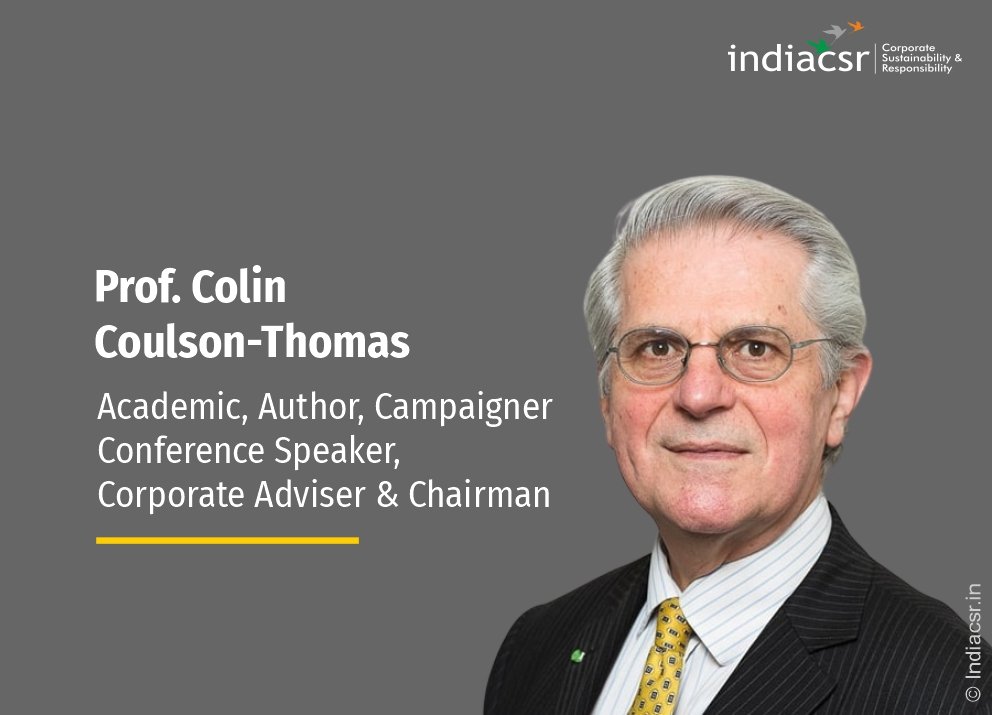
Prof (Dr) Colin Coulson-Thomas
Prof (Dr) Colin Coulson-Thomas, President of the Institute of Management Services and leader of the International Governance Initiative of the Order of St Lazarus, has a portfolio of international leadership roles and is inter alia India CSR’s global Goodwill Ambassador for Sustainability and Director-General, UK & Europe operations of India’s Institute of Directors. He has helped board members to improve director, board and corporate performance in over 40 countries.
(India CSR)