

What I learned, who I talked to and why we need to rethink the idea of a “quantum leap” to get to a sustainable future
By Reynard Loki
In 2012, the world’s biggest and most important meeting on sustainable development was Rio+20, the United Nations Conference on Sustainable Development, which was meant to establish the global sustainability agenda for the next decade. Sadly, it’s become clear that leaders of the world can’t lead when it comes to making any meaningful progress in the climate fight. To witness the onslaught of disappointment, outrage and resignation, simply Google “Rio+20 failure.” Or think a moment about the fact that a Google search for “ocean acidification” turns up 1.5 million results, while a search for “Snooki” gives the intrepid knowledge-seeker more than 23 million pages of animal print-loving, orange-tanned splendor. (The two, of course, are connected: The first, brought on by our increased carbon emissions, is destroying coral reefs and marine food chains. If we don’t do something soon to stem it, the second will no longer have her beloved Jersey shore.)
So while the Rio+20 outcome document may be weaker than a virgin caipirinha, the expectations were admittedly pretty low, especially considering that the United States and the European Union have been tangled in other niggling concerns, like the economy and jobs. And while those issues may be more immediate, they are no less pressing than (and, like so many of society’s most intractable problems, actually closely connected to) achieving a sustainable future, the door of which is closing fast.
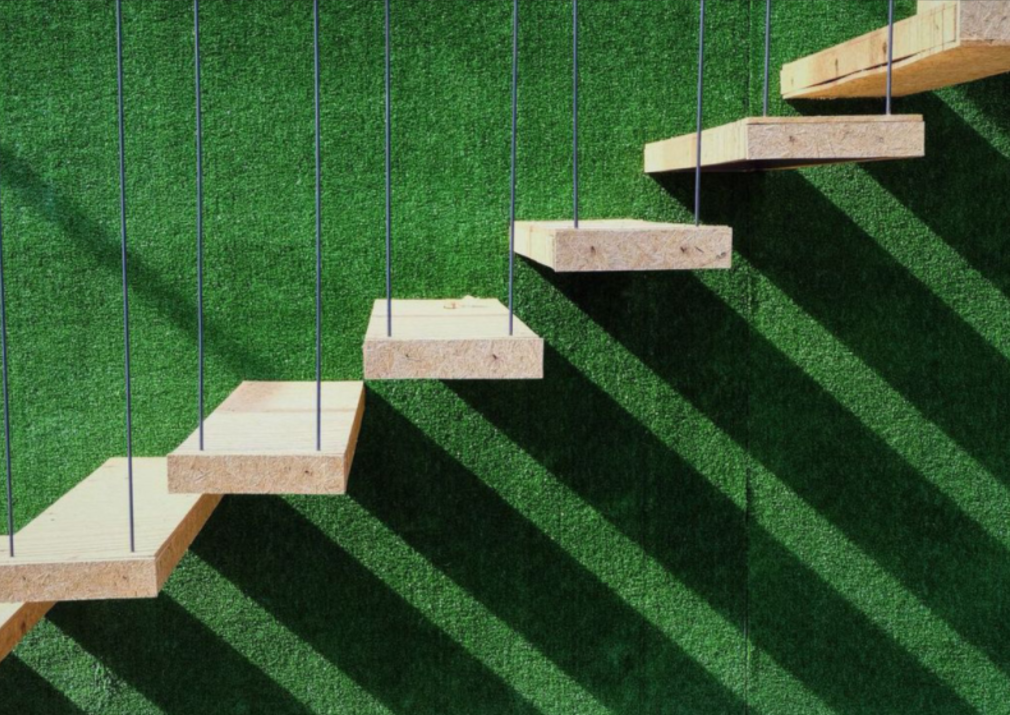
But one thing that was made clear in 2012 is that the world’s climate negotiators aren’t the planet’s only hope. A growing army of young social entrepreneurs, emerging design innovators and cleantech companies are not only building the stairway to sustainability with bold ideas, but are spreading the gospel of sustainability through social media. Not to be undersold, conscious consumers are having their day at the register. And the rise of the ethical investor continues apace. To be sure, corporations are listening. In the four years since the onset of the global financial crisis, there has been a period of waking up. And while humans generally continue to exist in an unsustainable way, sustainability is possible, but—as International Land Coalition director Madiodio Niasse cautioned in May—only with a “quantum leap.”
While Niasse means an abrupt major advance, the word “quantum” in physics actually means the smallest possible change that makes a difference. Perhaps those focused solely on large-scale, systemic sustainability might see the value in this other meaning: The leap to sustainability could be made up of a collection of small leaps, ones made by individuals through their behavior as consumers, investors and leaders, whether it’s at home, at the office or in the community.
With that in mind, herewith is a recap of some leaps (quantum or otherwise) during a year of learning, talking and writing about sustainability.
BAD CLIMATE FOR A CLIMATE ACCORD
For world of sustainable business, the year opened with a rude awakening. “For the first time we have made no improvement in our rate of decarbonization,” stated the 2012 State of Green Business Report, which was released on January 18 by GreenBiz. “We have in fact increased the carbon intensity of growth.”
So when President Obama said just a week later in his State of the Union Address, “I will not cede the wind or solar or battery industry to China or Germany because we refuse to make the same commitment here,” it sounded good, but without legislation to back it up—and a bickering, do-nothing Congress continually keeping the nation’s green power industry in limbo with the on-again, off-again Production Tax Credit—it rang hollow.
On a global level, little progress was made toward a meaningful climate accord. A January 25 New York Times article about the UNFCCC’s climate talks in Durban quoted Trevor Houser, a climate and energy analyst at the Rhodium Group, as saying, “There is no mention of historic responsibility or per capita emissions…There is no mention of economic development as the priority for developing countries. There is no mention of a difference between developed and developing country action. Rather it calls for urgent action by everyone and the widest possible collaboration.”
OLD EXECS STUMBLE WHILE YOUNG ENTREPRENEURS SHINE
Crisis mode is the mode in which UN Secretary-General Ban Ki-moon wants leaders to be operating. As he told executives gathered at the KPMG Global Summit Opening Address on February 14: “Trust in government and the private sector is declining dramatically. A series of disasters, scandals and business-as-usual have made people increasingly skeptical of the corporate world…What I see is a crisis of leadership—a lack of imagination in looking at old problems with fresh eyes—and a lack of urgency as the clock keeps ticking down. In these uncertain and tumultuous times, we need to work together to deliver solutions for sustainability.”
Those who worry about leadership in the private sector would have had something to cheer had they attended Harvard University’s 13th Annual Social Enterprise Conference, a two-day meeting in early February. I spoke to conference co-chair Tony Muljadi, who said, “A successful social enterprise makes a positive and sustainable impact on the world. If you’re not making a positive impact, you’re just using resources.” The conference’s young entrepreneurs keynote brought together Lauren Bush, who co-founded FEED Projects, which sells products with built-in donations to provide school meals to children around the world through the World Food Programme; Taylor Conroy, who developed an online social network platform to raise money for schools in Africa; and Kavita Shulka, who founded Fenugreen, which produces all-natural biodegradable paper.
THE IMPORTANCE OF EMPATHY AND CHOICE
On March 8, I attended the International Women’s Day conference at the United Nations and was able to spend some time talking with Ms. Bush, who gave a presentation about FEED Project. Even though we were surrounded by throngs of people who wanted to get their picture taken with the former fashion model (and granddaughter of President George H. W. Bush and niece of President George W. Bush), she had a remarkable way of making me feel that our conversation was the only thing that mattered to her at that moment. It’s no wonder she’s greeted so warmly when she visits the communities in Africa improved by the work of her social enterprise. As she told me, “True human empathy and connection—and the level of dedication that can follow from that—comes from personal interaction.” Such a sage sentiment indicates she may agree with a more personal, individual approach to the “quantum leap.”
The following week, I caught up with Talya Bosch, the senior director of social ventures at Western Union, and asked her about how cross-sector collaborations help create financial opportunities for women and other underserved groups around the world. “The question becomes choice,” she said. “And giving people in every market as much choice as possible is powerful. As more people move money through traditional bank accounts, prepaid cards, mobile phones, cash and eventually through technologies that are yet to come, the potential for positive social change becomes even more interesting and powerful as we look ahead.”
ECOSYSTEM SERVICES AND LESSONS FROM DENMARK AND INDIA
As usual, April showers brought May flowers, but for how long? “Healthy ecosystems provide us with fertile soil, clean water, timber, and food. They reduce the spread of diseases. They protect against flooding. Worldwide, they regulate atmospheric concentrations of oxygen and carbon dioxide. They moderate climate. Without these and other ‘ecosystem services,’ we’d all perish,” wrote David C. Holzman in an excellent paper published in the April issue of the journal Environmental Health Perspectives. However, he pointed out that the “value of ecosystem services typically goes unaccounted for in business and policy decisions and in market prices. For commercial purposes, if ecosystem services are recognized at all, they are perceived as free goods, like clean air and water.”
While clean water is not something that the 400 million people who live along India’s extremely polluted Ganges River can always access, “Indian companies have much to teach the rest of the world about sustainable finance, argued Financial Times correspondent David Gait in an April 15 op-ed. “There are many for which sustainable business practices have always come naturally, but also some with particularly questionable practices. This combination of best and worst throws up lessons for investors willing to learn.”
On April 25, Justmeans hosted the 2012 Social Innovation Awards in Boston in conjunction with the 2012 Ceres Conference: Igniting Innovation, Scaling Sustainability. The Best Sustainability Performance Award went to Novo Nordisk, a global healthcare company based in Denmark recognized for the success of its energy-saving partnership with DONG Energy and the World Wide Fund for Nature (WWF). The company has committed to reducing energy consumption from its production sites around the world so that by 2014, their total CO2 emissions are 10 percent less than they were in 2004. “The main foundation for Novo Nordisk is the triple bottom line because that is what’s protecting our license to operate,” said president and CEO Lars Rebien Sorensen. “That begs and obliges everybody in the company not only to see that we become a good business—that’s the financial bottom line—but that we do so in a way that is socially and environmentally responsible.”
SPECIES DIE-OFF AND NUCLEAR PHASE-OUT
Reducing consumption was a main message on World Biodiversity Day, held on May 22 to raise awareness of global biodiversity loss. As the Worldwatch Institute noted, “The current rate of species extinction is up to 1,000 times above the Earth’s normal extinction rate.” And if we connect the dots, the root cause is the destruction of ecosystems for human consumption. “The current model of consumer societies is destroying the planet and its resources,” said Bo Normander, director of Worldwatch Institute Europe and one of the report’s contributing authors. “This must change in order for the planet to sustain future generations.”
Philippe Cousteau (grandson of legendary oceanographer Jacques Cousteau) was definitely thinking about the welfare of future generations on May 23. That’s when he launched the AdvisorShares Global Echo ETF (GIVE) fund, which has a built-in donation (40 basis points of the fund’s 1.7% annual operating expense) that goes to the Global Echo Foundation, a 501c3 charitable foundation founded by Cousteau that invests in women’s and children’s rights, energy efficiency, technology, renewable energy and, of course, ocean conservation.
TRAGEDY OF THE COMMONS
The state of the world’s water is also a concern for Robert Johnson, the executive director of the Institute for New Economic Thinking and one of the speakers at the New Economics Institute conference, which was held June 8-10 at Bard College in New York. In an interview, he echoed Holzman’s critique of the devaluing of ecosystem resources,” saying, “Water and air are priced at zero. On the other hand, if you cut off my air and water, I would be willing to pay to get it turned back on. So there’s something amiss in a theory of value that doesn’t value these common resources, the common pool on which we all base our lives.”
Developing those common resources in a sustainable way was the fundamental principle of the United Nations Conference on Sustainable Development (aka “Rio+20”), held June 20-22 in Rio de Janeiro. During the conference, the world’s largest development banks—including the Asian Development Bank and the World Bank—were roundly praised after announcing plans to invest $175 billion in sustainable transport, a critical piece of the sustainability puzzle as the human population swells to a staggering 9 billion by the year 2050.
SOWING THE SEEDS OF SUSTAINABILITY
Clothing such huge numbers of people requires a lot of cotton: 25 million tons of it are produced worldwide every year. So we better start thinking more about sustainable cotton, a concept that was front and center at the Second Ethical Fashion Show, held July 4-6 in Berlin. An international gathering of sustainable fashion industry professionals, it served as a powerful reminder that green fashion is not only a rapidly growing market, but that—as the event’s organizers noted—”urban lifestyle and a feeling for fashionable and tasteful design can be combined with high ecological and ethical standards.”
As the fashion show entered its last day, the United Nations Conference on Trade and Development (UNCTAD) released the 2012 World Investment Report, in which sustainability was a main theme. In the previous year, the report mentioned the word “sustainability” 62 times. In this year’s report, the word appeared 274 times. As UN Secretary-General Ban Ki-Moon wrote in the report’s preface, “A broader development policy agenda is emerging that has inclusive and sustainable development goals at its core.”
SYSTEMIC CHANGE MUST INCLUDE ASIA
One of 2012’s most awesome quantum leapers is Cheryl Heller, chair of the new Design for Social Innovation program at the School of Visual Arts in New York, which launched this fall. When I asked her what she wanted to bring to the world of social innovation for a Justmeans Q&A published on August 1, she replied, “A sense of beauty and hope.” But she also acknowledged the monumental scale of change that is required. “Changing any one part isn’t enough,” she said, “It has to be systemic. We have to be doing all the things we’ve been doing, but should be doing more of these things in collaboration instead of in competition.” Now there’s an idea.
And while all parts of the global system require retooling, it’s clear that the road to sustainability must go through Asia: The majority of the world’s people live there. So it was nice to learn that funds managed under sustainable and responsible investing in Asia recently hit the $24 billion mark, according to the Asia Sustainable and Responsible Investment Trends Survey, released on August 22 by the Association for Sustainable & Responsible Investment in Asia.
FOOD, FORESTRY AND FISHING
In September, a few days after the United Nations Food and Agriculture Organization (FAO) and the European Bank for Reconstruction and Development (EBRD) called on the private sector to inject massive investment into agriculture, I investigated the effect of commodities speculation on hunger, looking ahead to World Food Day in October. “There can be no freedom from hunger—there can be no food security—without the active participation of all sectors of society, including the private sector,” said FAO director-general José Graziano da Silva.
Also in September, WWF released the 2050 Criteria, a “field guide for investors” targeting the long term sustainability of ten high priority global commodity sectors. The guide identifies responsible companies and projects in key industries dealing with at-risk global commodities across agriculture, forestry and fishing. It provided a stern reminder that if we do not up the sustainability factor significantly in these areas, a sustainable future will simply not be possible, and the year 2050 will be a very bad time for most living things.
THE GIVING TREES
On October 11, the Committee Encouraging Corporate Philanthropy (CECP) in association with the Conference Board released the annual Giving in Numbers report. Now in its eight edition, the field’s leading analysis of corporate giving delivered some much-needed good news: total corporate giving increased across all industries, with the Consumer Staples and Health Care sectors at the top of total giving growth.
A few days later, the Oxford, UK-based forest protection think-tank Global Canopy Programme (GCP) released The Little Forest Finance Book, which highlights ways to increase forest-friendly sustainable finance, at the 11th Conference of the Parties to the United Nations Convention on Biological Diversity, in Hyderabad, India.
HEDGE FUNDS AND HEMLINES
in November, the UN-backed Principles for Responsible Investing (PRI) initiative released a discussion paper that seeks to apply the tenets of responsible investing to the high-flying world of hedge funds, because, as PRI’s director of responsible investment Rob Lake pointed out, “There is currently no clear consensus on what being a responsible investor in hedge funds actually entails.”
In December, global retail fashion giant H&M gave conscious consumers an opportunity to add to the sustainability quotient when it announced its new used clothing collection initiative, making it the first fashion company to have such a program. Starting in January, anyone can drop off used clothes at selected H&M stores across the world and get a discount coupon to use in the store. Now there’s a fashion trend that we can all get behind.
RETHINKING SUSTAINABILITY’S QUANTUM LEAP
While the world is still on a dangerous road, there have been leaps of various sizes towards a more sustainable future. After a year of learning, talking and writing about sustainability, it’s clear to me that while significant changes on a systemic level must be made, the big “quantum leap” to sustainability isn’t something we can bet on. But the small, individual quantum leaps that we as individuals make each and every day—can make a difference.
Earlier this month, sustainability consultant Vicky Grinnell-Wright encapsulated the predicament that even the most ethical consumers tangle with when, in an article for The Guardian entitled “Consumerism Christmas—the sustainability dilemma,” she asked herself, “If the most sustainable choice is a gift not manufactured, not transported, not purchased, not wrapped, not opened, not sent to landfill, or discarded in some toy box, why do I seek to find ways to fill up my children’s Christmas lists?”
It’s a fair question, and one we should all ask ourselves about every purchase, not just during the holidays. But a more incisive question that gets to heart of the power of individual choice on the grand scheme of things is one that appeared in a headline for the satirical newspaper The Onion a few years ago: “‘How Bad for the Environment Can Throwing Away One Plastic Bottle Be?’ 30 Million People Wonder.”
Have a happy—and more sustainable—new year.
Reynard Loki
Reynard is a Justmeans staff writer for Sustainable Finance and Corporate Social Responsibility. A former media executive with 15 years experience in the private and non-profit sectors, Reynard is the co-founder of MomenTech, a New York-based experimental production studio that explores transnational progressivism, neo-nomadism, post-humanism and futurism.
( Article published under 3BL Media-INDIACSR partnership)