• India CSR Awards 2025
  • India CSR Leadership Summit
  • Guest Posts
Saturday, February 28, 2026
India CSR
  • Home
  • Corporate Social Responsibility
    • Art & Culture
    • CSR Leaders
    • Child Rights
    • Culture
    • Education
    • Gender Equality
    • Around the World
    • Skill Development
    • Safety
    • Covid-19
    • Safe Food For All
  • Sustainability
    • Sustainability Dialogues
    • Sustainability Knowledge Series
    • Plastics
    • Sustainable Development Goals
    • ESG
    • Circular Economy
    • BRSR
  • Corporate Governance
    • Diversity & Inclusion
  • Interviews
  • SDGs
    • No Poverty
    • Zero Hunger
    • Good Health & Well-Being
    • Quality Education
    • Gender Equality
    • Clean Water & Sanitation – SDG 6
    • Affordable & Clean Energy
    • Decent Work & Economic Growth
    • Industry, Innovation & Infrastructure
    • Reduced Inequalities
    • Sustainable Cities & Communities
    • Responsible Consumption & Production
    • Climate Action
    • Life Below Water
    • Life on Land
    • Peace, Justice & Strong Institutions
    • Partnerships for the Goals
  • Articles
  • Events
  • हिंदी
  • More
    • Business
    • Finance
    • Environment
    • Economy
    • Health
    • Around the World
    • Social Sector Leaders
    • Social Entrepreneurship
    • Trending News
      • Important Days
        • Festivals
      • Great People
      • Product Review
      • International
      • Sports
      • Entertainment
    • Case Studies
    • Philanthropy
    • Biography
    • Technology
    • Lifestyle
    • Sports
    • Gaming
    • Knowledge
    • Home Improvement
    • Words Power
    • Chief Ministers
No Result
View All Result
  • Home
  • Corporate Social Responsibility
    • Art & Culture
    • CSR Leaders
    • Child Rights
    • Culture
    • Education
    • Gender Equality
    • Around the World
    • Skill Development
    • Safety
    • Covid-19
    • Safe Food For All
  • Sustainability
    • Sustainability Dialogues
    • Sustainability Knowledge Series
    • Plastics
    • Sustainable Development Goals
    • ESG
    • Circular Economy
    • BRSR
  • Corporate Governance
    • Diversity & Inclusion
  • Interviews
  • SDGs
    • No Poverty
    • Zero Hunger
    • Good Health & Well-Being
    • Quality Education
    • Gender Equality
    • Clean Water & Sanitation – SDG 6
    • Affordable & Clean Energy
    • Decent Work & Economic Growth
    • Industry, Innovation & Infrastructure
    • Reduced Inequalities
    • Sustainable Cities & Communities
    • Responsible Consumption & Production
    • Climate Action
    • Life Below Water
    • Life on Land
    • Peace, Justice & Strong Institutions
    • Partnerships for the Goals
  • Articles
  • Events
  • हिंदी
  • More
    • Business
    • Finance
    • Environment
    • Economy
    • Health
    • Around the World
    • Social Sector Leaders
    • Social Entrepreneurship
    • Trending News
      • Important Days
        • Festivals
      • Great People
      • Product Review
      • International
      • Sports
      • Entertainment
    • Case Studies
    • Philanthropy
    • Biography
    • Technology
    • Lifestyle
    • Sports
    • Gaming
    • Knowledge
    • Home Improvement
    • Words Power
    • Chief Ministers
No Result
View All Result
India CSR
No Result
View All Result
Home More

Who can improve Social Service Provision, The state, The private sector or NGOs

India CSR by India CSR
December 14, 2011
in More
Reading Time: 4 mins read
Share Share Share Share
WhatsApp icon
WhatsApp — Join Us
Instant updates & community
Google News icon
Google News — Follow Us
Get our articles in Google News feed

By Sharon Weir and Payal Mulchandani

India CSRIt is argued that the supposed monopoly of the State in social service delivery like health or education has gradually broken down. Non Governmental Organisations (NGOs) and Community Based Organisations (CBOs) have increased in strength and importance, for services to be delivered well, appropriately and in direct response to the needs of local people.

Neoliberalism, since the 1980s, has propagated ‘rolling back’ of the state and relies heavily on markets through privatisation and public private relationships in order to increase efficiency and delivery of public goods services.

Accountability, good governance and good management practices in the key to effective service provision. Public Goods like Education and Health – Service provision can be improved and it is essential for the State to play a key role in this exercise since public goods provision left to markets will be non egalitarian and would only benefit those who can afford them, which contradicts the basic idea of public goods like health and education to be beneficial to all and non rival and non exclusionary. The market would have few incentives to provide public goods. Government intervention is required to check market failures and to promote equality.

Service Provision is constantly failing to improve outcomes since services are often inaccessible, very expensive, even when available they are low in technical quality and unable to cater to the needs of a diverse clientele. The public sector is criticised for being deeply politicised and corrupt. There are not enough incentives associated with social service delivery and most times the funds and infrastructure required are absent.

The reasons for an ever growing increase and emphasis on public – private partnerships is due to the insufficient budgetary resources of states, public dissatisfaction with quality and coverage of public service provision and slow and ineffective delivery and outcomes. The advantages of bringing in the private sector for service provision are increased competition and efficiency in service provision, expansion in coverage of services, reduction in delivery costs, increased possibility of new ideas, commercial discipline and financial diligence, mobilising private and foreign investment capital for infrastructure expansion or improvement and to avoid the bureaucratic or corruption problem. PPPs enable the State to extend services without increasing the number of public employees and without making large investments in facilities and equipment. There are considerable considerations and that need to be done in order to derive the results expected of PPPs like adequate legal reforms, regulations and checks. Unnecessary restriction should be removed and the State’s role should be redefined from a direct provider to a regulator.

The main drawback and criticism for privatisation is that if a government has been corrupt or if policy making and implementation have been devilled by the pursuit of private agendas by interest groups, the process of privatisation is unlikely to escape the impact of these sources of government failure. (Vickers and Yarrow, 1991) Opening up the Health service provision markets for private investment, for liberals, promises to increase the efficiency of health services globally, for others the prospect suggests a further marginalisation of the poor, a reduction in access to health provision and the appropriation of public funds by powerful TNCs. (Price, 1999) For decades, cooperative organisations, trade unions, women’s and youth clubs, and religious groups in Asia have all been involved in some aspect of public service provision. NGOs and religious organisations provide health, education and training programs that supplement those offered by governments.

NGOs are important in improving the delivery of basic services because of their relative flexibility, experience with dealing with the poor, cost effectiveness and freedom from politicisation. There are issues with NGOS with regards to accountability and transparency and sometimes leads to increases in dependence and reduces the states sovereignty.

The most vital aspects for services to work is to increase the accountability of providers, improve the management of services and the personnel involved in provision of services and facilitate more voice and participation of recipients. The effectiveness of service delivery depends on the extent to which those who deliver are held accountable for their performance.

The public sector, the private sector and the third sector of NGOs and philanthropic institutions and individuals should be engaged in service provision according to their comparative advantages.

The public sector should continue to regulate and monitor service provision and focus on participation, equality and disbursement of powers in order to increase the effectiveness of the services delivered and play an integral role in facilitating, supporting and implementing Social Service Provision activities. The private sector should utilise its sound management systems, good access to technology and funds and their profit making and non politicised systems. NGOs and local organisations and governments should draw on their advantages of proximity to grassroots and their knowledge of problems and inefficiencies in service delivery.

Privatisation might lead to service provision being restricted to only those who have the ability to pay and many times, private service provisions are subject to the same problems of bureaucratisation and elite capture of the public sector.

NGOs also are influenced by transnational corporations and their conditionalities and beliefs and hence rather than being a ‘bottom up measure’, suffers from ‘top down’ policy issues. Private Service provision can definitely overcome the limitations of the public sector in terms of better management, efficiency, technical studies, understanding the local demands and catering to a larger population.

Without strong central oversight and support, the delivery of services will suffer. There is no escaping the fact that serious reforms are needed in the public sector that would facilitate and enhance the effectiveness of private service provisions.
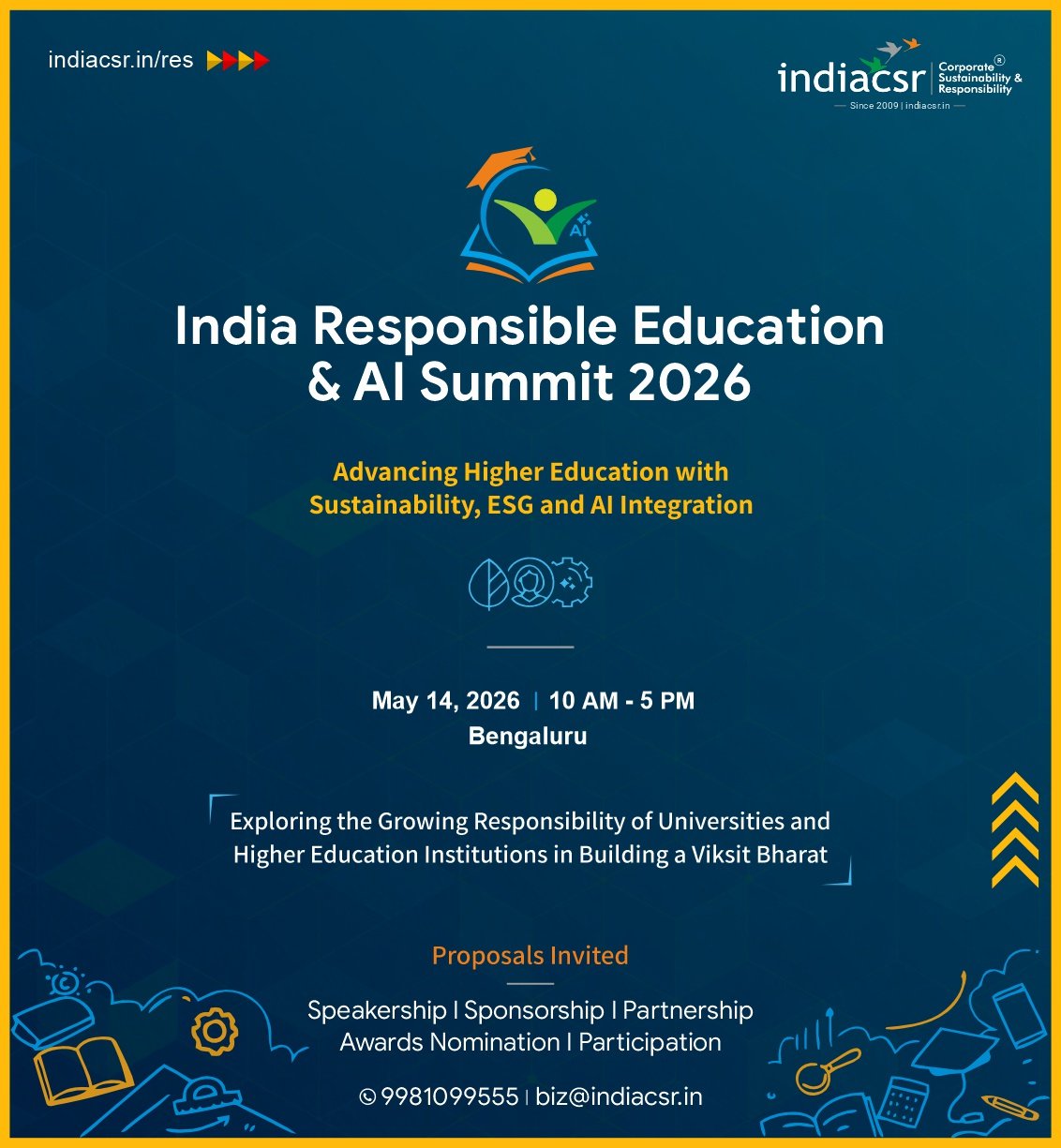
India Responsible Education & AI Summit 2026
ADVERTISEMENT
Ambedkar Chamber
ADVERTISEMENT
ESG Professional Network
ADVERTISEMENT
India Sustainability Awards 2026
ADVERTISEMENT
India CSR Image 1 India CSR Image 2

CSR, Sustainability, and ESG success stories hindustan zinc
ADVERTISEMENT
India CSR

India CSR

India CSR is the largest media on CSR and sustainability offering diverse content across multisectoral issues on business responsibility. It covers Sustainable Development, Corporate Social Responsibility (CSR), Sustainability, and related issues in India. Founded in 2009, the organisation aspires to become a globally admired media that offers valuable information to its readers through responsible reporting.

Related Posts

India’s Veteran journalist Vinod Dua passes away
More

India’s Veteran journalist Vinod Dua passes away

4 years ago
India CSR
More

Republic or Democratic?

5 years ago
Dr. H. Chaturvedi on Stem Education in India at STEM – CSR Roundtable
Corporate Social Responsibility

How can we conserve water amidst the Coronavirus crisis?

6 years ago
Dr. H. Chaturvedi on Stem Education in India at STEM – CSR Roundtable
More

Toyota Kirloskar Motor temporarily halts production at its Plant in Bidadi, Karnataka

6 years ago
Dr. H. Chaturvedi on Stem Education in India at STEM – CSR Roundtable
Corporate Social Responsibility

Govt. seeks public comments on Corporate Social Responsibility Policy (CSR) Amendment Rules, 2020

6 years ago
Dr. H. Chaturvedi on Stem Education in India at STEM – CSR Roundtable
Corporate Social Responsibility

Govt to amend CSR rules under companies law, invites public comments

6 years ago
Load More
India Responsible Education & AI Summit 2026
ADVERTISEMENT
Ambedkar Chamber
ADVERTISEMENT
India Sustainability Awards 2026
ADVERTISEMENT

LATEST NEWS

Municipalika 2026 Charts Roadmap for Viksit Bharat 2047 Cities

Hariharan Marks 50 Glorious Years of Ghazal with Grand Tribute Event

CSR: Mars Impact Fund Rolls Out India Dog Population Initiative

CSR: Over 3,000 Residents Attend Vatika’s Vasantotsav in Gurugram

TCS CodeVita 2026 Breaks Guinness Record with 146,922 Coders

MONEYWISE INDIA- Empowering Every Indian To Make Smarter Money Choices

Economy India Largest Media on Indian Economy and Business
ADVERTISEMENT
Ad 1 Ad 2 Ad 3
ADVERTISEMENT
ESG Professional Network
ADVERTISEMENT

TOP NEWS

Canvas Prints and Vintage Wall Art: Timeless Decor for Home Interiors

India’s Higher Education Roadmap Unlocks $113 Billion Opportunity

MONEYWISE INDIA- Empowering Every Indian To Make Smarter Money Choices

CSR: Qualcomm-backed Arduino Scales Physical AI in K–12 Schools

CSR: GreenCell Mobility Reinforces Road Safety Month 2026 Drive

Yuva Unstoppable Leads CSR Track at India’s Impact Global AI PitchFest 2026

Load More
STEM Learning STEM Learning STEM Learning
ADVERTISEMENT

Interviews

Prerrit Mansingh, Secretary, Aayom Welfare Society
Interviews

Scaling Compassion into Structured Social Change: An Interview with Prerrit Mansingh

by India CSR
February 28, 2026

Prerrit Mansingh on Aayom Welfare Society’s Legacy of Seva and Sustainable Community Transformation.

Read moreDetails
Sheena Kapoor, Head – Marketing, Corporate Communication & CSR at ICICI Lombard

ICICI Lombard at 25: Sheena Kapoor on Promise-Led CSR and Lasting Impact

February 28, 2026
Arun Jain, Founder and CMD of Intellect and Founder of Mission Samriddhi

Design Thinking for Rural India: Arun Jain’s Civilisation Economics Model

February 28, 2026
Rajani Jalan, Director, CSR & People Relations, mPokket

mPokket’s Decade of CSR Impact in West Bengal: An Interview with Rajani Jalan

February 25, 2026
Load More
Facebook Twitter Youtube LinkedIn Instagram
India CSR Logo

India CSR is the largest tech-led platform for information on CSR and sustainability in India offering diverse content across multisectoral issues. It covers Sustainable Development, Corporate Social Responsibility (CSR), Sustainability, and related issues in India. Founded in 2009, the organisation aspires to become a globally admired media that offers valuable information to its readers through responsible reporting. To enjoy the premium services, we invite you to partner with us.

Follow us on social media:


Dear Valued Reader

India CSR is a free media platform that provides up-to-date information on CSR, Sustainability, ESG, and SDGs. We need reader support to continue delivering honest news. Donations of any amount are appreciated.

Help save India CSR.

Donate Now

Donate at India CSR

  • About India CSR
  • Team
  • India CSR Awards 2025
  • India CSR Leadership Summit
  • India Responsible Education & AI Summit 2026
  • Partnership
  • Guest Posts
  • Services
  • ESG Professional Network
  • Content Writing Services
  • Business Information
  • Contact
  • Privacy Policy
  • Terms of Use
  • Donate

Copyright © 2025 - India CSR | All Rights Reserved

No Result
View All Result
  • Home
  • Corporate Social Responsibility
    • Art & Culture
    • CSR Leaders
    • Child Rights
    • Culture
    • Education
    • Gender Equality
    • Around the World
    • Skill Development
    • Safety
    • Covid-19
    • Safe Food For All
  • Sustainability
    • Sustainability Dialogues
    • Sustainability Knowledge Series
    • Plastics
    • Sustainable Development Goals
    • ESG
    • Circular Economy
    • BRSR
  • Corporate Governance
    • Diversity & Inclusion
  • Interviews
  • SDGs
    • No Poverty
    • Zero Hunger
    • Good Health & Well-Being
    • Quality Education
    • Gender Equality
    • Clean Water & Sanitation – SDG 6
    • Affordable & Clean Energy
    • Decent Work & Economic Growth
    • Industry, Innovation & Infrastructure
    • Reduced Inequalities
    • Sustainable Cities & Communities
    • Responsible Consumption & Production
    • Climate Action
    • Life Below Water
    • Life on Land
    • Peace, Justice & Strong Institutions
    • Partnerships for the Goals
  • Articles
  • Events
  • हिंदी
  • More
    • Business
    • Finance
    • Environment
    • Economy
    • Health
    • Around the World
    • Social Sector Leaders
    • Social Entrepreneurship
    • Trending News
      • Important Days
      • Great People
      • Product Review
      • International
      • Sports
      • Entertainment
    • Case Studies
    • Philanthropy
    • Biography
    • Technology
    • Lifestyle
    • Sports
    • Gaming
    • Knowledge
    • Home Improvement
    • Words Power
    • Chief Ministers

Copyright © 2025 - India CSR | All Rights Reserved

This website uses cookies. By continuing to use this website you are giving consent to cookies being used. Visit our Privacy and Cookie Policy.
Are you sure want to unlock this post?
Unlock left : 0
Are you sure want to cancel subscription?