• India CSR Awards 2025
  • India CSR Leadership Summit
  • Guest Posts
Monday, February 2, 2026
India CSR
  • Home
  • Corporate Social Responsibility
    • Art & Culture
    • CSR Leaders
    • Child Rights
    • Culture
    • Education
    • Gender Equality
    • Around the World
    • Skill Development
    • Safety
    • Covid-19
    • Safe Food For All
  • Sustainability
    • Sustainability Dialogues
    • Sustainability Knowledge Series
    • Plastics
    • Sustainable Development Goals
    • ESG
    • Circular Economy
    • BRSR
  • Corporate Governance
    • Diversity & Inclusion
  • Interviews
  • SDGs
    • No Poverty
    • Zero Hunger
    • Good Health & Well-Being
    • Quality Education
    • Gender Equality
    • Clean Water & Sanitation – SDG 6
    • Affordable & Clean Energy
    • Decent Work & Economic Growth
    • Industry, Innovation & Infrastructure
    • Reduced Inequalities
    • Sustainable Cities & Communities
    • Responsible Consumption & Production
    • Climate Action
    • Life Below Water
    • Life on Land
    • Peace, Justice & Strong Institutions
    • Partnerships for the Goals
  • Articles
  • Events
  • हिंदी
  • More
    • Business
    • Finance
    • Environment
    • Economy
    • Health
    • Around the World
    • Social Sector Leaders
    • Social Entrepreneurship
    • Trending News
      • Important Days
        • Festivals
      • Great People
      • Product Review
      • International
      • Sports
      • Entertainment
    • Case Studies
    • Philanthropy
    • Biography
    • Technology
    • Lifestyle
    • Sports
    • Gaming
    • Knowledge
    • Home Improvement
    • Words Power
    • Chief Ministers
No Result
View All Result
  • Home
  • Corporate Social Responsibility
    • Art & Culture
    • CSR Leaders
    • Child Rights
    • Culture
    • Education
    • Gender Equality
    • Around the World
    • Skill Development
    • Safety
    • Covid-19
    • Safe Food For All
  • Sustainability
    • Sustainability Dialogues
    • Sustainability Knowledge Series
    • Plastics
    • Sustainable Development Goals
    • ESG
    • Circular Economy
    • BRSR
  • Corporate Governance
    • Diversity & Inclusion
  • Interviews
  • SDGs
    • No Poverty
    • Zero Hunger
    • Good Health & Well-Being
    • Quality Education
    • Gender Equality
    • Clean Water & Sanitation – SDG 6
    • Affordable & Clean Energy
    • Decent Work & Economic Growth
    • Industry, Innovation & Infrastructure
    • Reduced Inequalities
    • Sustainable Cities & Communities
    • Responsible Consumption & Production
    • Climate Action
    • Life Below Water
    • Life on Land
    • Peace, Justice & Strong Institutions
    • Partnerships for the Goals
  • Articles
  • Events
  • हिंदी
  • More
    • Business
    • Finance
    • Environment
    • Economy
    • Health
    • Around the World
    • Social Sector Leaders
    • Social Entrepreneurship
    • Trending News
      • Important Days
        • Festivals
      • Great People
      • Product Review
      • International
      • Sports
      • Entertainment
    • Case Studies
    • Philanthropy
    • Biography
    • Technology
    • Lifestyle
    • Sports
    • Gaming
    • Knowledge
    • Home Improvement
    • Words Power
    • Chief Ministers
No Result
View All Result
India CSR
No Result
View All Result
Home Opinion

Unlocking India’s Potential: Why Education and Technology Must Lead the Charge

India CSR by India CSR
December 26, 2025
in Opinion
Reading Time: 6 mins read
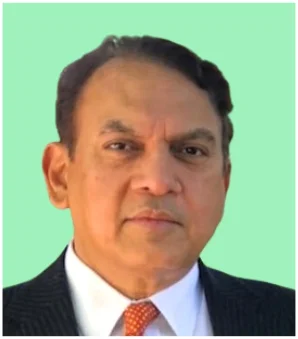
Satish Jha

Satish Jha

Share Share Share Share
India CSR

By Satish Jha

NEW DELHI (India CSR): In his ambitious working paper, “How Can India Create More Jobs and Achieve Viksit Bharat 2047?”, economist Ejaz Ghani (my friend and contemporary from JNU, a brilliant student who finished his doctorate from Oxford and joined the world bank to retire from there) offers a forensic diagnosis of India’s “Jobs Paradox”—an economy marching ahead while hundreds of millions of young people remain jobless or trapped in low-productivity work.

Drawing on firm-level data, Ghani identifies “structural brakes” such as the “Collateral Trap” (land-tied credit), “Regulatory Dwarfism” (stunted firm growth), and the “Triple Tax” on women (safety, care, and institutional barriers).

His blueprint proposes a “New Social Compact” powered by Digital Public Infrastructure (DPI) for Information-Based Lending (IBL), a portable “Mobility Shield” for welfare, and a National Jobs Council to align incentives.

The analysis is sharp, but it reflects a familiar elite gaze—economists and policymakers peering at poverty through distant, romanticized lenses of empathy or abstraction.

Too often, they imagine the poor as variables in a logical frame, as if human lives could be reduced to equations. Born with talent equal to theirs but denied opportunity, the poor are told to “skill up,” when what they truly needed was quality education that could have transformed not just their individual world, but the nation’s trajectory. In this arithmetic of reform, people risk becoming numbers.

As an observer who champions individual empowerment over top-down fixes, I applaud Ghani’s emphasis on young firms as job creators (accounting for 45% of net new jobs) and his call to shift from asset-based to data-driven finance.

Yet the firm-centric lens risks treating citizens as cogs in an economic machine. From a people’s perspective, true progress demands prioritizing education and technology not as supporting acts, but as the lead protagonists of inclusive growth.

Without empowering individuals with universal, quality-driven education and digital tools, Ghani’s reforms could entrench inequalities, leaving the demographic dividend as a mirage. Viksit Bharat isn’t about hitting $30 trillion GDP; it is about dignity, opportunity, and self-reliance for 1.5 billion Indians.

Ghani’s critique of the “Industrial Engine” myth is analytically precise. He rightly notes that mature firms (>10 years old) are net job destroyers (-3.5% creation rate), while services dominate at 55% of GDP. But this macro view glosses over the human stories beneath.

Consider the 20 percent unemployment rate among female graduates—a statistic Ghani cites but underplays. These aren’t abstract “factor misallocations”; they are real women like Leelawati’s dayghter Priya from rural Uttar Pradesh, who invests years in a degree only to face the “Graduate Paradox,” retreating to unpaid home duties due to unsafe commutes and childcare gaps.

A liberal critique insists we view this not merely as market failure, but as a rights violation. Women’s exclusion is not just inefficiency; it is a denial of agency in a nation where half the population shoulders disproportionate burdens.

Here, education emerges as the ultimate liberator. Ghani touches on “future-fit skills,” advocating vocational training in green tech and AI. But he treats human capital as a supporting act rather than the star.

Liberals argue education must be the foundation—universal, people-centered, and quality-driven. India’s gross enrollment ratio in higher education hovers at 28%, but quality is abysmal: over 50% of graduates are deemed unemployable by industry surveys.

Imagine redirecting resources from firm subsidies (like the ₹2 lakh crore Production Linked Incentive scheme) toward a “Skills Revolution.” Community-led curricula, co-designed with locals, could emphasize critical thinking, digital literacy, and entrepreneurship.

A World Bank study shows each additional year of schooling boosts earnings by 10% in developing economies. Kerala, with near-universal literacy, boasts lower unemployment (7.4%) and higher female participation (23%) than the national average. Bihar’s low education rates correlate with 13% joblessness. Ghani’s “Phoenix Dividend” for green jobs (35 million projected) is promising, but without mass upskilling, there won’t be enough roles and what will be there will go to a privileged few.

Technology, Ghani’s “Technological Bypass,” is another half-measure. He envisions DPI enabling IBL via Aadhaar, UPI, and GSTN, democratizing credit for MSMEs. This is innovative—UPI’s 10 billion monthly transactions prove India’s digital leap. Yet technology must empower individuals, not just firms. Ghani overlooks the digital divide: 67% of Indians lack internet access, with rural women at 75% disconnection.

His IBL assumes a “digital footprint,” but what of the street vendor without a smartphone or the farmer without GST registration? This risks creating a “Credit Apartheid 2.0,” where the digitally savvy thrive while others languish.

A robust liberal alternative: make key technologies like internet, UPI etc a universal right. Expand Ghani’s “Mobility Shield” into a “Digital Citizenship Guarantee”—free data, community Wi-Fi, and AI tutors for all.

Finland’s 95% broadband penetration shows how connectivity fuels innovation. In India, ed-tech platforms like Edufront have reached millions, but affordability barriers persist. Subsidize them via public-private partnerships, integrating with Ghani’s OCEN to let personal data (e.g., learning app progress) serve as “skills collateral” for micro-loans.

This flips the script: technology isn’t a bypass for elites; it’s a ladder for the masses, enabling a tailor in Bihar to access global markets or a homemaker to upskill remotely, shattering the “Triple Tax.”

Ghani’s regulatory reforms—easing the “Missing Middle” via sandboxes—are welcome, but they prioritize firm scale over worker rights. Deregulation must pair with safeguards: universal basic income pilots or portable pensions to cushion automation’s blow. Education and tech amplify this—AI-resilient training ensures workers aren’t displaced but augmented, as in Singapore’s SkillsFuture program, which has upskilled 500,000 citizens.

Politically, Ghani’s National Jobs Council is a step toward cooperative federalism, but isn’t that furthering centralism? Liberals may advocate grassroots involvement: “town halls” where workers, not just economists, shape policies. His 100-day roadmap for the PMO is top-down; why not a “People’s Jobs Charter” crowdsourced via apps, ensuring reforms reflect lived realities?

Ultimately, Ghani’s blueprint is a solid scaffold, but it needs a human soul. By centering education and technology, we empower individuals to create their own “Gazingas”—not as firm owners alone, but as innovators, workers, and citizens. This liberal vision promises not just jobs, but justice: an India where Priya doesn’t face a “U-shaped” employment curve, but soars on wings of knowledge and connectivity.

The path to 2047 isn’t through bypassing brakes; it’s through equipping every Indian to drive the change. That is the true dividend—people-powered, inclusive, and unstoppable!

About Satish Jha

Satish Jha is a social entrepreneur who earlier co-founded Jansatta for the Indian Express Group, was the chief Editor of newsweekly Dinamaan of The Times of India Group, a global CXO with a couple of Fortune 100 firms, founded edtech firm Edufront, chairs a family foundation Ashraya and supports about 27000 K12 students with One Tablet per Child programs.

Also Read:

  • The Kimmel Kerfuffle: When Satire Meets Suspicion
  • Ambassador Nirupama Rao Clarifies
  • Celestial Ambitions, Terrestrial Realities!
  • Failing the Future: By Design
  • Philanthropy: Satish Jha Expands Digital Learning Ecosystem to Vidya Bharati School in Meerut​
  • Ashraya chairman Satish Jha honored by Indo-American Art’s Council, New York
  • Making Smart Villages Truly Smart: Prioritizing Education as the Core
Tags: Satish JhaViksit Bharat 2047

CSR, Sustainability, and ESG success stories hindustan zinc
ADVERTISEMENT
India CSR

India CSR

India CSR is the largest media on CSR and sustainability offering diverse content across multisectoral issues on business responsibility. It covers Sustainable Development, Corporate Social Responsibility (CSR), Sustainability, and related issues in India. Founded in 2009, the organisation aspires to become a globally admired media that offers valuable information to its readers through responsible reporting.

Related Posts

Satish Jha
Opinion

The Village That Time Forgot

4 months ago
Satish Jha
Opinion

Trump’s H-1B Hammer and India’s Wake-Up Call

4 months ago
India foreign policy
Opinion

Outmanoeuvred!

5 months ago
Indian school teacher classroom
Opinion

Equip India’s Teachers to Forge a Future of Fearless Inquiry

5 months ago
Nirupama Rao
Opinion

Ambassador Nirupama Rao Clarifies

5 months ago
Chandrayaan | Celestial Ambitions, Terrestrial Realities!
Opinion

Celestial Ambitions, Terrestrial Realities!

5 months ago
Load More
Ambedkar Chamber
ADVERTISEMENT
India Sustainability Awards 2026
ADVERTISEMENT

LATEST NEWS

Alakh Pandey Supports Aangan Elderly Home with Rs 21 Lakh Care Fund

Ababill Application Launched to Connect Mosques, Community Members, and Local Businesses on One Digital Platform

Raviteja Gaddam: From Financial Expertise to Purpose-Driven Entrepreneurship

Global Seafood Leaders to Convene in India for World Seafood Congress 2026

World Mission Society Church of God Youth Cleaned Areas Around Punjab University and PGI

ANJ Group Expands Global Reach with UK-Based WFG Group Alliance

Ad 1 Ad 2 Ad 3
ADVERTISEMENT
ESG Professional Network
ADVERTISEMENT

TOP NEWS

Best Health Insurance Plans for Individuals Above 50: What to Consider

“The Blood Oath” Launched in New Delhi

From “Almost Me” to “That’s My Skin”: A Practical Way to Design Minecraft Skins with AI

Union Budget 2026: CA Abhay Bhutada Shares Views on Key Economic Priorities

Union Budget 2026–27: Industry Leaders Welcome Consumption Push, Infrastructure Boost and Reform-First Growth Vision

From Compliance to Impact: Designing Site-Specific and Need-Based CSR Programs

Load More
STEM Learning STEM Learning STEM Learning
ADVERTISEMENT

Interviews

Magma Group CEO and Founder, Neal Thakker
Interviews

Embedding CSR in Responsible Manufacturing at Magma Group: An Interview with Neal Thakker

by India CSR
January 21, 2026

Neal Thakker on integrating CSR and sustainability into factory operations.

Read moreDetails
Sudeep Agrawal, CFO & Head – CSR, Ashirvad by Aliaxis

Integrating Financial Leadership With Impactful CSR Initiatives: An Interview with Sudeep Agrawal, Ashirvad by Aliaxis

December 29, 2025
Sakina Baker, Head – CSR, Bosch Limited, and Head – Bosch India Foundation

Driving Social Innovation & Inclusive Skilling: An Exclusive Interview with Sakina Baker of Bosch India

December 1, 2025
Sita Ram Gupta speaking at the 16th India CSR Summit in New Delhi on November 21, 2025. © India CSR

Life is a Forward Progression, not a Backward Regression, Says Sita Ram Gupta

November 26, 2025
Load More
Facebook Twitter Youtube LinkedIn Instagram
India CSR Logo

India CSR is the largest tech-led platform for information on CSR and sustainability in India offering diverse content across multisectoral issues. It covers Sustainable Development, Corporate Social Responsibility (CSR), Sustainability, and related issues in India. Founded in 2009, the organisation aspires to become a globally admired media that offers valuable information to its readers through responsible reporting. To enjoy the premium services, we invite you to partner with us.

Follow us on social media:


Dear Valued Reader

India CSR is a free media platform that provides up-to-date information on CSR, Sustainability, ESG, and SDGs. We need reader support to continue delivering honest news. Donations of any amount are appreciated.

Help save India CSR.

Donate Now

Donate at India CSR

  • About India CSR
  • Team
  • India CSR Awards 2025
  • India CSR Leadership Summit
  • Partnership
  • Guest Posts
  • Services
  • ESG Professional Network
  • Content Writing Services
  • Business Information
  • Contact
  • Privacy Policy
  • Terms of Use
  • Donate

Copyright © 2025 - India CSR | All Rights Reserved

No Result
View All Result
  • Home
  • Corporate Social Responsibility
    • Art & Culture
    • CSR Leaders
    • Child Rights
    • Culture
    • Education
    • Gender Equality
    • Around the World
    • Skill Development
    • Safety
    • Covid-19
    • Safe Food For All
  • Sustainability
    • Sustainability Dialogues
    • Sustainability Knowledge Series
    • Plastics
    • Sustainable Development Goals
    • ESG
    • Circular Economy
    • BRSR
  • Corporate Governance
    • Diversity & Inclusion
  • Interviews
  • SDGs
    • No Poverty
    • Zero Hunger
    • Good Health & Well-Being
    • Quality Education
    • Gender Equality
    • Clean Water & Sanitation – SDG 6
    • Affordable & Clean Energy
    • Decent Work & Economic Growth
    • Industry, Innovation & Infrastructure
    • Reduced Inequalities
    • Sustainable Cities & Communities
    • Responsible Consumption & Production
    • Climate Action
    • Life Below Water
    • Life on Land
    • Peace, Justice & Strong Institutions
    • Partnerships for the Goals
  • Articles
  • Events
  • हिंदी
  • More
    • Business
    • Finance
    • Environment
    • Economy
    • Health
    • Around the World
    • Social Sector Leaders
    • Social Entrepreneurship
    • Trending News
      • Important Days
      • Great People
      • Product Review
      • International
      • Sports
      • Entertainment
    • Case Studies
    • Philanthropy
    • Biography
    • Technology
    • Lifestyle
    • Sports
    • Gaming
    • Knowledge
    • Home Improvement
    • Words Power
    • Chief Ministers

Copyright © 2025 - India CSR | All Rights Reserved

This website uses cookies. By continuing to use this website you are giving consent to cookies being used. Visit our Privacy and Cookie Policy.