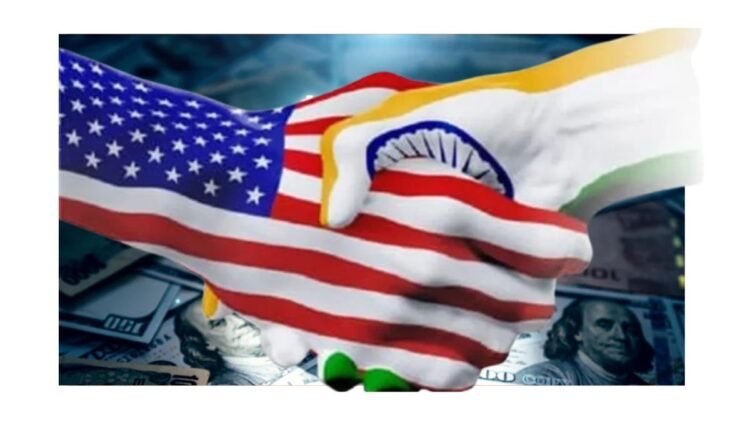



Nationalist groups and business leaders urge consumers to “buy local” as trade tensions rise
NEW DELHI (India CSR) — U.S. companies operating in India, from McDonald’s and Coca-Cola to Amazon and Apple, are facing mounting calls for a boycott as political groups and entrepreneurs rally against American products following steep U.S. tariffs on Indian goods, Reuters reports.
The move by former U.S. President Donald Trump to impose a 50% tariff on imports from India has ignited anti-American sentiment and triggered demands for a stronger “Made in India” push, the report said.
A Vital Market for American Brands
India, the world’s most populous nation, has become a crucial growth market for American corporations. Popular U.S. brands have rapidly expanded across the country, tapping into an aspirational middle class eager to consume global products.
Meta’s WhatsApp counts India as its largest user base, Domino’s operates more outlets here than in any other country, and beverages from Pepsi and Coca-Cola dominate store shelves. Apple store launches still draw queues, and Starbucks attracts crowds with new outlets and discount offers.
While there are no immediate signs of declining sales, the political and public backlash is growing both online and on the streets, urging consumers to replace U.S. products with Indian alternatives.
Calls for Self-Reliance
The latest wave of nationalist sentiment comes after Prime Minister Narendra Modi, speaking at a public event in Bengaluru on Sunday, appealed for greater self-reliance. While avoiding direct criticism of specific companies, Modi said Indian tech firms had long created products for global markets, but “now is the time for us to give more priority to India’s needs.”
Entrepreneurs and executives have amplified the message.
- Manish Chowdhary, co-founder of Wow Skin Science, posted a video on LinkedIn encouraging Indians to back farmers, startups, and domestic brands, citing South Korea as an example of how local food and beauty products can achieve global fame.
- Rahm Shastry, CEO of DriveU, urged the creation of Indian equivalents to global digital platforms like Twitter, Google, YouTube, WhatsApp, and Facebook.
BJP-Linked Group Leads Protests
The Swadeshi Jagran Manch (SJM), an affiliate of Modi’s Bharatiya Janata Party (BJP), has been at the forefront of organized demonstrations. On Sunday, it staged rallies in several Indian cities, urging consumers to boycott U.S. brands.
“This is a call for nationalism, patriotism,” said Ashwani Mahajan, SJM’s co-convenor. “People are now looking at Indian products. It will take some time to fructify.”
The group has circulated lists on WhatsApp recommending Indian alternatives to popular foreign bath soaps, toothpaste, and soft drinks. One online campaign graphic, titled “Boycott foreign food chains,” prominently displays the logos of McDonald’s and other global fast-food brands.
Corporate Responses and Market Realities
McDonald’s, Coca-Cola, Amazon, and Apple have not commented publicly on the boycott calls. Historically, U.S. brands have weathered similar nationalist campaigns in India without significant long-term damage, thanks to strong brand loyalty and deep market penetration.
Indian retail and food companies do provide competition — from Cafe Coffee Day to Haldiram’s — but building global recognition for local brands remains challenging. In contrast, Indian IT services companies such as TCS and Infosys have long been integrated into global supply chains, providing software solutions worldwide.
Mixed Public Reaction
While political groups push for a consumer shift toward Indian products, public opinion is divided. In Lucknow, Rajat Gupta, a 37-year-old McDonald’s customer, dismissed the boycott calls. Enjoying his 49-rupee coffee, he remarked, “Tariffs are a matter of diplomacy, and my McPuff or coffee should not be dragged into it.”
Others argue that replacing entrenched global brands with domestic ones would require not just patriotism but significant improvements in product quality, pricing, and distribution networks.
Trade Tensions and Economic Stakes
Trump’s steep tariff has unsettled Indian exporters, affecting sectors from textiles to engineering goods. The move is seen as a blow to the strategic partnership between New Delhi and Washington, which in recent years has expanded to cover defense, technology, and energy cooperation.
India remains an important market for U.S. multinationals, not only because of its size but also because of its rapidly expanding consumer base. Any sustained boycott movement could force American companies to rethink pricing strategies, local sourcing, and partnerships.
Business as Usual for Some
Despite the ongoing protests, U.S. companies continue to invest in India. On Monday, Tesla inaugurated its second showroom in the country, in New Delhi. The event was attended by officials from both the Indian Commerce Ministry and the U.S. Embassy — a sign that, at least in some sectors, business ties remain resilient.
Whether the boycott calls translate into a measurable impact on sales remains to be seen. For now, the debate reflects a broader tension in India’s economic policy — balancing the appeal of global brands with the desire to strengthen domestic industries in the face of international trade disputes.
(India CSR)