Plastic pollution has become one of the world’s most pressing crises that our planet faces today. Plastic waste usually finds its way to oceans, rivers, and landfills, the greatest threat to wildlife. This rubbish enters the human food chain and contributes to climate change, and millions of tons of plastic are wasted every year.
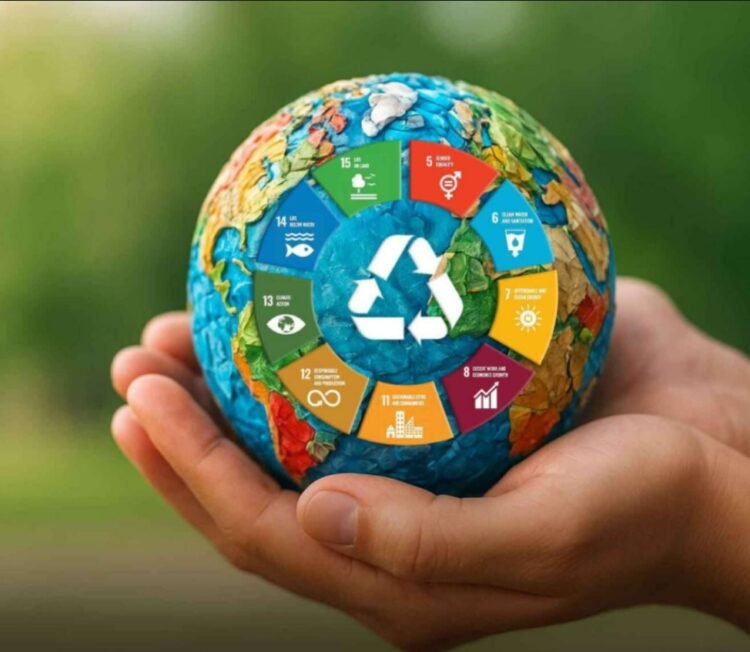
The Sustainable Development Goals stand as a promise of peace, prosperity, and planetary protection through global action. With different, interrelated goals, they focus on issues such as poverty, inequality, access to clean water, sustainable production and consumption, and climate action. Many of these goals are directly threatened by plastic pollution, which is why it is one of the most pressing issues the world needs to overcome.
How is Plastic Pollution Related to the Sustainable Development Goals?
Plastics or synthetic polymers are a practical product favoured by many industries because of their easy use and durability. The widespread and irresponsible application has caused catastrophic impacts on our environment. From marine debris to hazardous production and disposal emissions, plastic pollution is a pervasive barrier holding us back from achieving the key Sustainable Development Goals.
Here is where plastic pollution links to some critical SDGs:
1. Fresh Water and Sanitation
Plastic waste also pollutes fresh water, clogging drains and releasing poisonous microplastics into rivers and lakes. This brings a danger to the quality of water and the health of the public, especially in communities without an effective waste disposal strategy.
2. Responsible Consumption and Production
The way we consume plastic has become harmful to us as humans. It connects directly with the efforts to tackle single-use plastics, promote recycling, and ultimately, circular economies. These goals that are attainable would need to be adhered to by industries promoting sustainable packaging and production processes.
3. Climate Action
Greenhouse gas emissions from the production of plastic and its end-of-life incineration are enormous. By reducing plastic usage and promoting the use of sustainable materials, they directly contribute to and mitigate global warming levels.
4. Life Below Water
Plastic pollution looks most stark in our marine ecosystems. Every year, millions of tons of plastic find their way into the oceans, threatening marine animals, killing corals, and poisoning fish. To conserve marine biodiversity, we need to combat ocean plastic waste.
5. Life on Land
Plastics also have a significant influence on terrestrial ecosystems. It seeps into the soil and suffocates the plants and affects the animals. Animals mistake plastic for food, causing harm or even death. Reducing plastic waste contributes to the conservation of biodiversity and the quality of terrestrial soil.
Steps to Take Toward a Plastic-Free Future
Tackling plastic pollution requires action at all levels, such as individual, corporate, and governmental. Here is what we need to do in the direction of a future without plastic:
1. Promoting Circular Economy
The circular economy promotes the diversion of waste from landfills through repurposing, recycling, and product redesign. Such a transition can help reduce environmental pollution as nations are treating plastic waste as a high-value raw material that contributes to the economic prosperity of a nation.
2. Strengthening Waste Management Systems
Plastic pollution is among the top global challenges, and at the heart of the matter is good waste management; It means needing to focus on the infrastructure of new waste management, that is, the collection system, segregation, and recycling by the role of governments and organizations. Separating the plastics at the source gives a far better result for recycling and incentives for households and companies to start doing that.
3. Policy and Regulation
Many countries have already banned single-use plastics. While these efforts are encouraging, they need to be backed by extended producer responsibility (EPR) legislation that holds producers responsible for their products. There can also be significant shifts from policy measures that encourage innovation in compostable, sustainable alternatives.
4. Corporate Responsibility
Reinventing business is key to addressing plastic pollution. Packaging that tweaks the use of recyclable solutions, sustainable packaging, and eco-friendly manufacturing plastic applications further contributes to the worldwide concerted effort. Corporate sustainability initiatives must be transparent and accountable if we are serious about the Sustainable Development Goals (SDGs).
5. Individual Choices Matter
Using more reusable bags, bottles, and containers can help cut down the huge amount of single-use plastics in circulation. Raising awareness about plastic pollution and its implications on the environment and human health will inspire a community spirit.
6. Innovation and Technology
We make the path for better recycling, bioplastics and other new materials technology. Transformative technologies such as AI-powered waste sorting facilities, chemical recycling and plastic-to-fuel conversion are reshaping the way we think of the future of plastic waste. In this respect, stimulating research and innovation in that regard is anybody’s guess, consistent with the SDGs aspiration of a safe, sustainable and future-proofed industrialization.
Why Collaboration is Key?
Plastic pollution is a collective problem that requires collective action. Sometimes governments may create modalities, but industries and individuals are the ones to follow. The interplay among policymakers, business, recyclers, and citizens sets off a domino effect—spurring innovation, pushing education, and changing behavior.
Institutions of learning and Nonprofits have a meaningful role in refining and cultivating sustainable thinking for future generations. Likewise, local governments and social enterprises can also spearhead grassroots movements and be key players in the process of gathering and recycling plastic waste locally.
Final Words
Plastic pollution is not just about managing waste; it is the new way of taking care of the environment–to be sustainable in every way of living. Keeping these efforts with the Sustainable Development Goals can help us all get to a cleaner, safer, and more equitable future.
Innovative recyclers, like Banyan Nation, are helping to bring this change. Banyan Nation is making a significant contribution to the Sustainable Development Goals by developing cutting-edge recycling technologies and sustainable methods which could be applied to recycle these plastics, ultimately reducing plastic waste. Responsible recycling can be part of both the environmental and economic solution, and that growth can be progressive without sacrificing sustainability. We can do this sustainably by going beyond and raising awareness where needed, promoting and implementing innovative solutions together and with everyone involved.