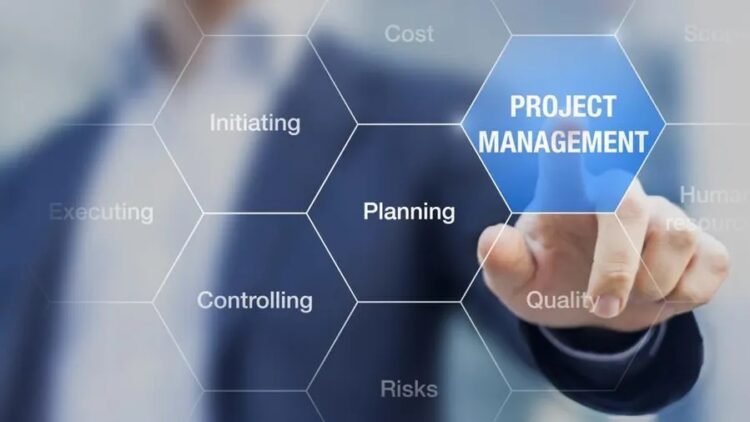


Having the right credentials goes a long way in helping businesses succeed in a world where project outcomes hinge on multiple factors. To succeed in project management professionally, the PMP® certification is a game changer. If you’ve already managed projects or large-scale initiatives, the certification is in demand and can prove useful. However, you need to consider the requirements, fees, and ways to prepare for the exam. This guide for 2026 provides eligibility, costs in India, and a step-by-step process to complete the exam on project management and earned value management (EVM).
Having a PMP is a big plus. PMI is the most well-regarded for having the PMP certification. This certification gives you the credentials to head projects and teaches you implementation strategies and project delivery for any project in any field. This gives you a leg up, as you will be recognised as one who will be able to manage a project with a high level of proficiency. This boosts your career as high-tier project management jobs are a lot easier to secure.
To acquire some basic experience, entry-level prospects often pursue a CAPM certification, albeit it is not uncommon for applicants to attain CAPM certification before they meet the requirements to sit for the PMP exam.
Do You Satisfy the Conditions for PMP?
PMI defines the conditions to apply for the PMP exam, and there are a few basic paths for determining eligibility.
If You Are Enrolled in a University
- A minimum of 3 years and 12 months of relevant work experience in the past 8 years occupying a role in project leadership
- 35 hours of formal project management education or training must be attained
- CAPM certification could also be suitable
If You Are a Recent High School Graduate
- A required minimum of 5 years work experience in the past 8 years, in any area of project management
- Completion of 35 hours of formal project management training or education, or a CAPM certification
What is Considered Project Management Experience?
Formal experience as a project manager is not required as long as you have done activities such as:
- Work planning
- Allocating time for each task over a schedule
- Budget management
- Stakeholder coordination
These activities count even if they are unpaid.
If your application gets selected for an audit, it is essential to accurately depict the activities undertaken, hours logged, and responsibilities.
If you do not have other project management training requirements, the CAPM is a good starting point. This certification is meant for people in the initial stages of their careers.
The Cost of PMP Certification in 2026 (India & Global)
Understanding the total cost helps you plan better. Costs differ based on PMI membership, country of residence, and training type.
Exam Fees (2026)
- For PMI Members: ~Rs 24,708 in India (≈ USD 425) — NovelVista
- For Non-Members: ~Rs 50,025 in India (≈ USD 675) — NovelVista
PMI membership isn’t mandatory, but it provides a big discount and useful resources like the PMBOK Guide, tools, and a global community.
Training and Study Costs
The 35-hour education requirement usually involves formal training.
In India:
- Online/self-paced: Rs 8,000–Rs 26,000
- Classroom/Instructor-led: Rs 15,000–Rs 30,000 (sometimes more)
Other Costs (Optional but Important)
| Cost Component | Approx Indicative (India, 2026) |
| Re-examination | ₹15,929 (members) / ₹28,961 (non-members) |
| Certification renewal (every 3 years) | ₹3,475 (members) / ₹11,585 (non-members) |
| Mock tests/workbooks | ₹5,000–₹10,000 |
Total estimated cost for most Indian PMP aspirants:
Rs 40,000 to Rs 80,000 (training + exam + materials)
Training & Exam Prep: Choose the Path That Is Best for You
After eligibility and costs, the next step is selecting a training mode that suits your schedule, learning style, and budget.
Self-Paced / Online Training
- Flexible
- Ideal for busy professionals
- Good for those already experienced and disciplined
Instructor-Led (Live/Virtual) Courses
- Structured, guided learning
- Interaction with mentors
- Helps maintain accountability and scheduling
Mock Tests & Practice Exams
These are crucial and often neglected.
Practice with 180-question timed simulations to build endurance for the real exam.
PMI-authorised providers offer the 35-hour required training — choose one with a strong success track record.
Exam Structure & What to Expect
The 2026 PMP exam includes:
- 180 questions
- 230 minutes (~3 hours 50 minutes)
- Two 10-minute breaks
Question Distribution:
- People: ~42%
- Process: ~50%
- Business Environment: ~8%
Question Types:
- Single-select
- Multi-select
- Matching
- FAQ-style
- Fill-in-the-blank
The exam covers initiation, planning, execution, monitoring & controlling, and closing of a project.
You must learn not just theory, but also how to apply concepts in the real world — managing risk, time, decisions, people, etc.
If Not Eligible Yet: Think of CAPM
If you lack the required experience for PMP, the CAPM is a strong starting point.
CAPM is ideal for:
- Freshers
- New graduates
- Those transitioning into PM roles without prior experience
After gaining experience, you can transition to PMP.
Effortless and Smart Prep
- Document project experience responsibly
- Create a study schedule (5–6 hours/week)
- Use practice exams in simulated conditions
- Review the latest PMBOK Guide
- Join online study groups
Is It Worth It to Get a PMP Credential?
Absolutely — especially in IT, construction, consulting, and operations.
Benefits of PMP:
- Worldwide recognition
- High-paying roles
- Better portfolio credibility
- Higher chances of project sponsorship
- Fast ROI within months
Demand is especially strong in India, including remote MNC roles, which increases job geoflexibility.
Conclusion: Self-Planning, Take the Leap, and Move Forward
If you plan to acquire PMP in 2026, now is the time for serious planning. Evaluate eligibility, budget, and training schedule, and dedicate consistent time for preparation. PMP is a globally respected credential that allows professionals to demonstrate integrated and professional PM skills.
If you’re eligible — pursue it. If not — begin with CAPM and build the required experience. Commit to your plan, stay consistent, and move towards your certification goals.