


NEW DELHI (India CSR): Municipalika 2026, the 18th edition of India’s longest-running international exhibition and conference on Safe, Smart, and Sustainable City Solutions, concluded today at Bharat Mandapam, New Delhi, following three days of deliberations focused on accelerating India’s urban transformation. Recognised as India’s only 360-degree event in city infrastructure, the platform brought together policymakers, city leaders, global institutions, and industry stakeholders to advance a cohesive roadmap aligned with the vision of Viksit Bharat 2047.
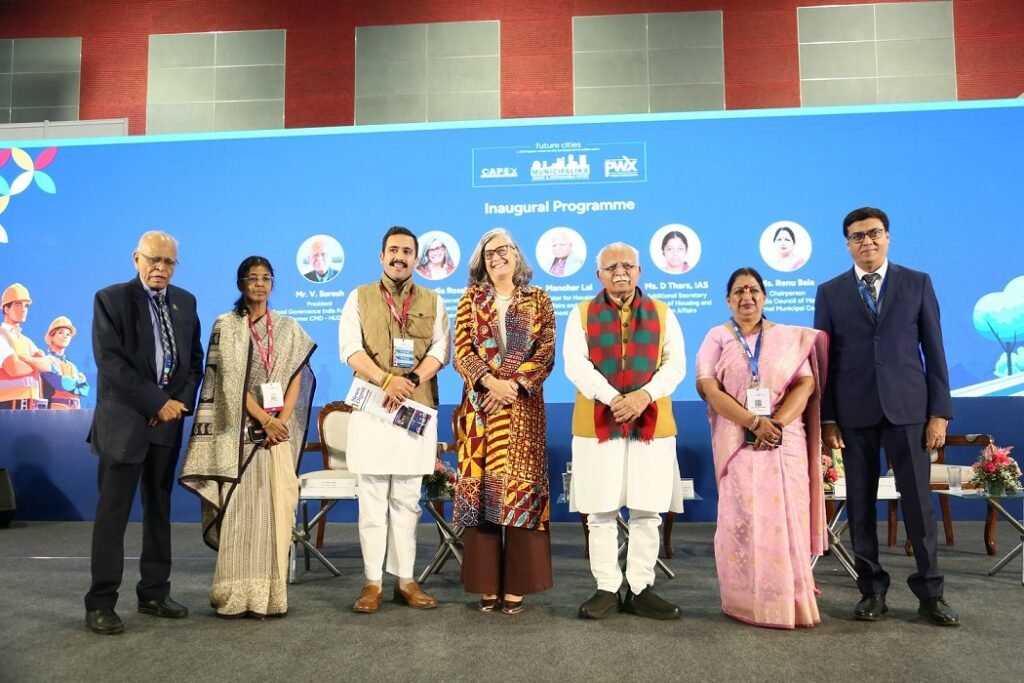
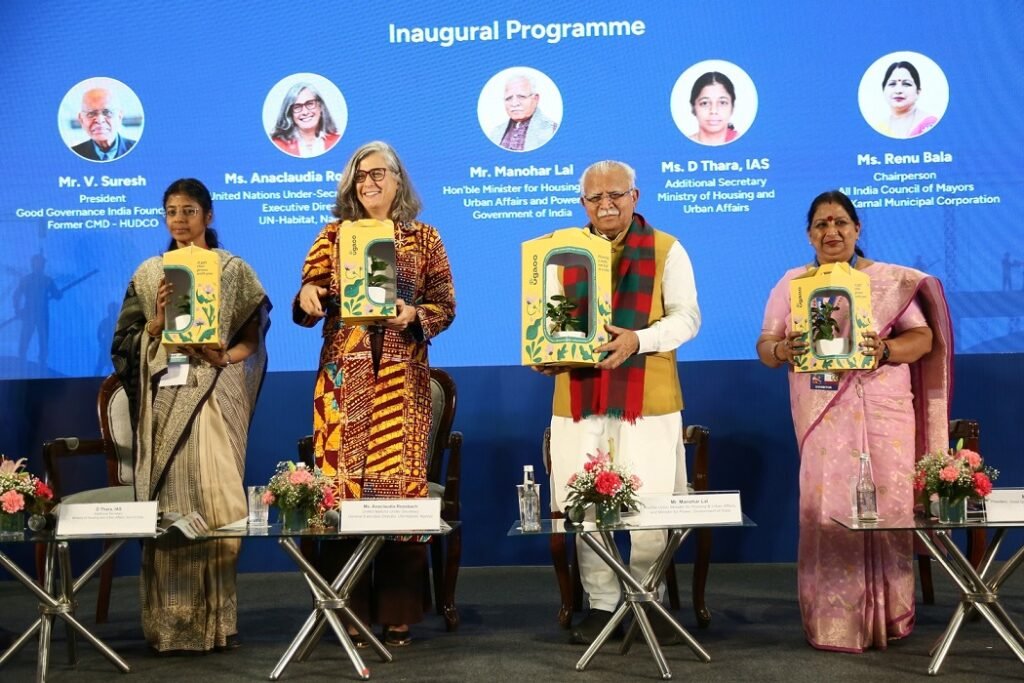
The event was inaugurated on February 25 by Manohar Lal, Union Minister for Housing and Urban Affairs and Power, Government of India, in the presence of senior policymakers, urban administrators and international representatives including Anaclaudia Rossbach, Executive Director, UN-Habitat; D. Thara, Additional Secretary, Ministry of Housing and Urban Affairs; Renu Bala, Chairperson, All India Council of Mayors, Mayor, Karnal Municipal Corporation; and V. Suresh, President, Good Governance India Foundation. In his inaugural address, Shri Manohar Lal emphasised that the path to Viksit Bharat runs through strong, secure, and sustainable cities, underscoring the importance of coordinated governance, infrastructure investment, and technology integration.
The event brought together representatives from over 300 cities across 25+ states, along with more than 300 exhibitors, 3,000 delegates, and upwards of 10,000 urban professionals, reinforcing its stature as India’s most comprehensive platform spanning policy dialogue, technology showcase, and institutional collaboration.
Reflecting on the scale and impact of the event, V. Suresh, President, Good Governance India Foundation and Former CMD, HUDCO, said, “Municipalika has evolved into a national convergence platform where policy vision meets implementation reality. The scale of participation this year reflects the growing recognition that India’s urban transformation requires structured collaboration between government institutions, industry innovators, and global partners. Our objective is not merely to deliberate, but to accelerate solutions that are practical, scalable, and financially viable for cities across the country.”
The inaugural day shaped the core urban agenda, anchoring discussions in governance reform, infrastructure resilience and technology-led transformation for safe, smart, and sustainable cities. Deliberations focused on urban policy frameworks, ease of doing business, safe and secure cities, disaster preparedness, and digital transformation in public works, including the integration of BIM and artificial intelligence. The day concluded with high-level Vision Addresses by distinguished urban leaders, outlining the long-term strategic direction of India’s urban transformation and reinforcing alignment between national missions, institutional capacity and city-level implementation frameworks. Srikanth Viswanathan, Chief Executive Officer, Janaagraha Centre for Citizenship and Democracy; Ar. K. T. Ravindran, Former Chairman, Delhi Urban Arts Commission; and Omesh Saigal, Chair, Ex–Chief Secretary, Delhi, Ex–Secretary, Government of India, were present for the visionary address.
Day two expanded discussions to water and wastewater management, sanitation and solid waste systems, circular economy practices, sustainable and green building technologies, and modern, speedy construction methodologies. Dedicated sessions addressed housing for all, climate change and environmental sustainability, innovative urban infrastructure financing mechanisms, and construction practices in challenging terrains, reinforcing the importance of durability, resource efficiency, and financial innovation in urban development.
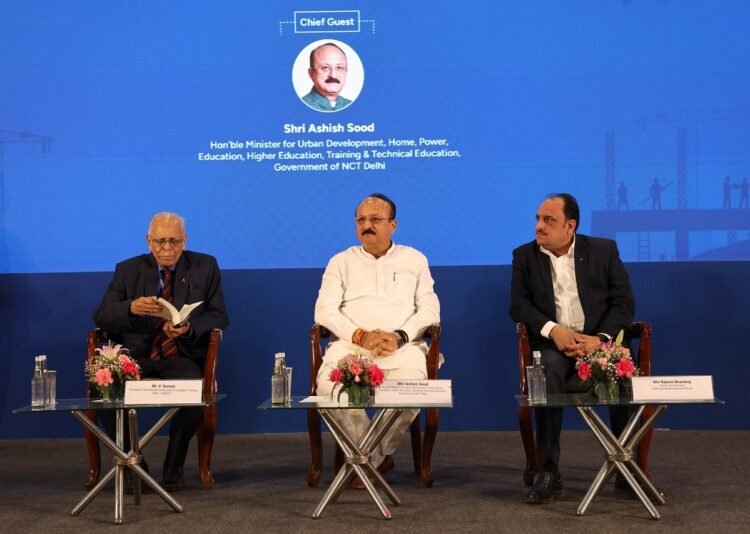
A major highlight of the second day was the Urban Innovation Challenge 2026, a national design and ideas competition organised by the Good Governance India Foundation in association with Municipalika. The challenge attracted over 135 registrations and more than 290 submissions from students and young professionals across the country, centred on themes of Resilient Development, Sustainable Green Built Environment, and Redevelopment and Reconstruction. A national jury evaluated entries on innovation, implementability, scalability, and social impact, culminating in the recognition of 36 winners across two categories during the awards ceremony. Shri Ashish Sood, Hon’ble Minister for Urban Development, Home, Power, Education, Higher Education, Training & Technical Education, Government of NCT of Delhi, graced the occasion as the Chief Guest.
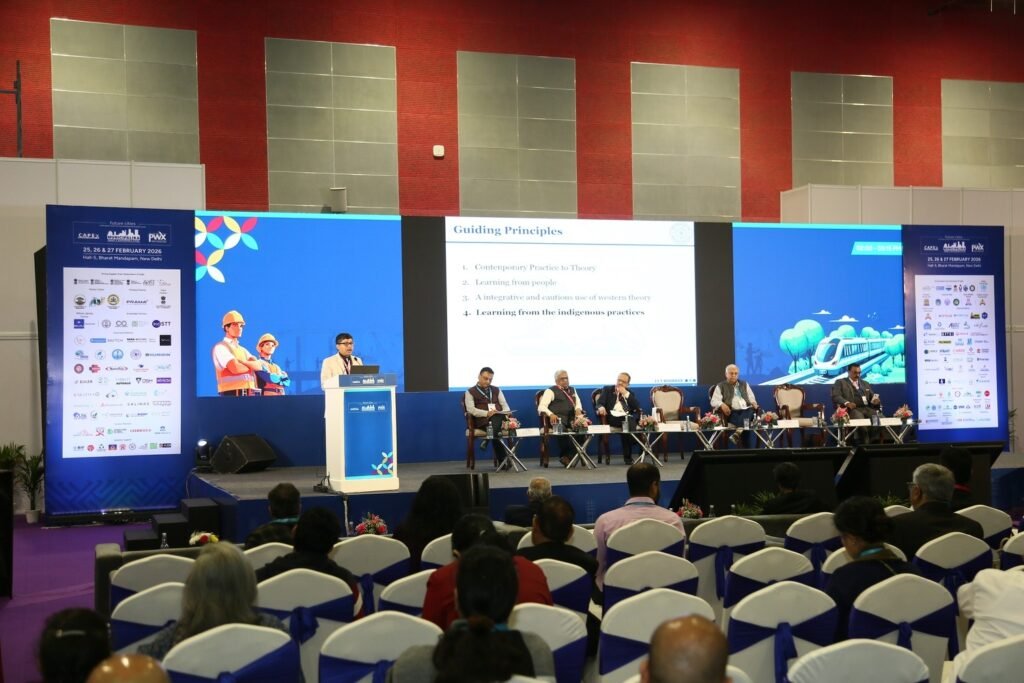
On the concluding day, sessions focused on integrated urban mobility, including mass transit systems, electric vehicles, and regional connectivity, as well as renewable energy integration and climate-responsive infrastructure planning. Senior officials, including Shri Nalin Kumar Srivastava, Deputy Director General, National Mission for Clean Ganga, participated in discussions highlighting river rejuvenation, water sustainability, and integrated urban ecosystem planning. The City Professionals Conclave and infrastructure sessions underscored cross-sector collaboration and technical excellence in public works delivery.
The three-day deliberations culminated in a Valedictory Session that synthesised key policy insights, technological advancements and financing strategies discussed during the summit, reaffirming a collective commitment to advancing safe, smart and sustainable cities across India.
Municipalika 2026 received strong institutional backing from key ministries of the Government of India, including the Ministry of Housing and Urban Affairs, Ministry of Electronics and Information Technology, Ministry of Jal Shakti, and Ministry of Earth Sciences, along with flagship national missions such as AMRUT, Pradhan Mantri Awas Yojana – Urban, Swachh Bharat Mission, Namami Gange and the River Cities Alliance. The event was held in global partnership with UN-Habitat and saw participation from partner states, including the Government of Meghalaya and the Government of Karnataka.
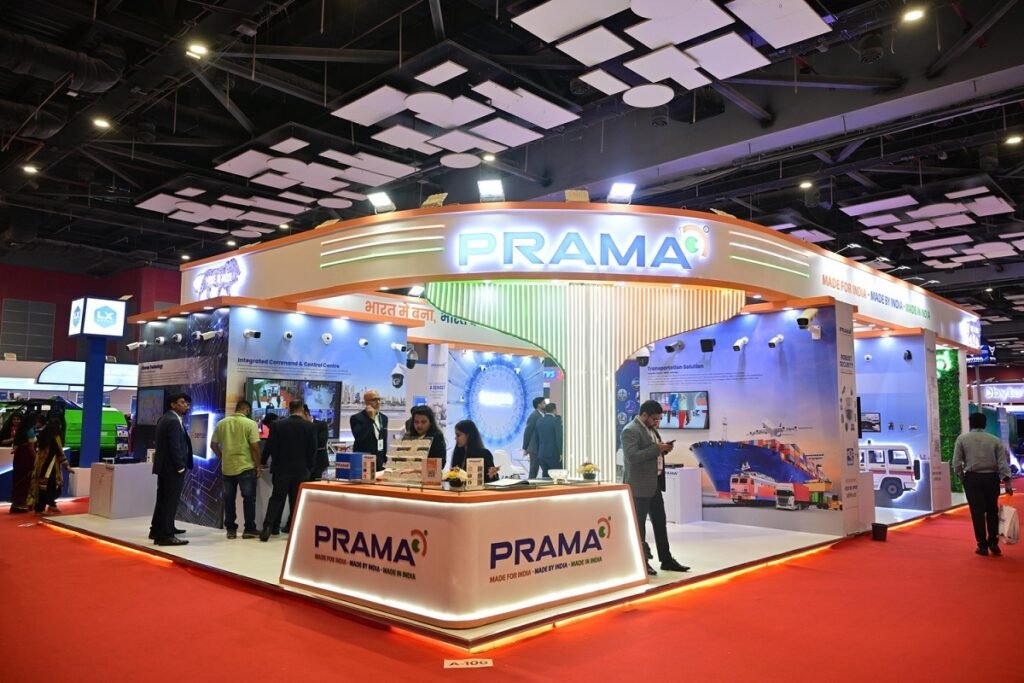
PRAMA served as Principal Partner, while the Local Self Government Department, Government of Rajasthan, led the State Pavilion. Featured city participation included the Municipal Corporation of Gurugram, Faridabad, Manesar, Sonipat, Davanagere, Hubballi-Dharwad, and Kalaburagi. Delhi Metro partnered as Urban Mobility Partner, Delhi Jal Board as Water Session Partner, and Bajaj Electricals as Official Lighting Partner.
Knowledge partners included the Council of Architecture and the Alliance for an Energy Efficient Economy. Leading industry participants such as CP Plus, Eurotek, UltraTech Cement, Tata Motors Commercial Vehicles, Ashok Leyland, Signature Global, Saint-Gobain, Tata Projects, NBCC, Transcend Cleantech, Automeck, KUIDFC, and BMDA showcased solutions spanning mobility, construction technologies, clean energy systems, and smart urban infrastructure, with industry bodies including CREDAI, ICLEI, India Green Building Council, Indian Plumbing Foundation, BMPC, and IndSTT extending institutional support.
As India prepares for an unprecedented phase of urban expansion over the next two decades, the 18th edition of Municipalika reaffirmed its role as a catalytic platform aligning policy, technology and implementation frameworks. Building on the momentum of this edition, the next chapter of Municipalika will continue to strengthen collaboration across government, industry and global institutions to shape resilient and future-ready cities for Viksit Bharat 2047.
(India CSR)