


By Mayank Jaiswal
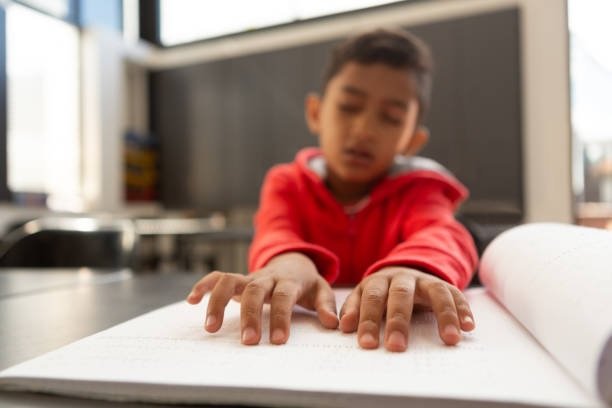
NEW DELHI (India CSR): Post-demonetisation, the size differences among Indian currency notes became minimal, making tactile identification particularly challenging for individuals with limited visual abilities. Many also faced socio-economic limitations and limited access to assistive tools, resulting in reliance on others to confirm currency values. This dependence on others made independent financial interaction a critical step toward inclusion. Mudrabhaas addresses this need by providing a simple, low-cost and dignified way to identify currency independently.
Concept Note
Mudrabhaas is a tactile assistive solution designed for individuals with limited visual abilities to help them identify Indian currency denominations independently. The device is a compact, handheld plate embedded with distinct tactile patterns corresponding to different denominations, enabling recognition through touch alone. By eliminating dependency on others or on audio-based mobile apps, Mudrabhaas encourages confidence, privacy and autonomy in daily cash transactions. The solution aims to support financial independence and seamless participation in everyday economic activities for such individuals.
Key Findings from the Project
- Individuals with limited visual abilities often require assistance from others to confirm currency denominations, reducing privacy and independence.
- Solutions for this community must be affordable, durable and easy to use in real-life environments such as markets or public transport.
- Tactile recognition proved to be more accurate and trustworthy than audio-based or digital solutions in user testing.
- Emotional feedback from users highlighted increased confidence, dignity and control when handling money independently.
The project also revealed broader gaps in accessibility across education, healthcare, mobility and work environments, indicating further opportunities for inclusive design.
The Path from Concept to Prototype
This project was made possible through collaboration with the Blind People’s Association (Ahmedabad) and Anant National University. The process began with primary and secondary research to understand the daily financial transaction challenges faced by people with limited visual abilities. Ideation focused on environmental factors, sensory capabilities and ergonomic usability. Several prototypes were developed and iteratively tested with users to refine the tactile pattern system. The final prototype is portable, affordable and designed for quick, intuitive use during real-life cash handling.
The Aarambh Incubation Centre played a crucial role in making Mudrabhaas a reality. The centre supported the project by funding for IPR and facilitating the process, along with providing continuous mentorship support. The mentors, including Prof Milind Chitale, Associate Professor, School of Design and Director, Makerspace; Dr Subhalaxmi Mohapatra, Associate Professor, Anant National University; and Prof Parth Shah, Assistant Professor, School of Design and Manager, Makerspace, helped me throughout the project. Their guidance was invaluable not only during the early-stage research but also in navigating conceptual exploration, rapid prototyping and user testing. Their inputs helped me overcome design challenges and ensure that the final solution remained user-centred, practical and aligned with real community needs.
Anant’s flexible curriculum and infrastructural support also played a vital role in bringing the concept to fruition. The curricular flexibility allowed me to combine my interest in product design, industrial design and UX design to design Mudrabhaas. The freedom I had to test and iterate on different prototypes in the Makerspace also allowed me to develop a more refined design prototype. This ecosystem provided me with the freedom to experiment, while structured academic guidance ensured that the project remained grounded in practical feasibility.
About the Author
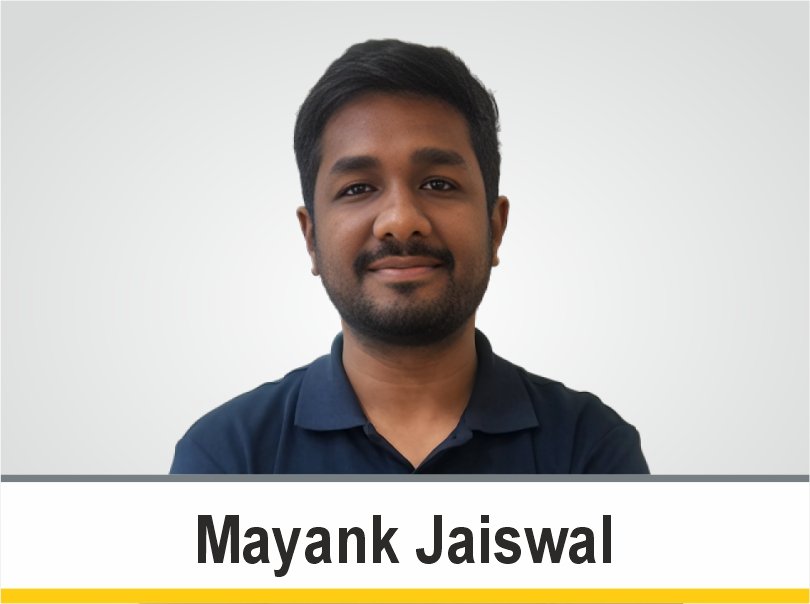
Mayank Jaiswal, MDes (Integrated Product Design) Class of 2023.
(India CSR)