

Climate Change and Urban Challenges Amplify Flood Risks Across India
India’s urban centers are grappling with an escalating crisis as floods, fueled by intense monsoon rains, river overflows, and inadequate infrastructure, wreak havoc annually. Cities like Patna, Mumbai, and Guwahati are among the most vulnerable, with millions facing displacement, economic losses, and infrastructure damage in 2025. The devastating Uttarkashi cloudburst in August 2025 underscores the growing threat of climate-driven extreme weather, particularly in Himalayan regions. As unplanned urbanization and poor drainage systems exacerbate the problem, this article explores India’s top flood-prone cities, their unique challenges, and the urgent need for resilient solutions.
The Rising Tide of Urban Flooding in India
Floods remain one of India’s most destructive natural disasters, affecting millions and causing billions in damages each year. The 2025 monsoon season has been particularly severe, with climate change intensifying rainfall patterns and increasing the frequency of flash floods. According to the National Disaster Management Authority (NDMA), over 80% of India’s population lives in areas vulnerable to hydro-meteorological disasters, with urban centers bearing the brunt due to poor planning and infrastructure. From coastal megacities like Mumbai to riverine hubs like Patna, the interplay of natural and human-induced factors is pushing flood risks to new heights.
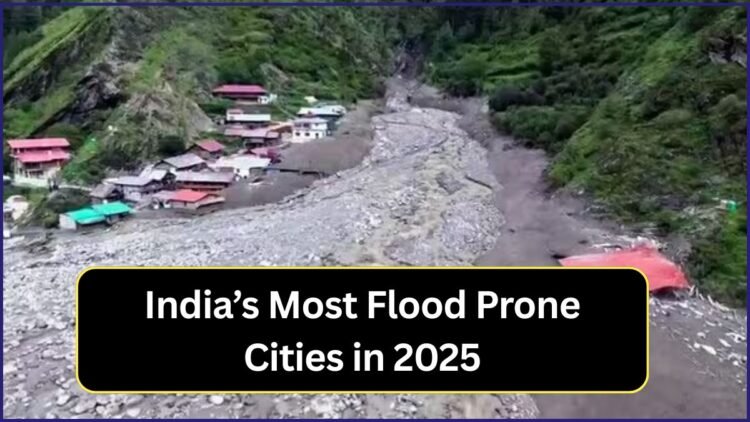
The August 2025 Uttarkashi cloudburst, which unleashed over a billion liters of water in minutes, serves as a stark reminder of the destructive power of localized weather events. As cities struggle to cope, experts are calling for innovative urban planning, enhanced drainage systems, and climate-resilient infrastructure to mitigate the growing threat.
Top Flood Prone Cities in 2025
India’s flood-prone cities span diverse geographies, from river basins to coastal plains, each facing unique challenges. Below is a detailed look at the most vulnerable urban centers, based on historical data, geographic vulnerabilities, and recent flood events:
- Patna, Bihar: Located on the low-lying alluvial plains of the Ganga River, Patna tops the list as India’s most flood-prone city. Annual monsoon overflows and poor drainage led to severe flooding in August 2025, affecting over 2.5 million people across Bihar.
- Mumbai, Maharashtra: India’s financial capital faces coastal flash floods and cloudbursts, exacerbated by the Mithi River’s overflow and clogged drains. Low-lying areas like Dadar, Sion, and Kurla were heavily waterlogged in May 2025, breaking a 107-year rainfall record.
- Guwahati, Assam: Situated along the Brahmaputra River, Guwahati’s floodplain location and heavy monsoon rains make it highly susceptible. Flash floods in 2025 disrupted lives in areas like Dispur and Maligaon, with silted streams worsening the impact.
- Kolkata, West Bengal: The Hooghly River and tidal influences, combined with outdated drainage systems, cause frequent flooding in areas like Behala and Tollygunge. Kolkata’s deltaic location amplifies risks during monsoons.
- Chennai, Tamil Nadu: Coastal plains and encroached waterways lead to severe urban flooding. The 2025 northeast monsoon inundated areas like Velachery and Tambaram, highlighting ongoing drainage issues.
- Delhi: The Yamuna River’s overflow and urban sprawl cause flooding in areas like Yamuna Bazar and East Delhi. Record rainfall in May 2025 submerged key infrastructure, exposing the capital’s vulnerabilities.
- Lucknow, Uttar Pradesh: The Gomti River’s overflow and inadequate drainage systems flood low-lying areas, disrupting life during monsoons.
- Surat, Gujarat: Tapi River floods and coastal influences make Surat prone to riverine and urban flooding, with rapid urbanization adding pressure.
- Srinagar, Jammu & Kashmir: The Jhelum River and Himalayan flash floods pose significant risks, with valley terrain amplifying impacts.
- Kochi, Kerala: Heavy monsoon rains and a poor drainage network lead to frequent waterlogging in this coastal city, affecting mobility and infrastructure.
Key Causes of Urban Flooding
Flooding in Indian cities stems from a deadly combination of natural and anthropogenic factors. Heavy monsoon rains, often intensified by climate change, overwhelm rivers like the Ganga, Brahmaputra, and Yamuna. Cloudbursts, particularly in Himalayan regions like Uttarkashi, trigger flash floods, as seen in the August 2025 disaster that devastated Dharali village, claiming at least four lives and leaving over 100 missing.
Urban challenges exacerbate the crisis. Unplanned construction has encroached on natural water bodies and wetlands, reducing their capacity to absorb excess water. Clogged drains, often filled with plastic waste, fail to handle sudden downpours, leading to waterlogging in cities like Mumbai and Delhi. Rapid urbanization, with impermeable surfaces like concrete replacing green cover, further limits natural drainage, turning even moderate rainfall into urban chaos.
India’s Most Flood-Prone Cities
| City | State | Major Flood Causes | Flood-Prone Features |
|---|---|---|---|
| Patna | Bihar | Ganga River overflows, intense monsoons, poor drainage | Low-lying alluvial plains, dense population, inadequate urban planning |
| Mumbai | Maharashtra | Coastal flash floods, Mithi River overflow, cloudbursts, clogged drains | Coastal megacity, reclaimed land, high rainfall intensity, poor stormwater systems |
| Guwahati | Assam | Brahmaputra River flooding, heavy monsoons, silted streams | Located on floodplain, hilly terrain with rapid runoff, weak drainage capacity |
| Kolkata | West Bengal | Hooghly River overflow, tidal surges, outdated drainage | Deltaic geography, old drainage network, tidal influence on river |
| Chennai | Tamil Nadu | Encroached waterways, poor drainage, northeast monsoon rains | Coastal plains, rapid urbanization, blocked natural channels |
| Delhi | NCR | Yamuna River overflow, extreme rainfall, poor stormwater systems | Urban sprawl on floodplain, impervious concrete surfaces, encroached floodplain areas |
| Lucknow | Uttar Pradesh | Gomti River overflow, poor drainage | Low-lying settlements near river, insufficient drainage infrastructure |
| Surat | Gujarat | Tapi River floods, heavy rains, coastal influences | Rapid industrialization, urbanization pressure, location near river mouth |
| Srinagar | Jammu & Kashmir | Jhelum River flooding, Himalayan cloudbursts, glacial melt | Valley terrain, proximity to glaciers, frequent cloudbursts |
| Kochi | Kerala | Heavy monsoons, clogged drains, poor waste management | Coastal city, waterlogging-prone lowlands, weak urban drainage network |
Climate Change: A Growing Threat
Climate change is a critical driver of India’s flooding crisis. Rising global temperatures have intensified monsoon patterns, leading to erratic and heavier rainfall. In 2025, India experienced record-breaking rainfall in cities like Mumbai and Delhi, with coastal areas facing additional risks from rising sea levels and storm surges. Himalayan regions are particularly vulnerable to cloudbursts, which are increasing in frequency due to orographic moisture convergence and glacial melting.
The Council on Energy, Environment, and Water (CEEW) identifies Bihar, Assam, and Maharashtra as among India’s most climate-vulnerable states, with over 80% of the population living in high-risk districts. These shifts demand urgent adaptation, including climate-resilient urban planning and early warning systems to mitigate losses.
Efforts Toward Resilience and Mitigation
India is taking steps to address urban flooding, though challenges persist. Cities like Mumbai and Chennai have deployed AI-driven flood forecasting systems to provide early warnings, while Bengaluru and Hyderabad are experimenting with the “Sponge Cities” model, using green infrastructure like wetlands and permeable pavements to absorb rainwater. The government has introduced mandatory flood-resilient guidelines for new real estate projects and expanded rainwater harvesting initiatives to recharge groundwater.
However, inefficiencies in waste management, uncontrolled construction, and inadequate maintenance of drainage systems continue to hinder progress. The NDMA and state governments are scaling up disaster response teams and Doppler radar-based alerts, but public awareness and community-level preparedness remain critical for effective mitigation.
The Path Forward: Building Climate-Resilient Cities
The escalating flood risks in cities like Patna, Mumbai, and Guwahati highlight the urgent need for systemic change. Experts advocate for a multi-pronged approach: mapping flood-prone areas, upgrading drainage infrastructure, and enforcing stricter urban planning regulations. Restoring natural water bodies, expanding green cover, and implementing sustainable waste management can reduce waterlogging and enhance resilience.
Community engagement is equally vital. Residents in flood-prone areas must be equipped with safety knowledge and access to real-time alerts via mobile apps. The Uttarkashi cloudburst underscored the importance of rapid response, with NDRF and Indian Air Force teams playing a crucial role in rescue efforts. As India navigates its 2025 climate challenges, collaborative efforts between governments, communities, and urban planners will be key to safeguarding lives and livelihoods.
(India CSR)