

NEW DELHI (India CSR): India’s plywood and wood panel industry is witnessing steady expansion. Demand from housing and infrastructure is rising, but so is regulatory measures around pollution, emissions, and raw material sourcing. At the same time, the sector is seeing a shift towards larger, organised manufacturers as capacity expands and investment flows into modern plywood and MDF plants. This growth is bringing greater attention to how wood panels are sourced, produced and regulated, especially as companies compete on scale, quality and consistency.
In this environment, sustainability in the plywood industry has moved beyond compliance. It now includes responsible timber sourcing, cleaner manufacturing processes, healthier products and transparent reporting of environmental impact.
Greenply Industries’ Green Vision framework represents the company’s response to the evolving expectations of stakeholders, reflecting how one of the largest players in the sector is pursuing growth while advancing sustainability. Through this long-term model, Green Vision seeks to build a regenerative supply chain — one where the journey of plywood begins with a sapling and culminates in healthier homes, stronger communities and transparent environmental reporting. The story that follows traces this journey.
The company was the first to introduce the ESG report in the wood panel industry in FY 2021–22, developed with reference to GRI Standards, signalling a move towards long-term, data-driven sustainability rooted in transparency and regeneration.
Plantation-Led Sourcing and Rural Livelihoods
Raw material sourcing has become a key area of focus within the plywood industry as manufacturers seek greater stability and traceability in their wood supply chains. In this context, Green Vision is anchored in Greenply’s plantation programme, which has expanded well beyond its original goalobjective of reducing dependence on forest timber to become a holistic model of sustainable sourcing and community development. It is currently used as a rural development model combining ecological restoration and assuring livelihood security to the farmers.
In Nagaland, West Bengal, Gujarat, Odisha and Uttar Pradesh over 75 million trees have been planted, most of them being high-yield species with rapid growth rate, such as Eucalyptus, Melia Dubia and Poplar. However, it is not a mere plantation drive programme. It has been assisted by training of farmers on how to prepare the soil, maintain spacing, water use, pests and intercropping. The model also allows farmers earn twice, first because of intercrops and second as a result of selling mature timber. This has turned the unreliable agricultural harvests to a more reliable, renewable source of income to most of the rural households.
Changing Consumer Expectations and Health-Focused Products
Consumer priorities in the plywood and wood panel market are also evolving. Beyond durability and pricing, buyers are increasingly paying attention to health and safety factors such as indoor air quality and emissions from wood-based products. This shift has pushed the industry to focus more closely on formaldehyde levels, product certifications and alignment with global standards. Product innovation is therefore becoming closely linked to environmental and health considerations, not just performance.
Greenply’s sustainability approach extends to its product portfolio, with a focus on healthier indoor environments. The company’s Zero-Emission (E-0) plywood, compliant with CARB and EPA standards, is engineered to keep emissions extremely low, supporting cleaner air in homes and other interior spaces. As consumers increasingly prioritise well-being and responsible choices, such innovations highlight how environmental responsibility is being integrated into both operations and product design.
Integrating Sustainability into Manufacturing
Manufacturing processes have come under increased regulatory focus cross the plywood sector, particularly around emissions, energy use and waste management. Alongside plantation sourcing and product development, Greenply has embedded sustainability into its manufacturing practices. Investments are being made in biofuel-powered boilers, solar and wind energy, water recycling systems and electric mobility.
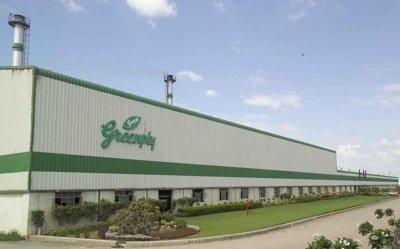
Greenply’s facilities in Vadodara, Kriparampura, Rajkot, and Sandila are adopting cleaner production systems. The Vadodara plant meets over half of its energy requirements through renewables and runs coal-free boilers, while the Sandila unit employs electric forklifts and EV-charged vehicles to curb emissions.
As Sanidhya Mittal, Joint Managing Director, Greenply Industries Ltd., notes, “Green Vision guides us with a clear focus, to build a manufacturing ecosystem that gives back more than it takes. It pushes us to rethink every part of our supply chain through the lens of regeneration and efficiency. The sustainability practices adopted at our Vadodara plant strongly indicate how we are scaling this mindset across the organisation”.
Greenply remains steadfast in driving measurable environmental impact, from afforestation and sustainable product innovation to community engagement and responsible manufacturing. With every milestone, Greenply strengthens its role as a catalyst for positive change, building not just better interiors, but a greener, more resilient future for all.
Impact: A Culture of Accountability
The development of Green Vision is indicative of a company that tries to shift out of compliance to the culture of transparent and data-oriented sustainability. The following are the indicators that are notable to the course of the programme as well as the plans that were revealed:
- Advancing agribusiness traceability through digital portals while working towards the ambitious vision of planting 100 million plantation trees by 2028.
- Expanding renewable energy usage and driving towards zero-waste manufacturing.
- First-mover approaches to sustainability reporting, setting new standards of transparency in the manufacturing sector.
- Developing product offerings for healthier interiors with E-0 certified products designed for low emissions.
- Combined, these efforts place Greenply among the few companies transforming sustainability into a competitive edge in conventional manufacturing industries.
Transparency and Data-Led Sustainability
Transparency and sustainability reporting are emerging as important areas across the plywood industry. While such disclosures are well established in some sectors, they are still developing in traditional manufacturing industries. Regulators, investors and other stakeholders are increasingly seeking clearer data on environmental impact, sourcing practices and energy use, encouraging greater accountability, particularly among larger players.Taken together, these efforts position sustainability as a competitive and operational consideration within a conventional manufacturing industry.
Towards Responsible, Impact-Led Growth
What sets Green Vision apart is not one initiative, but the way it brings together regenerative sourcing, greener manufacturing, healthier products, community engagement, and transparent ESG tracking.
Greenply’s approach offers a practical roadmap for how Indian manufacturing can grow responsibly and inclusively, with long-term environmental awareness built in. It shows that when sustainability is treated as a continuous effort, it creates value well beyond the factory floor, reaching farmers, communities, and ultimately, the homes of its customers.
(India CSR)