


Most videos fail because of a very simple reason: they appear flat. Not emotionally flat, visually shallow. Your subject sits against a plain wall, a blurred room, or a single-layer background, giving the eye no place to go.
In fast-scrolling feeds, depth equates to attention. Viewers are drawn to images that feel dimensional, cinematic, and alive. This is where the modern video agent steps in-quietly reshaping how creators add richness sans expensive cameras, sets, or reshoots.
AI backgrounds aren’t just replacements. They’re a means of visual layering, perceived motion, and cinematic depth-without capturing one extra frame.
Depth is not resolution; it’s perception
Many creators assume cinematic quality is about sharper footage or higher resolution. In reality, depth is about separation.
Foreground, middle ground, and background give the brain visual hierarchy. When everything exists on one plane, the image feels static. When layers exist, the scene feels intentional-even immersive.
AI backgrounds give creators the ability to introduce that separation after filming, turning basic shots into dimensional compositions.
How cinematic language is achieved without a camera crew
Conventional cinema employs lenses, lighting, and set design to create depth. Single filmmakers cannot access these.
AI upends the equation with its digital imitation of the language of film. Gradients, environment details, and positioning happen through a trick of perspective. Even static images seem more real when their backgrounds give the impression of something existing outside of what’s focused on.
This, however, is no longer realism. This is believability.
The role of visual layering in short-form videos
The short-form platforms reward videos that begin feeling dynamic from the first second. Layered visual elements provide multiple entry points for the eye.
A foreground subject engages the viewer. A softly detailed background assists in creating ambiance. Text overlays hover above layers to emphasize messaging hierarchy.
This approach ensures that the audience remains interested for longer since the image that they’re watching appears to be richer than the length of time they’re watching it
Motion depth without motion footage
Probably one of the largest benefits of using AI-created backgrounds is implicit motion.
Gradients, light fall-off, environmental textures, and perspective lines provide the illusion of movement even when static images are being shown. A combination of this with Zoom or cuts provides the video with a cinematic look without complex animations.
This is a very effective approach for product photos, explainers, and talking head shots.
Why minimal footage is no longer a constraint in visuals
They also think they need more b-roll to make their videos better. They need improved context instead.
An image can support varied storylines when placed within different contexts. An educational, dramatic, play, and pro atmosphere is simply achieved through a background change.
Here’s where a free AI video editor transcends from a mere editing app to a storytelling amplifier.
Depth as an emotional indicator
A quality of great depth is not merely visual. It is emotional.
The background needs to have depth. A shallow background is perceived as careless. A background with depth is noticed. A cinematic background shows that it took work. The audience picks up on it unconsciously.
They cannot quite describe what makes a video feel high-end, but sometimes the answer is depth.
Avoiding the trap of overdesigned scenes
Cinematic does not have to mean busy. There are far too many things that reduce the image to a flat plane.
Strong AI backgrounds involve less. Soft contrast. Limited color. Easy separation between subject and background.
When AI backgrounds outperform real locations
Interestingly, real-life backgrounds are sources of noise. Harsh lighting, clutter, and improper color textures hinder the subject.
AI-created worlds do not have these distractions. They provide developers with an opportunity to create worlds that support storytelling instead of becoming distractions.
This explains why many creators have now opted for the use of generated backgrounds in place of real-world spaces. Here’s how you can use Pippit’s AI background generator for stunning backdrop visuals:
Turning single images into layered visual scenes with Pippit
Pippit takes a background generation technique that is about increasing depth and is not a graphical trick. The technique is centered on separating the subject and restarting the scene with depth.
Step 1: Upload your images from links or from your devices
In the first step, registration should be done on the Pippit AI background, then click Image Studio on the left menu. Choose the AI Background option under Quick Tools, then drag and drop the images of the products or click Device to upload them from the computer.

Step 2: Personalize image background & content
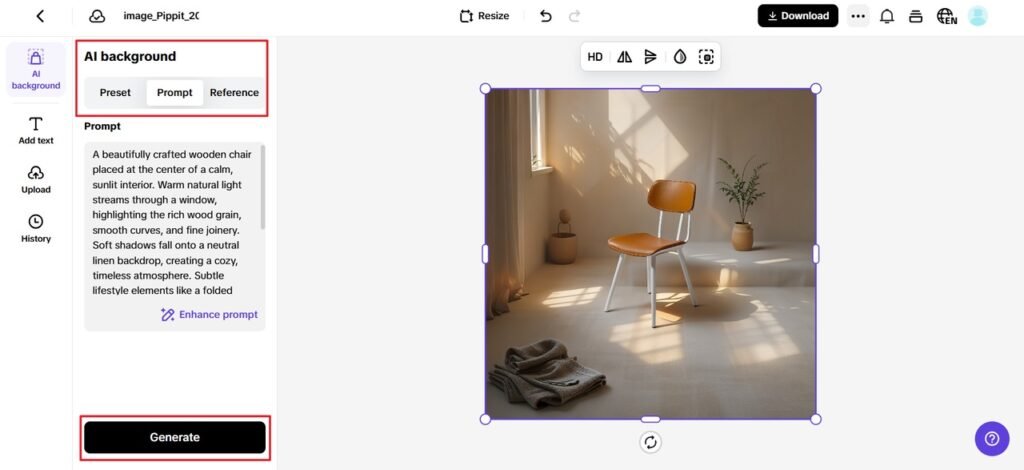
The AI Background feature will remove the background automatically. To continue, go to the Preset for a pre-designed background, the Reference for uploading a background image, or the Prompt for generating a background through AI technology. Alternatively, use the Sales Poster for designing the promotional images, in which case you will need to add the text through the Add Text feature on the software.
Step 3: Finish and export
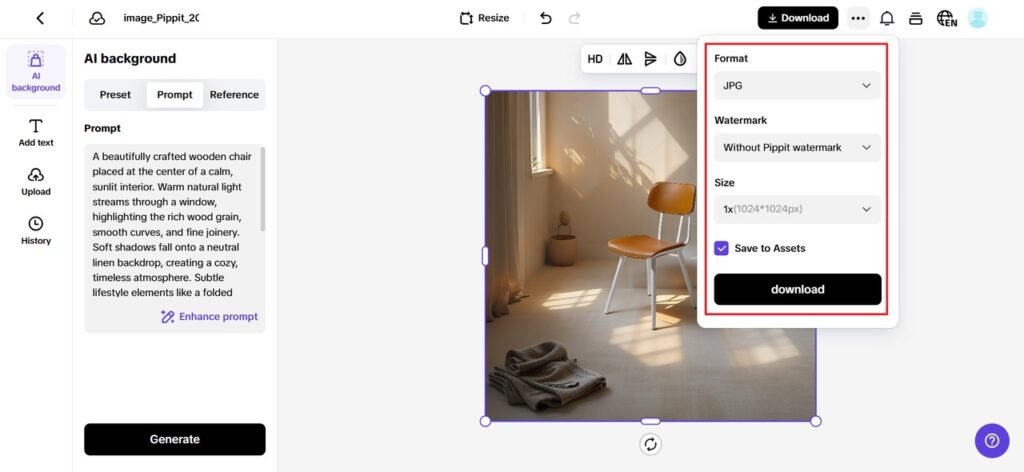
Finally, click Download at the top-right part of the editor. Based on your preference for file format and size, you will then be able to download your picture. You have two choices: to include or not include the watermark before finishing the download.
Cinematic is no longer about equipment}
The cinematic has a new definition. It is no longer associated with cameras and locations but has to do with depth and clarity.
AI backgrounds help designers think like visual directors even when the amount of footage is limited. A single subject. A single frame. Layered meaning.
Why “depth” has become the new production value
In a news feed full of content, the finish matters. The details stick.
They linger on scenes that have a spaciousness, intention, and life about them. They scroll through scenes that have no life, no matter how great the dialogue might be.
The more the message is seen, the more attention it will receive. The more attention it
Applying filmic thought to creative work
Pippit unlocks the power of depth-of-field filmmaking with ease. It allows the industry to move away from the pursuit of more footage and leverage what they have to create more depth.
It’s possible that if your videos appear flat to the eye, the answer to your problem is not necessarily shooting more. The answer could be better layering.
Experience what Pippit has to offer and transform basic visuals into cinematic experiences – all without reshoots and studios – and with smarter use of depth.