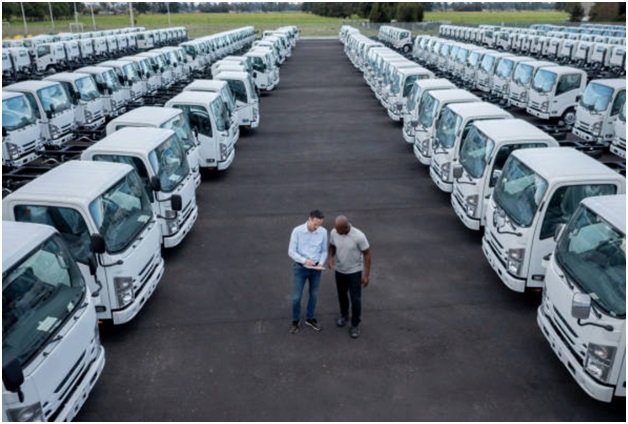


Fleet management in India is undergoing a rapid transformation due to emerging technologies and digital innovations. Today, it’s no longer simply about knowing where your vehicles are. Businesses are using data to make improved decisions, reduce expenses, and improve operational efficiency.
This is where GPS systems, telematics, and real-time tracking come in as crucial focuses for increasing fleet safety and productivity. That translates to more time saved from waiting in traffic, improved fuel efficiency, and reduced wear-and-tear on vehicles. Companies across logistics and public transport industries are discovering how these tools are enabling them to remain competitive and deliver on expectations in a demanding marketplace.
Fleet management encompasses all the functions involved in managing a company’s vehicle fleet in order to increase efficiency and reduce expenses. It’s more than moving people from A to B. For businesses operating in the lean margins of the transportation sector, effective asset management is vital.
Keep all vehicles in optimal condition. Get the most out of them and route smart to save fuel and time. It’s about ensuring that each vehicle is an asset, not a liability.
Fleet management systems are increasingly popular tools for tracking and managing fleets of vehicles. Along with the ability to identify trends, they offer up real-time data, and that’s key to making immediate, informed decisions.
Using this information, businesses are able to track maintenance schedules, driver safety, and fuel efficiency, resulting in improved overall fleet management. Smart fleet management helps your business perform better by minimizing or eliminating costly downtime and enhancing overall productivity.
Real-life examples in India
Closer home, companies such as Mahindra Logistics and VRL Logistics have adopted fleet management solutions extensively in India. They use these systems to create greater operational efficiencies and enhanced service delivery.
For example, Mahindra Logistics applies fleet data to schedule the most efficient routes and make timely deliveries. Fleet management success case studies highlight how businesses that use fleet management experience a boost in operational efficiency and a decrease in costs.
These use cases demonstrate the direct, measurable impacts that effective fleet management can have on India.
Fleet management is the unsung hero in the pursuit of meeting business objectives and being a high-performing organization. By managing the logistics of vehicle fleets, businesses can make sure that their resources are used efficiently and effectively.
One logistics firm in Mumbai employs fleet management software to monitor vehicle locations and offer real-time updates. This allows them to make sure deliveries are always on time and avoid having their vehicles idle unnecessarily. This proactive approach leads to less fuel consumed overall and more efficient business operations.
Good fleet management means better customer service and customer satisfaction. When vehicles are properly maintained and optimized routes prevent delays in delivery, deliveries make it to their destination on time, increasing customer trust and loyalty.
A retailer in Delhi, India smartly manages its fleet to make same-day deliveries. This level of precision increases customer satisfaction and retains clients.
Fleet management improves operational efficiency through using strategies such as real-time tracking and predictive maintenance to avoid unnecessary delays. Better communication and collaboration between teams are also crucial.
Efficient fleet management systems foster better communication and collaboration between teams. One construction company in Bengaluru has increased its productivity by 30 percent by streamlining its fleet management.
This method has helped reduce downtime while increasing productivity.
Fleet managers can save on fuel and maintenance costs by easing wear and tear through better routes and schedules. Keeping up with routine vehicle maintenance is one of the most effective ways to avoid costly repairs and extended downtime.
By prioritizing these areas, businesses can reduce their travel spend in a big way and positively impact their profit margin.
Role of Technology in Fleet Management
Technology continues to redefine fleet management by improving overall efficiency and security. Integrating advanced tech keeps operations smooth and competitive, essential for managing vehicle specs, hiring, planning, and adapting to economic shifts.
The market’s growth from ₹212.6 crore in 2022 to ₹436.7 crore by 2027 further demonstrates its criticality.
Additionally, GPS tracking provides you with real-time data—information that’s vital to optimizing routes and monitoring driver performance.
Help Prevent Theft With 64% of fleet managers using it, GPS plays a key role in combating theft and ensuring security.
Precise route optimization reduces fuel costs and improves delivery times—two areas GPS has revolutionized and continues to advance.
Telematics
Telematics, another major tech trend, collects data from vehicles to provide fleets with data they can turn into actionable insights.
It allows for predictive maintenance too, which cuts downtime and costs.
Businesses leverage telematics to track driver behavior, keeping fleets running at top performance.
IoT technology improves communication and collaboration between fleet managers, drivers and maintenance staff, making operations more efficient.
Automation
Automation technology streamlines many routine tasks, helping to eliminate costly mistakes and improve overall efficiency through less human error.
It allows for easy scheduling, dispatching, and reporting.
Successful automation such as automated maintenance alerts and electronic logging devices have been adopted nationwide.
Near Field Communication pushes the limits of tracking capability and control, showcasing automation’s growing influence on fleet management transformation.
Key features
A fleet management system as extensive and advanced as India has many highly desirable features. It should provide features like real-time tracking, fuel usage management, and maintenance reminders. Each of these features contributes to creating an operation that just runs better, cutting costs and creating operational efficiencies.
The flexibility to be able to tailor those solutions to their unique business needs is critical as well. For example, a logistics transportation company might need an advanced solution to handle complex multi-stop route planning. Conversely, a delivery service may want the algorithm to focus on the most fuel efficient routes. This level of customization allows fleet management to work in concert with the overall goals and business strategies of a business.
Intuitive interfaces are key in keeping teams connected and productive. When software is intuitive, it reduces the need for training time and allows teams to spend more of their time doing what they do best. An intuitive dashboard puts all the information you need at your fingertips – from vehicle location to driver performance.
Providing access to information improves decision-making and increases transparency among all stakeholders. This is vital even more so in a chaotic, fast-paced environment where smart, efficient, informed decisions can have a huge impact.
Routine maintenance for vehicles is essential to extending the life of assets and prioritizing the safety of all travelers. Regular, scheduled maintenance can help you avoid major repairs and surprise failures that are painful to deal with. Advanced techniques such as predictive maintenance attempt to utilize data to deploy repairs before problems occur, minimizing downtime.
Computerized maintenance tracking systems record a history of services and repairs, enhancing fleet reliability and safety.
By keeping an eye on driver behavior, you can keep your drivers safe and your fleet efficient. By monitoring key behaviors such as speeding and hard braking, fleet managers can find out where drivers need to improve. These training programs are specifically designed to develop the safest, most knowledgeable drivers, keeping your drivers compliant and accountable.
By providing feedback to drivers, fleets can reward safe behaviors while identifying at-risk drivers, leading to safer fleets and roadways.
Implementing smart routing plans helps to lower travel times and fuel usage. Strategies include leveraging new GPS technology to provide real-time traffic updates to drivers so they can plan routes to avoid congestion.
When coupled with analyzing historical data to anticipate future demand, that can result in more efficient routes and better resource allocation. This reduces the strain on resources while increasing operational efficiency across the board.
There are proven strategies that can help fleet managers take control and improve performance and efficiency. By establishing concrete goals and key performance indicators (KPIs), fleet managers can take these easy-to-implement solutions and improve performance.
By setting metrics for vehicle use, fuel consumption, and maintenance cycles, managers help keep things moving. Monthly training sessions for drivers and maintenance staff power ongoing improvement efforts. They involve and inform all stakeholders, which leads to more effective decision-making and improved fleet performance.
Fuel management is increasingly important to reduce operational costs. By tracking fuel consumption with real-time data and analytics, underperformers can be pinpointed so managers can take actionable steps to maximize fleets’ fuel efficiency.
Methods such as incorporating GPS tracking and telematics systems can identify how fleets can do better. Switching to other fuels such as CNG and electric power helps us diversify our energy sources beyond traditional fuels. This change significantly reduces emissions, helping us lead the way towards a more sustainable future.
Predictive maintenance means using data-driven tools to predict vehicle maintenance needs before they even arise. Using predictive analytics, fleet managers can avoid costly breakdowns and improve the longevity of their vehicles.
This method uses real-time vehicle condition monitoring. It uses predictive data analytics to proactively schedule maintenance before a problem arises, reducing the chances of needing an unexpected repair and improving fleet performance.
Managing data
In an era of rapid technological advancement, leveraging data smarter is imperative to running a more efficient fleet in India. We understand that fleets come in all shapes and sizes. With data at your fingertips, you can monitor and optimize everything from fleet maintenance to fuel consumption.
By leveraging this data-driven approach, fleet managers can optimize their operations, reduce expenses, and enhance productivity.
Important metrics such as fuel consumption, vehicle usage, and maintenance schedules are essential to the performance evaluation process. Data that is precise and uniform is the backbone of dependable analysis.
This is where technology really comes into play, as vehicle telematics and software such as TrackoBit make the collection of this data much easier and efficient. This helps to ensure data quality and improve operational efficiency.
Data-driven insights are key to making smarter, more effective decisions for fleet management efficiency. Connecting these insights to overarching business goals makes it easier to ensure decisions are data-driven and strategically sound.
For instance, manufacturers such as Tata Motors are adopting smart solutions to increase the overall efficiency. These strategies enable the replacement of 5%-15% of current fleets at scale, maximizing cost-effectiveness.
Protecting this sensitive data has to be a top priority. Best practices even call for systems that are secure, and that the systems used comply with laws like those surrounding data privacy in India.
Employee training is extremely important, making sure employees know how to use data and how to protect data.
Employee contributions
In fleet management, it’s employees that provide the muscle to successful fleets. What employees contribute most to fleet success? Key roles within a fleet management team would be managers, drivers, mechanics, and dispatchers. Workers drive, maintain, and fuel the vehicles that move our economy.
Finally, drivers are an important part of the frontline. They don’t just drive their vehicles—they perform daily maintenance inspections and adhere to strict safety protocols and industry standards. Fleet mechanics are the frontline defense for good vehicle health and safety, preventing expensive, dangerous breakdowns.
Dispatchers play a critical role too, coordinating schedules and routes, often with the help of advanced tools, to maximize operations. Communication and collaboration between these roles is key to success. Continuous training keeps staff updated on industry trends, such as the use of alternative fuels like CNG and LNG, which reduce emissions and costs.
Ongoing training is an important aspect for all fleet stakeholders. When fleets invest in employee development, performance and safety follow suit. Instructional courses provide employees with an understanding of new fleet management technology.
These systems increase safety and compliance by easily incorporating anti-theft technologies and GPS tracking. Technology solutions make this transition from pen-and-paper to digital data collection and analysis easy, cost-effective and convenient.
Considering that 70% of fleet managers agree that upskilling is key, these types of programs are absolutely essential. They empower employees to leverage technology for better route optimization and resource management, ultimately boosting profitability and reducing operational costs.
Team structure for fleet oversight
Clearly defining a team structure is important for effective fleet oversight. In India, where operational excellence is a way of life, having the right organizational structure in place creates a culture of efficiency and compliance.
A clear chain of command simplifies fleet management by establishing a clear chain of command and accountability. For example, Fleet Managers are critical, responsible for choosing drivers, training them, and monitoring their performance.
Transparent reporting lines improve accountability by making it clear who’s responsible for what. Leadership is critical in terms of driving strategies and sustained in-house expertise from overseeing the world’s largest fleet of ships – 650+ ships.
This kind of leadership goes a long way toward anticipating future trends and providing creative solutions.
Collaboration is key to reaching fleet management objectives. Cross-functional collaboration like between professionals and technical teams nurtures a holistic approach to challenges.
Joint meeting strategies or utilizing shared platforms such as the state’s fleet management system promote inter-departmental cooperation. Providing a mechanism for ongoing, two-way communication is key, improving performance by creating an opportunity for ongoing feedback and optimization.