• India CSR Awards 2025
  • India CSR Leadership Summit
  • Guest Posts
Wednesday, February 11, 2026
India CSR
  • Home
  • Corporate Social Responsibility
    • Art & Culture
    • CSR Leaders
    • Child Rights
    • Culture
    • Education
    • Gender Equality
    • Around the World
    • Skill Development
    • Safety
    • Covid-19
    • Safe Food For All
  • Sustainability
    • Sustainability Dialogues
    • Sustainability Knowledge Series
    • Plastics
    • Sustainable Development Goals
    • ESG
    • Circular Economy
    • BRSR
  • Corporate Governance
    • Diversity & Inclusion
  • Interviews
  • SDGs
    • No Poverty
    • Zero Hunger
    • Good Health & Well-Being
    • Quality Education
    • Gender Equality
    • Clean Water & Sanitation – SDG 6
    • Affordable & Clean Energy
    • Decent Work & Economic Growth
    • Industry, Innovation & Infrastructure
    • Reduced Inequalities
    • Sustainable Cities & Communities
    • Responsible Consumption & Production
    • Climate Action
    • Life Below Water
    • Life on Land
    • Peace, Justice & Strong Institutions
    • Partnerships for the Goals
  • Articles
  • Events
  • हिंदी
  • More
    • Business
    • Finance
    • Environment
    • Economy
    • Health
    • Around the World
    • Social Sector Leaders
    • Social Entrepreneurship
    • Trending News
      • Important Days
        • Festivals
      • Great People
      • Product Review
      • International
      • Sports
      • Entertainment
    • Case Studies
    • Philanthropy
    • Biography
    • Technology
    • Lifestyle
    • Sports
    • Gaming
    • Knowledge
    • Home Improvement
    • Words Power
    • Chief Ministers
No Result
View All Result
  • Home
  • Corporate Social Responsibility
    • Art & Culture
    • CSR Leaders
    • Child Rights
    • Culture
    • Education
    • Gender Equality
    • Around the World
    • Skill Development
    • Safety
    • Covid-19
    • Safe Food For All
  • Sustainability
    • Sustainability Dialogues
    • Sustainability Knowledge Series
    • Plastics
    • Sustainable Development Goals
    • ESG
    • Circular Economy
    • BRSR
  • Corporate Governance
    • Diversity & Inclusion
  • Interviews
  • SDGs
    • No Poverty
    • Zero Hunger
    • Good Health & Well-Being
    • Quality Education
    • Gender Equality
    • Clean Water & Sanitation – SDG 6
    • Affordable & Clean Energy
    • Decent Work & Economic Growth
    • Industry, Innovation & Infrastructure
    • Reduced Inequalities
    • Sustainable Cities & Communities
    • Responsible Consumption & Production
    • Climate Action
    • Life Below Water
    • Life on Land
    • Peace, Justice & Strong Institutions
    • Partnerships for the Goals
  • Articles
  • Events
  • हिंदी
  • More
    • Business
    • Finance
    • Environment
    • Economy
    • Health
    • Around the World
    • Social Sector Leaders
    • Social Entrepreneurship
    • Trending News
      • Important Days
        • Festivals
      • Great People
      • Product Review
      • International
      • Sports
      • Entertainment
    • Case Studies
    • Philanthropy
    • Biography
    • Technology
    • Lifestyle
    • Sports
    • Gaming
    • Knowledge
    • Home Improvement
    • Words Power
    • Chief Ministers
No Result
View All Result
India CSR
No Result
View All Result
Home Articles

Economic Growth – who pays the price?

Our children are our future. Let’s not exploit them for economic growth but protect them for economic sustainability

India CSR by India CSR
August 4, 2021
in Articles, Prime
Reading Time: 5 mins read
India CSR
Share Share Share Share

“The successful exploitation of child labour was vital to Britain’s economic success in the 19th Century”.

In the 19th century it was common and necessary for children of a working-class family in Britain to work in factories and farms. There was less emphasis on education.  Some work required the size and agility of children compared to adults and children were cheaper to employ and easier to discipline.

Fast forward to the 21st century. The growing importance of education has led to national and international law giving children everywhere the right to education and governmental protection against all forms of physical or mental violence, injury, abuse, maltreatment or exploitation. Work that is exploitative or hazardous, is mentally, physically, socially or morally dangerous and that interferes or deprives them of schooling, is prohibited under international agreements.

National governments began to introduce laws setting out a legal minimum age at which children could be engaged in light and safe work that will not harm their health or development.M aximum hours are also set for such work so that the child can attend school while contributing to family income.  In the UK, children under 16 cannot work during school hours or more than 12 hours in any school week, for example.

In 2015, governments of 191 countries made a collective pledge to take immediate measures to eliminate the worst forms of child labour and eventually end child labour in all its forms. World leaders also promised inclusive, equitable and free quality primary and secondary education and lifelong learning opportunities for every child by 2030 as stated in Goals 4 and 8 of the 17 sustainable Development Goals.

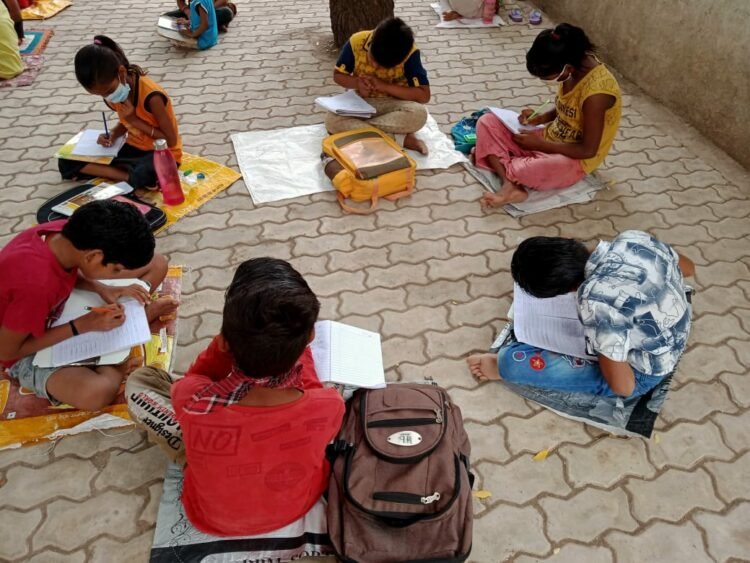
Six years later, 160 million children are still working. This is an increase of 8.4 million in the last four years, according to latest report by Unicef and the International Labour Organisation (ILO) Child Labour: Global Estimates 2020, Trends and the Road Forward. Of these 79 million are in hazardous work including mining cobalt, gold and mica or working in the complex supply chains of manufacturing and production of fashion, mobile phones, make up, carpets, toys and jewellery, fruit and vegetables, chocolate, coffee, and cotton. The list goes on.  This work is hazardous to both health and safety. Over half are aged between 5 and 11. More significantly, 72 million children of primary education are not in school.  Denied education, they are trapped in a cycle of poverty, exploitation and abuse.

Whilst child labour is most prevalent in low-income countries and emerging economies in the sub-Saharan Africa, Asia and the Pacific, the ILO estimates that 12 million children in upper- or middle-income countries are exploited. In 2013, the Council of Europe’s Commissioner for Human Rights, reported on children working long hours as a consequence of the 2008 economic crisis.

In 2019, the UK government’s own data showed 54 per cent of the 4,550 children identified as potential victims of trafficking and modern slavery work in labour sectors, including domestic servitude, hospitality or construction industries and criminal enterprises such as cannabis cultivation.

To this day child labour remains a low cost and high profit business.  In a globalised economy, companies are ready to outsource their labour-intensive processes by taking advantage of cheaper labour and accessing cheap raw materials as well as relaxed labour and environmental laws. This is the logic of competing on low costs of production and services.

Across the supply chain there is evidence of children working producing goods and services for global consumption and profit.  Research by the Ashridge Centre for Business and Sustainability at Hult International Business School and the Ethical Trading Initiative, found 71% of companies in the UK believe there is a likelihood of modern slavery at some stage in their supply chain.

The ILO has estimated an annual profit of US $ 150.2 billion from the forced labour of men, women and children, with developed Economies and the EU making US$ 46.9 billion profit. Annual profits per victim are highest in the developed economies (US$34,800 per capita), ten times the rate in Africa (US$3,900 per capita)

Child labour, trafficking and forced labour is a violation of a child’s fundamental human rights. To foster a worldwide movement against child labour, The ILO have declared 2021 International Year for the Elimination of Child Labour. Nations are urged to ratify ILO convention 182, which prohibits child labour and to do what is necessary to eliminate worst forms of child labour and end child labour in all its forms by 2025.

Laudable and necessary as these actions are, the reality for many children is far from the protection afforded by Acts of Parliament, international conventions and pledges or ratification of UNCRC and ILO conventions. Exploitation of child labour remains one of the most significant humanitarian issues of the 21st Century. Many children, due to their circumstances of family poverty and lack of access to quality education, represent a source of cheap, compliant labour and are vulnerable to exploitation and abuse.

If global economic success is to be fair and equitable to all countries, global social, economic and environmental systems are required beyond pledges and promises. It requires investment in quality education for children and decent jobs for adults. It requires investment in social protection systems. But most of all, given the economic dominance of multinational corporations (MNCs), it requires companies to rethink their business model and ask themselves the difficult question: “Who is paying the price for our profits?”

Laws requiring companies to carry out robust due diligence of environmental and human rights across their supply chains, can help business identify the risks of child labour and take action to prevent exploitation. Introducing a fair, equitable, global corporate tax would ensure MNC’s pay tax on profits in the countries they were generated. The Tax Justice Network advocacy group estimates that a 21% minimum rate would bring in $640bn in underpaid tax.

It is time for the economic success to be built on equitable systems with adequate resources and investments in education, health, and social protection for the world’s most vulnerable people. Our children are our future. Let’s not exploit them for economic growth but protect them for economic sustainability.

(Views are personnel)

Bharti Patel is International Child Rights and Justice advocate.
Tags: Bharti PatelEconomic Growth

CSR, Sustainability, and ESG success stories hindustan zinc
ADVERTISEMENT
India CSR

India CSR

India CSR is the largest media on CSR and sustainability offering diverse content across multisectoral issues on business responsibility. It covers Sustainable Development, Corporate Social Responsibility (CSR), Sustainability, and related issues in India. Founded in 2009, the organisation aspires to become a globally admired media that offers valuable information to its readers through responsible reporting.

Related Posts

Childcare
Articles

Stronger Families, Stronger Bottom Lines: Why Childcare Support Is a Business Imperative

4 days ago
Satish Jha
Articles

Satish Jha: India Has Grown But Not Flourished

6 days ago
Corporate Social Responsibility
Articles

From Compliance to Impact: Designing Site-Specific and Need-Based CSR Programs

2 weeks ago
Gaurav Sharma, CHRO of Balancehero India.
Articles

Youth, Rural India and Sustainability — Why CSR Must Focus on Empowerment, Not Just Relief

2 weeks ago
Carbon Neutral Manufacturing: Technology Pathways and Investment Strategies
Articles

Carbon Neutral Manufacturing: Technology Pathways and Investment Strategies

1 month ago
CSR in India
Articles

Corporate Social Responsibility (CSR) Must Include Environmental Responsibility: Supreme Court Judgment

2 months ago
Load More
Ambedkar Chamber
ADVERTISEMENT
India Sustainability Awards 2026
ADVERTISEMENT

LATEST NEWS

What Happens When AI Support Isn’t Properly Tested

XLRI Records Strong Final Placements for PGDM (BM) & PGDM (HRM) Batch 2024–26

Jindal Stainless Signs MoU with Govt Under PLI 1.2 to Boost Specialty Steel

As Urban Air Pollution Reaches Alarming Levels, GOODAIR Introduces 24/7 In-Car Protection Against Toxic Gases

Hindustan Zinc Marks International Day of Women in Science with Immersive ‘She Knows the Ground She Stands On’ Campaign

हिंदुस्तान जिंक ने वूमेन इन साइंस इंटरनेशनल डे के अवसर पर विशेष अभियान ‘शी नोज द ग्राउंड शी स्टैंड्स ऑन’ शुरू किया

Ad 1 Ad 2 Ad 3
ADVERTISEMENT
ESG Professional Network
ADVERTISEMENT

TOP NEWS

Informa Markets India’s Rs 50 Lakh CSR Boosts Affordable Diagnostics in Mumbai

Vedanta Udaipur World Music Festival 2026 Lights Up Zinc City

How to Top Up Your Account with Cryptocurrency in the BCGame App

Buy Khajur Online from GGT Foods – Fresh, Premium Dates You Can Trust

KT Kids signs landmark Peppa Pig deal in India’s kids’ personal care segment; Kareena Kapoor Khan leads the national campaign

Banana Pro AI: A Complete Guide to Creating Professional Images Without Design Skills

Load More
STEM Learning STEM Learning STEM Learning
ADVERTISEMENT

Interviews

Prof. Kang Sung Lee, PhD
Interviews

Prof. Kang Sung Lee on Academia, Policy, and Industry-Linked Career Pathways

by India CSR
February 5, 2026

Despite being an advanced economy, South Korea faces a severe demographic crisis.

Read moreDetails
Magma Group CEO and Founder, Neal Thakker

Embedding CSR in Responsible Manufacturing at Magma Group: An Interview with Neal Thakker

January 21, 2026
Sudeep Agrawal, CFO & Head – CSR, Ashirvad by Aliaxis

Integrating Financial Leadership With Impactful CSR Initiatives: An Interview with Sudeep Agrawal, Ashirvad by Aliaxis

December 29, 2025
Satish Jha

Interview with Satish Jha: Pioneering CSR in Education

December 5, 2025
Load More
Facebook Twitter Youtube LinkedIn Instagram
India CSR Logo

India CSR is the largest tech-led platform for information on CSR and sustainability in India offering diverse content across multisectoral issues. It covers Sustainable Development, Corporate Social Responsibility (CSR), Sustainability, and related issues in India. Founded in 2009, the organisation aspires to become a globally admired media that offers valuable information to its readers through responsible reporting. To enjoy the premium services, we invite you to partner with us.

Follow us on social media:


Dear Valued Reader

India CSR is a free media platform that provides up-to-date information on CSR, Sustainability, ESG, and SDGs. We need reader support to continue delivering honest news. Donations of any amount are appreciated.

Help save India CSR.

Donate Now

Donate at India CSR

  • About India CSR
  • Team
  • India CSR Awards 2025
  • India CSR Leadership Summit
  • Partnership
  • Guest Posts
  • Services
  • ESG Professional Network
  • Content Writing Services
  • Business Information
  • Contact
  • Privacy Policy
  • Terms of Use
  • Donate

Copyright © 2025 - India CSR | All Rights Reserved

No Result
View All Result
  • Home
  • Corporate Social Responsibility
    • Art & Culture
    • CSR Leaders
    • Child Rights
    • Culture
    • Education
    • Gender Equality
    • Around the World
    • Skill Development
    • Safety
    • Covid-19
    • Safe Food For All
  • Sustainability
    • Sustainability Dialogues
    • Sustainability Knowledge Series
    • Plastics
    • Sustainable Development Goals
    • ESG
    • Circular Economy
    • BRSR
  • Corporate Governance
    • Diversity & Inclusion
  • Interviews
  • SDGs
    • No Poverty
    • Zero Hunger
    • Good Health & Well-Being
    • Quality Education
    • Gender Equality
    • Clean Water & Sanitation – SDG 6
    • Affordable & Clean Energy
    • Decent Work & Economic Growth
    • Industry, Innovation & Infrastructure
    • Reduced Inequalities
    • Sustainable Cities & Communities
    • Responsible Consumption & Production
    • Climate Action
    • Life Below Water
    • Life on Land
    • Peace, Justice & Strong Institutions
    • Partnerships for the Goals
  • Articles
  • Events
  • हिंदी
  • More
    • Business
    • Finance
    • Environment
    • Economy
    • Health
    • Around the World
    • Social Sector Leaders
    • Social Entrepreneurship
    • Trending News
      • Important Days
      • Great People
      • Product Review
      • International
      • Sports
      • Entertainment
    • Case Studies
    • Philanthropy
    • Biography
    • Technology
    • Lifestyle
    • Sports
    • Gaming
    • Knowledge
    • Home Improvement
    • Words Power
    • Chief Ministers

Copyright © 2025 - India CSR | All Rights Reserved

This website uses cookies. By continuing to use this website you are giving consent to cookies being used. Visit our Privacy and Cookie Policy.