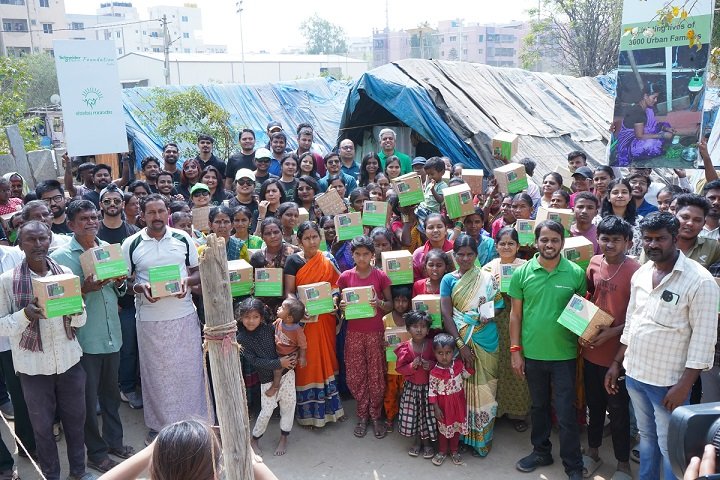


BENGALURU (India CSR): In a city known for smart homes and sensor-driven technology, many migrant settlements still live in darkness. In several informal clusters across Bengaluru, families lack access to basic electricity, relying on paid charging points and unsafe lighting alternatives.
Addressing this gap, Schneider Electric Infrastructure Limited (SEIL) and Schneider Electric India Foundation (SEIF), in partnership with Shishu Mandir, has completed the distribution of 3,000 portable solar lamps during FY 25-26 to underserved migrant communities across Bengaluru. The initiative marks one of the largest single-year solar lamp commitments under the decade-long collaboration between the two organisations.
“Technology must ultimately reach the last mile for impact,” said Udai Singh, CEO& MD, Schneider Electric Infrastructure Limited. “For low income families, a single solar lamp is more than a light — it brings safety, supports children’s learning, and restores dignity. By closing the energy gap, we’re not just lighting homes; we’re lighting up the hopes of the next generation. Our aim is to offer reliable lighting and mobile charging support, while helping communities build better livelihoods and create lasting impact.””
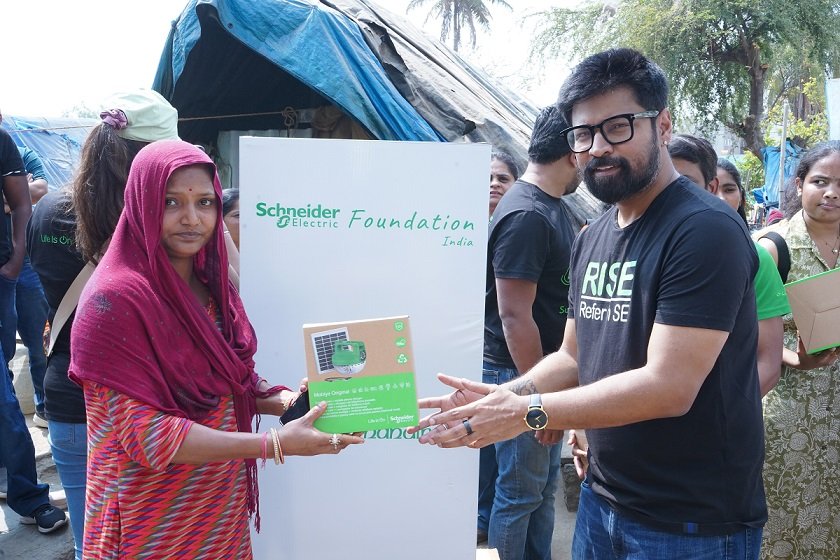
Each solar lamp is equipped with a compact solar panel and mobile charging port, enabling families to access clean, reliable lighting without recurring costs. For households that typically spend Rs 10–20 daily on charging mobile phones, the lamps can generate estimated savings of up to ₹7,000 per year. Through lamp distribution drives we were able to engage 200+ volunteers as well.
A Decade of Green Skill Development
The solar lamp initiative is part of a broader collaboration focused on vocational training and renewable energy skills. Over the past ten years, Schneider Electric has supported the establishment and strengthening of three specialised laboratories at Shishu Mandir’s Bengaluru vocational training centre, covering Basic Electrical Training, Solar Technician Training, and Industrial Wiring and Automation Training.
The centre focuses on school dropouts, rural youth and underserved communities, offering livelihood-based skilling that translates directly into employability. In addition to infrastructure support, Schneider Electric conducts Week-long Training of Trainers (ToT) programs for Industrial Training Institute (ITI) instructors from across India.
Selected trainees also undergo a 21-day entrepreneurship development programme covering business registration, credit access, compliance and mentoring, enabling many to start micro-enterprises and generate additional employment.
Shishu Mandir plays a deliberate role in beneficiary identification and programme implementation. “The lamps provide immediate relief, but the deeper transformation lies in skills and livelihoods,” said Anand, Director, Shishu Mandir. “For over ten years, Schneider Electric has stood with us in strengthening both skills and sustainability. From setting up advanced electrical labs to training trainers and now lighting 3,000 homes, this partnership reflects a shared belief — that development must reach the last mile. A single solar lamp may appear small, but for a family living without electricity, it transforms safety, savings and hope.”
National CSR and Sustainability Impact
The Bengaluru initiative aligns with Schneider Electric’s broader CSR and sustainability efforts across India. Between 2019 and 2025, the company has supported the training of over 3 lakh youth through more than 600 training centres across 27 states, working with 70+ partners. Its clean energy initiatives include solar-powered digital classrooms, solar water pumps for farmers, portable solar lighting solutions and Climate Smart Village programmes in states such as Jharkhand, Maharashtra and Karnataka.
(India CSR)