


By Amitabh Chaudhry & Ashish Dhawan
NEW DELHI (India CSR): Corporate Social Responsibility (CSR) spending in India is projected to exceed Rs 1.2 lakh crore annually by 2035, up from around Rs 35,000 crore in FY24, making it the largest pool of philanthropic capital in the country. The sheer scale of these resources presents a significant opportunity to strengthen public systems that drive lasting social and economic transformation.
Over the past decade, CSR has evolved from a compliance obligation into a strategic instrument for change. Around 40% of large-company CSR budgets are now committed to multi-year programmes. Yet much of the spending continues to support short-term, isolated projects such as building classrooms, distributing devices, or conducting awareness drives, without addressing deeper structural issues. While these initiatives are important, social outcomes often plateau once project funding ends.
The Case for Systemic Giving
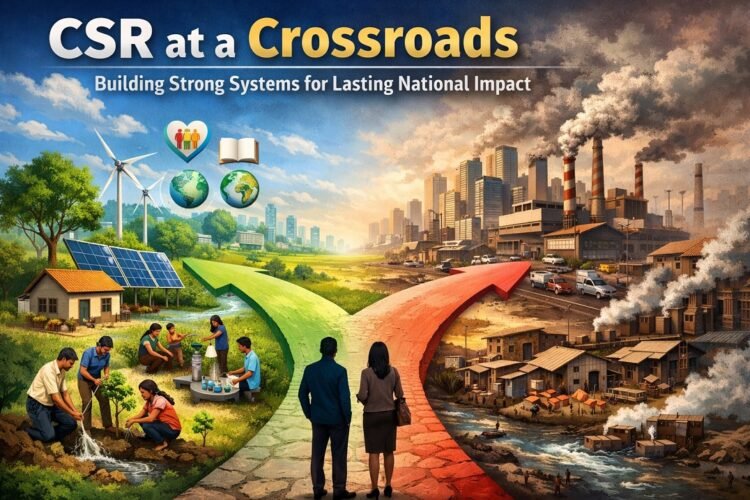
To unlock durable impact, CSR must shift from funding isolated projects to strengthening systems that deliver change at scale. Systemic giving means supporting pilots and proof points that can be scaled through government programmes for wider impact.
When CSR capital aligns with government priorities, it creates a powerful multiplier effect, amplifying social returns many times over. Every corporate rupee can thus become risk capital for nation-building.
India already offers strong examples. When corporate funders partnered with non-profits and government through the NIPUN Bharat Mission, over Rs 13,000 crore in government spending was aligned to improve foundational learning for children across 20 states. These models demonstrate that every rupee of catalytic CSR investment can yield a tenfold multiplier when aligned with public systems.
Shift One – Leadership Vision: Realising this potential requires leadership vision. Boards and CEOs must recognise that systemic investments in policy research, data systems, and institutional capacity require long-term thinking, risk tolerance, and sustained multi-year commitments.
Systemic and programmatic work can co-exist. Companies could allocate 10–20% of their CSR outlay to strengthening systems, while the remainder continues to support community-level initiatives.
Shift Two – Elevating CSR Leadership: Systemic giving demands high-calibre, mission-driven CSR leaders who bring rigour, ambition, and strategic discipline to social investments. Effective CSR leadership combines business acumen with a deep understanding of the social sector, enabling organisations to deploy capital thoughtfully and at scale.
Shift Three – Embracing Collaboration: A collaborative mindset is equally critical. Partnering with organisations already driving systemic change in education, health, livelihoods, and climate action avoids duplication and accelerates progress. Co-investment and strategic alliances can transform CSR into risk-bearing capital that fuels innovation and systemic reform.
From Spending More to Spending Smarter
Moving to systemic giving is not about spending more, but about spending smarter. When CSR strengthens systems rather than merely treating symptoms, it becomes a powerful bridge between business leadership and public good.
With clarity of purpose and bold leadership, India can transform its CSR framework from a compliance mechanism into one of the world’s most powerful engines of inclusive growth.
About the Author
Amitabh Chaudhry, MD & CEO, Axis Bank and Ashish Dhawan, Founder-CEO, The Convergence Foundation.
(India CSR)
Source: Moneycontrol.com