

Creating professional images used to require either hiring a designer, investing in expensive software, or spending hours learning complex tools. Today, that’s changed completely. Banana Pro AI offers a free alternative that lets content creators, small business owners, and freelancers generate stunning visuals in seconds—without needing design experience or technical knowledge.
I’ve spent the last two years testing AI image generators with creators across different industries. What I’ve learned is that the best tools aren’t always the most feature-rich; they’re the ones that respect your time and remove friction from your workflow. Banana Pro AI does exactly that.
This guide walks you through how to get started with Banana Pro AI, sidestep common beginner mistakes, and build a sustainable image creation workflow that actually saves you money and time.
What Banana Pro AI Actually Does
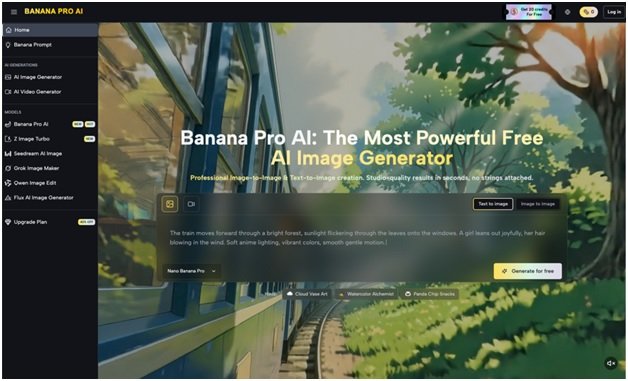
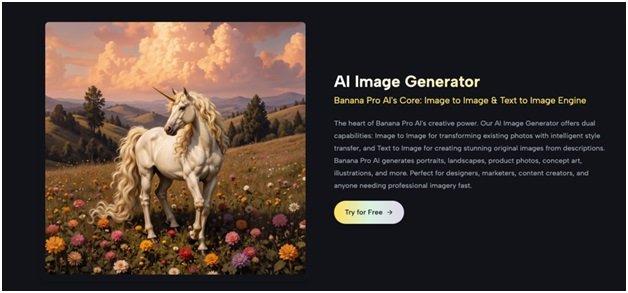
Banana Pro AI is a free AI image generator built for creators who need professional visuals fast. The platform offers two core capabilities: Text to Image generation (describe what you want, and Banana Pro AI creates it) and Image to Image transformation (upload a photo, and Banana Pro AI reimagines it in new styles or with modifications).
The key difference between Banana Pro AI and other tools isn’t just speed—it’s accessibility. You don’t need to understand prompting techniques, learn design principles, or navigate overwhelming settings. Banana Pro AI’s interface is intentionally simple, which means you can generate your first image within 30 seconds of signing up.
The platform also includes batch generation, meaning Banana Pro AI creates multiple variations from a single request. This is genuinely useful when you’re unsure which direction works best for your project.
How Banana Pro AI Works: A Four-Step Workflow
Understanding the workflow removes most of the confusion beginners face. Here’s how Banana Pro AI handles image creation from start to finish.
Step 1: Choose Your Creation Method
You have two options with Banana Pro AI. Text to Image is straightforward—you write a description of what you want to see, and Banana Pro AI interprets it. Image to Image requires uploading an existing photo; Banana Pro AI then transforms it based on your instructions (changing style, adjusting composition, applying artistic effects, etc.).
For beginners, I recommend starting with Text to Image. It’s more forgiving because you’re not constrained by an existing image’s composition or subject matter.
Step 2: Describe Your Vision (Or Upload Your Photo)
This is where most people stumble. With Banana Pro AI, you don’t need perfect prompts. The AI Image Generator understands conversational language, so writing “a cozy coffee shop with warm lighting and people working on laptops” works just as well as technical prompting syntax.
That said, specificity helps. Instead of “a professional headshot,” try “a professional headshot of a woman in business casual clothing, natural lighting, neutral background, confident expression.” Banana Pro AI responds better to detail.
Step 3: Let Banana Pro AI Process and Refine
Once you submit your request, Banana Pro AI’s AI Image Generator processes it in 8-12 seconds for Text to Image or 5-10 seconds for Image to Image. You’ll see your generated image appear instantly.
Here’s where batch generation becomes valuable. Banana Pro AI creates multiple variations simultaneously, so you can compare options without waiting for additional generations. If none feel quite right, you can refine your description and regenerate.
Step 4: Download and Use Immediately
Banana Pro AI delivers high-resolution images (up to 2048×2048 pixels) with full commercial usage rights included. There are no hidden licensing restrictions, no additional fees for commercial use, and no surprise limitations. Download your image and use it however you need client work, social media, advertising, print materials, merchandise, websites. Banana Pro AI gives you complete creative freedom.
Common Beginner Mistakes (And How to Avoid Them)
After watching dozens of creators adopt AI image generators, I’ve noticed patterns in where people struggle. Here are the mistakes that waste the most time and frustration.
Mistake #1: Vague Descriptions
Beginners often write minimal prompts, assuming Banana Pro AI will “just know” what they mean. The AI Image Generator is smart, but it works better with context. Instead of “a product photo,” specify the product, setting, lighting, and mood. Banana Pro AI responds to detail.
Mistake #2: Expecting Perfection on the First Try
AI image generators, including Banana Pro AI, rarely produce exactly what you want on the first generation. That’s not a flaw—it’s the nature of the technology. Plan to iterate. Use Banana Pro AI’s batch generation to explore variations, then refine based on what works.
Mistake #3: Ignoring Commercial Rights Until It’s Too Late
This one matters. Many creators generate images with Banana Pro AI, use them for client work, and only later wonder about licensing. With Banana Pro AI, commercial rights are included from day one, so this isn’t a concern. But it’s worth confirming upfront to avoid legal headaches later.
Mistake #4: Not Organizing Your Generations
Banana Pro AI includes a smart asset library that automatically saves and organizes every image you create. Beginners often skip this, then waste time hunting for specific generations later. Use Banana Pro AI’s organization features from the start. Tag your successful prompts, save variations, and build a reference library.
Mistake #5: Treating Banana Pro AI Like a Replacement for Strategy
This is subtle but important. Banana Pro AI is a tool for execution, not strategy. You still need to decide what images your business actually needs, who your audience is, and what message you’re conveying. Banana Pro AI makes creation faster, but it doesn’t replace thinking about your visual brand.
Why Banana Pro AI’s Speed Actually Matters
Speed isn’t just a convenience feature—it changes how you work. When Banana Pro AI generates images in 5-15 seconds, iteration becomes practical. You’re not waiting 5 minutes between attempts; you’re exploring creative directions fluidly.
This speed also reduces decision fatigue. With traditional design workflows, you commit to a direction early because changes are expensive. With Banana Pro AI, you can explore 30 variations in the time it takes to brief a designer on one concept.
I’ve noticed creators who embrace this iterative approach produce better work than those who try to “get it right” on the first attempt with Banana Pro AI. The tool rewards experimentation.
Getting Started: Your First Week With Banana Pro AI
Day 1-2: Explore Text to Image
Start simple. Generate 10-15 images using straightforward descriptions. Notice what works, what doesn’t, and how Banana Pro AI interprets different prompting styles. Don’t overthink it.
Day 3-4: Try Image to Image
Upload 3-5 existing photos and experiment with Banana Pro AI’s style transfer and transformation features. This is where you’ll discover the practical applications for your specific work.
Day 5-7: Create One Real Project
Use Banana Pro AI to generate images for an actual project—a social media post, blog article, or marketing material. This forces you to think strategically about what you actually need, not just what’s possible.
The Bottom Line: Why Banana Pro AI Changes the Game for Creators
The real value of Banana Pro AI isn’t just that it’s free or fast. It’s that it removes the barrier between idea and execution. You don’t need design skills, expensive software, or a budget for freelancers. You need a clear vision and 30 seconds.
For content creators, small business owners, and freelancers operating on tight budgets and tighter timelines, Banana Pro AI solves a real problem. It lets you produce professional-quality visuals at scale without sacrificing quality or burning through your budget.
The technology behind the Banana Pro AI image editor will keep improving, but Banana Pro AI’s commitment to accessibility, speed, and commercial freedom makes it the practical choice for creators who want results, not complexity.
Start with one project. See what’s possible. Then build from there.