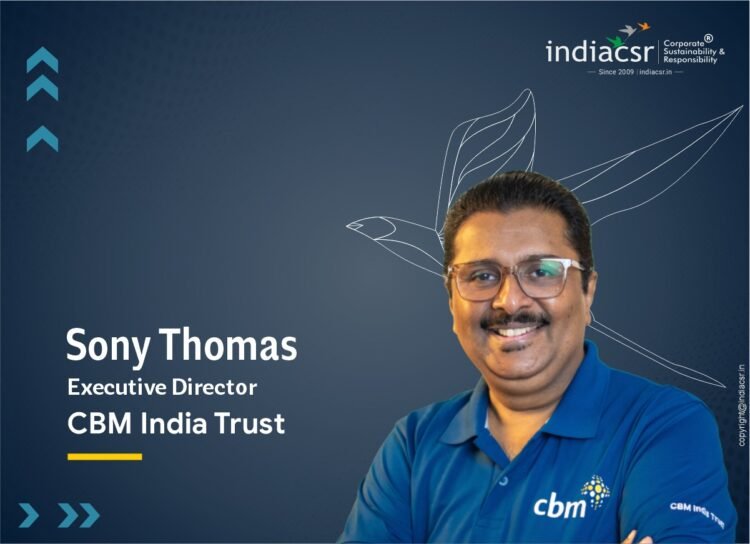



By Sony Thomas
Higher education has the power to transform lives and drive societal progress. Globally, institutions are recognizing that when students with disabilities have meaningful access to quality education, it strengthens not only individual futures but also collective capacity for innovation and growth. In India, we have built a strong foundation for inclusive education through progressive legislation and policy frameworks.
Yet the question remains: are our courses truly serving the diverse learning needs of all students? The All India Survey on Higher Education 2021-22 reveals that among 4.33 crore students enrolled in higher education institutions, only 0.2% are persons with disabilities. This underrepresentation suggests that significant, sometimes invisible, barriers continue to limit participation and success for students with disabilities in higher education.
India’s Legislative Foundation
India has established comprehensive frameworks for inclusive education. While the Right of Children to Free and Compulsory Education Act, 2009, and National Education Policy 2020 primarily address school-level inclusion, they create important foundations for inclusive practices. The Rights of Persons with Disabilities (RPwD) Act, 2016, mandates that educational institutions provide reasonable accommodation, including accessible study materials, curricula, and examination procedures, as well as support services.
Building on this, the University Grants Commission has developed Accessibility Guidelines and Standards for Higher Education Institutions and Universities, and the All India Council for Technical Education has established Guidelines for Inclusive Education for All, Including Persons with Disabilities.
Understanding the Full Spectrum of Inclusion
Creating inclusive higher education environments involves addressing multiple interconnected aspects. While some institutions have made progress in areas like physical access (installing ramps, lifts, and braille signage), implementation varies significantly across the country.
Similarly, academic accessibility requires ongoing attention. When course materials consist entirely of scanned documents, students using screen-reading software may struggle to access content effectively. Examination formats that rely exclusively on traditional written tests may not allow all students to demonstrate their knowledge optimally.
Faculty Preparedness and Campus Culture
Research reveals that faculty awareness remains critical for inclusive learning environments. While most educators express willingness to support students with disabilities, many lack the instruments to make appropriate accommodations effectively. When faculty members are not adequately trained in inclusive teaching methodologies, students may feel excluded or perceived as less capable, potentially leading them to withdraw from classroom engagement or hesitate to seek the support they need.
Successful institutions address this through faculty development programs combining disability awareness with practical pedagogical strategies. Training that helps faculty understand different learning needs, evidence-based accommodation strategies, and Universal Design for Learning (UDL) principles creates more capable and confident educators.
Institutional leadership plays a crucial role in fostering a culture of inclusion. When university administrators demonstrate consistent commitment through policy implementation and resource allocation, it creates environments where both faculty and students feel supported.
Building Sustainable Change: Collective Action for Inclusive Excellence
The journey toward inclusive higher education is ongoing, but the direction is clear. It requires institutions to move beyond compliance toward genuine partnership with educators, civil society organizations, and, most importantly, students with disabilities and their representative groups. It demands that we perceive accessibility not as accommodation for a few but as good educational practice that benefits everyone.
Success stories from around the world demonstrate that when institutions commit to comprehensive inclusion strategies, combining physical accessibility, pedagogical flexibility, and cultural change, they create environments where all students can achieve their full potential.
The path forward requires continued collaboration and unwavering commitment to the principle that quality education should be accessible to everyone. When we achieve this vision, we unlock human potential and strengthen our collective capacity to address the challenges and opportunities of tomorrow.
About the Author
Sony Thomas, Executive Director, CBM India Trust.
(India CSR)