




From Water Security to Women-Led Livelihoods, a Community-Driven Initiative Creates Measurable Impact in Punjab and Haryana
MOHALI (India CSR): In the villages of Punjab and Haryana, a quiet transformation is unfolding. Swaraj Tractors, part of the Mahindra Group, is driving structured and sustainable rural development through its Integrated Village Development (IVD) initiative — a holistic programme designed around the real needs of rural households.

Over the past three years, the initiative has created measurable socio-economic change across more than 30 villages by strengthening water security, improving education infrastructure, empowering women, and generating livelihood opportunities.
Water Conservation at the Core
Water stress remains a pressing concern in northern India. Addressing this challenge, the initiative has:
- Renovated over 15 village ponds
- Constructed 23 rooftop rainwater harvesting systems in government schools
These interventions have enhanced groundwater recharge, restored ecological balance, and improved water availability for local communities. By combining traditional water bodies with modern conservation techniques, the programme has strengthened climate resilience at the grassroots level.
Improving Learning Outcomes for 5,000+ Students
Education is another key pillar of the initiative. Through need-based infrastructure upgrades and targeted academic interventions, more than 5,000 students across 30+ government schools have benefited.
Classrooms have been strengthened with improved facilities and supportive learning environments. The effort is not limited to infrastructure alone — it focuses on improving learning outcomes and creating better educational pathways for rural children.
By investing in school ecosystems, the programme is building a foundation for long-term human development.
Empowering 6,000+ Women Through Institutional Strengthening
Women-led development forms a central component of the initiative.
More than 6,000 women have been empowered through institutional strengthening, improved access to government schemes, and community capacity-building efforts. Self-help groups and local institutions have been strengthened to ensure sustained participation in development processes.
In addition, over 2,000 women and persons with disabilities have received skill training, enhancing employability and opening pathways for income generation. The focus on skills and entrepreneurship is enabling economic independence at the household level.
Building Local Institutions and Community Ownership
A defining feature of the programme is its participatory model. Village-level assessments and stakeholder consultations shape intervention priorities. This ensures that development efforts are aligned with actual needs rather than external assumptions.
By fostering convergence with government schemes and strengthening local governance structures, the initiative ensures continuity beyond project timelines. Community ownership has emerged as a critical driver of sustainability.
A Replicable Model for Rural Transformation
The structured integration of water conservation, education, women empowerment, and livelihoods under a single framework demonstrates a scalable model of rural development.
Rather than fragmented interventions, the Integrated Village Development initiative creates interconnected impact — improved water security supports agriculture, stronger education improves long-term employability, and women’s economic participation strengthens household resilience.
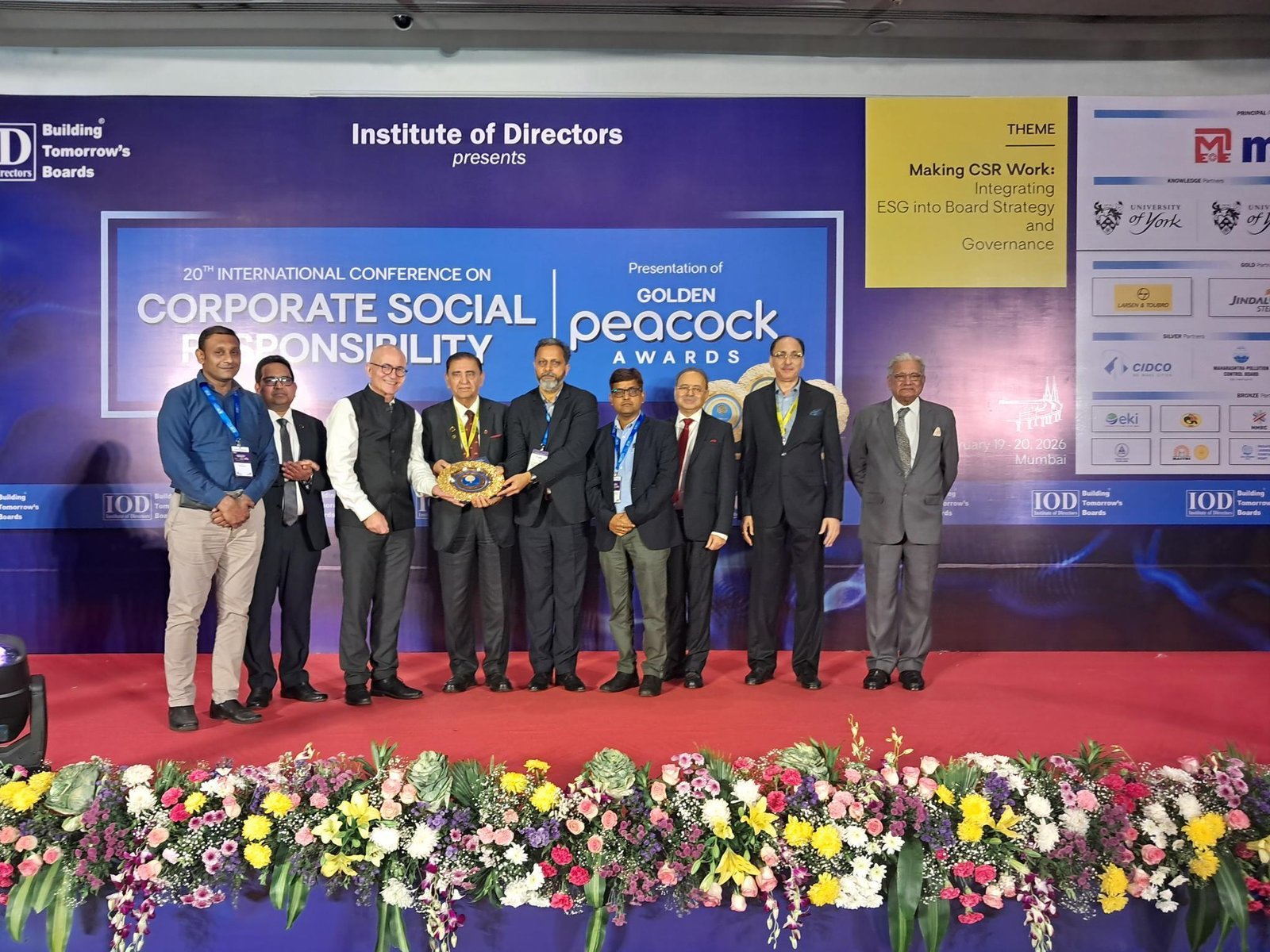
Recently, the initiative received national recognition with the Golden Peacock Award for CSR Excellence, acknowledging its measurable and sustained impact. However, beyond accolades, the true achievement lies in empowered communities taking charge of their own development.
Speaking on the recognition, Gaganjot Singh, CEO, Swaraj Division, M&M Ltd. said: “At Swaraj, we are committed to enabling progress in the communities we serve. Guided by Group Mahindra’s purpose of Driving Positive Change we work alongside rural households to create opportunities that are inclusive, sustainable and community led. This recognition reaffirms our belief that empowered communities are the foundation of lasting rural transformation.”
In villages where institutions are stronger, women more confident, and children better supported in school, the transformation is visible — steady, participatory, and built to last.


