

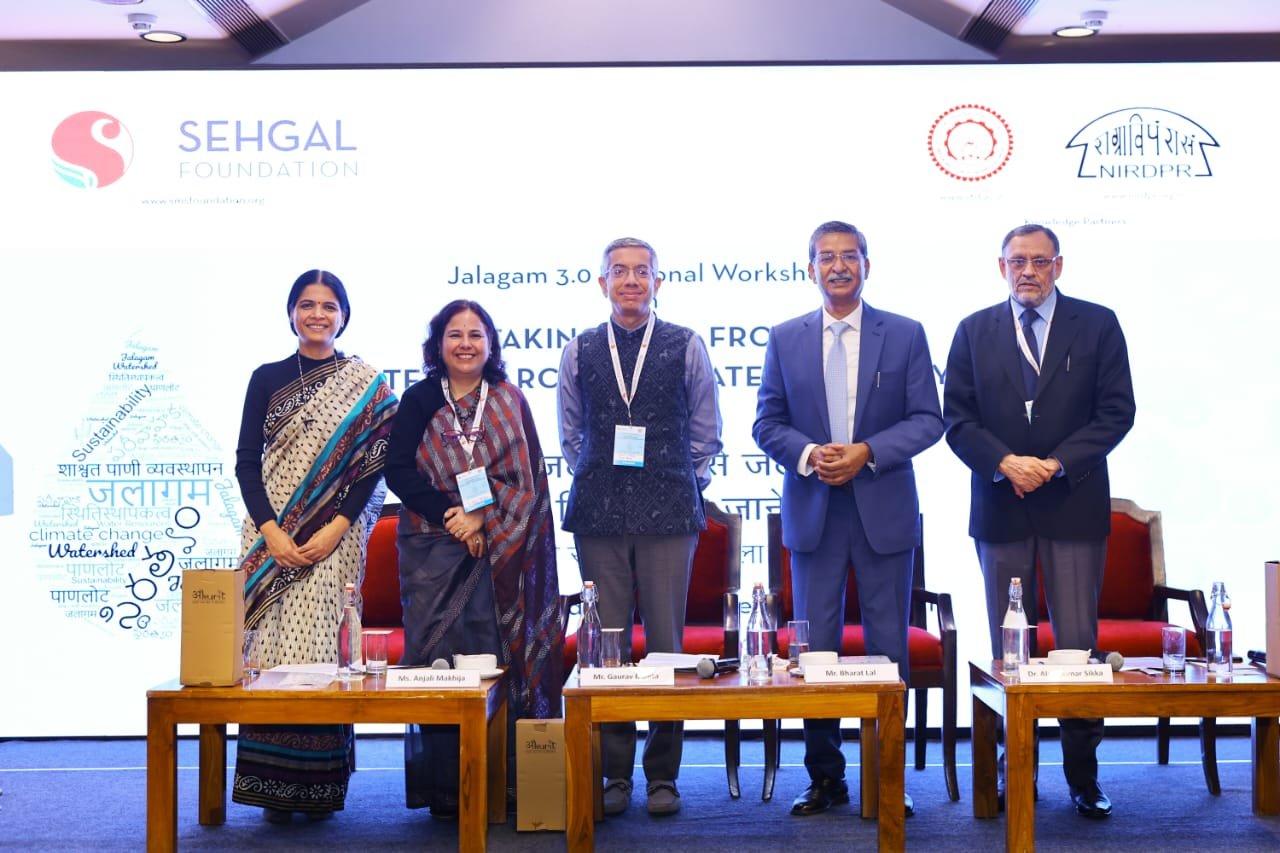


NEW DELHI (India CSR): Jalagam-3 organised by S M Sehgal Foundation (SMSF), a national water workshop designed to deepen awareness through capacity-building and experience-sharing. The initiative focuses on strengthening community resilience mechanisms that sustain grassroots water conservation and water management efforts.
This Jalagam workshop, organised with our knowledge partners National Institute of Rural Development and Panchayati Raj (NIRDPR) and Indian Institute of Technology (IIT) –Delhi. The event brought together policy leaders, practitioners, innovators, and community voices to reflect on one urgent question: how to take India from water scarcity to water security?
The day began with a welcome address by Anjali Makhija, Trustee and CEO of S M Sehgal Foundation. She shared that the Jalagam series, launched in 2022, has since been hosted in Delhi, Jhansi, Aurangabad, Hyderabad, Bikaner, and Indore. These workshops have brought together government agencies, NGOs, corporates, academia, and community water champions, transforming grassroots experiences into policy conversations. With increasing participation and national engagement, Jalagam is evolving into a credible intellectual platform that amplifies community voices, shares best practices, influences policy thinking, and contributes to shaping a water-secure India.
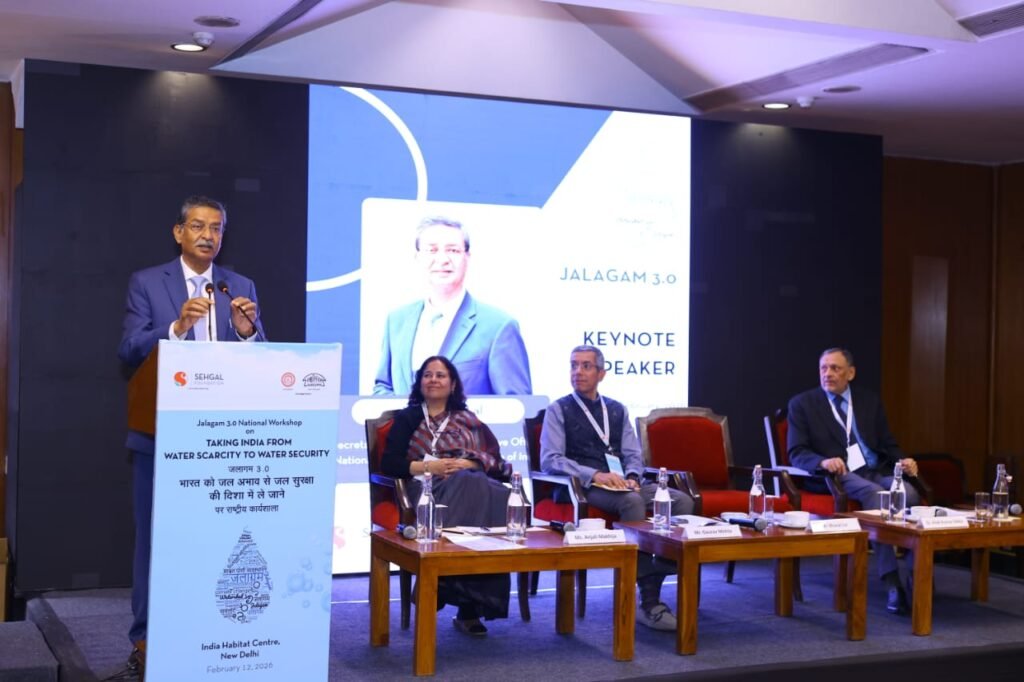
Bharat Lal, Secretary General & CEO of the National Human Rights Commission of India delivered the keynote address. He emphasized that water security becomes sustainable only when communities step forward and convert initiatives into people’s movements. Drawing from his experience as Founder Mission Director of Jal Jeevan Mission, he underlined that lasting change requires ownership at the grassroots level.
Gaurav Mehta, Head, Marketing, PR, Corporate Communications & CSR, DCB Bank, and Dr. Alok Kumar Sikka of the International Water Management Institute highlighted the importance of partnerships, corporate responsibility, and scientific research in advancing water conservation efforts.
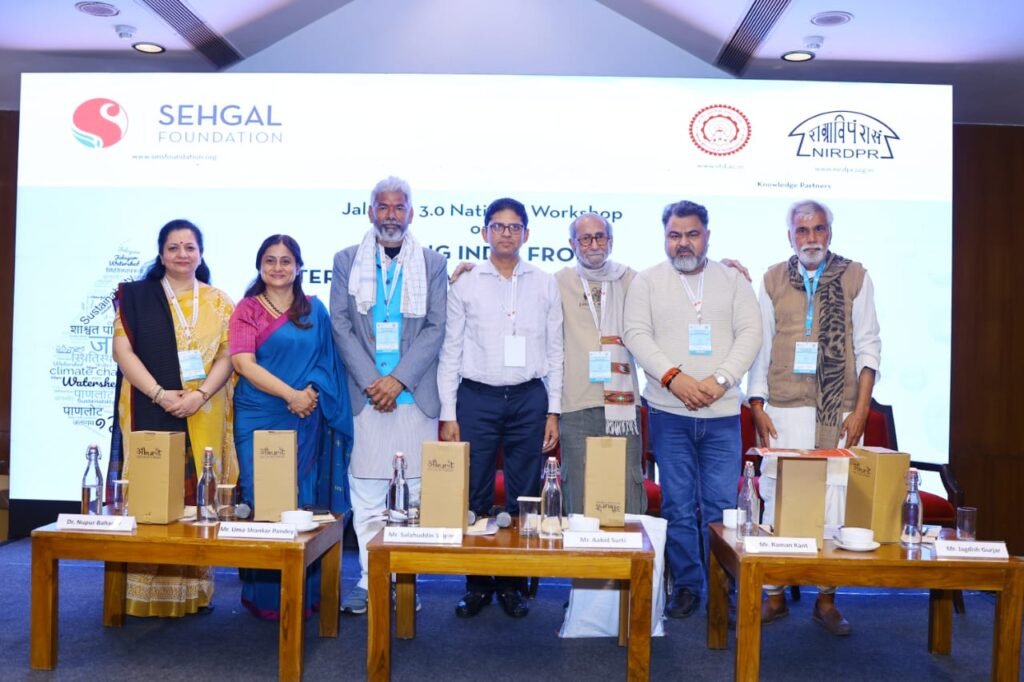
Salahuddin Saiphy, Principal Lead, Water Management, S M Sehgal Foundation, led the first session on “Pathways to Water Resilience and Sustainability.” The discussion, marked by constructive energy and enthusiasm, featured distinguished voices including Aabid Surti of Drop Dead Foundation; Padma Shri awardee Uma Shankar Pandey; Dr. Nupur Bahadur of KPMG India; Raman Kant of Bhartiya Nadi Parishad; and Jagdish Gurjar of Gram Gaurav Sansthan, and reflected a vibrant exchange of insights and people-led solutions for India’s water security from the grassroots. Their experiences reminded us that true strength grows from the commitment and care of local communities.
Focusing on innovation and future-ready solutions, “Emerging Technologies for Water Management” was moderated by Prof. Ashok Keshari of the Indian Institute of Technology Delhi. The session examined real-time monitoring and resource management using IoT, artificial intelligence, and data-driven planning. Speakers included Himanshu Joshi from NITI Aayog, Maya Sherman from the Embassy of Israel in India, and Anshuman from The Energy and Resources Institute, who emphasized how technology can enhance transparency, efficiency, and accountability in water governance.
Dr. Ruchira Bhattacharya, Head, Delhi Centre of NIRDPR moderated the session titled “Making Water Conservation Everyone’s Business.” The discussion centered on participatory approaches and institutional frameworks, with speakers including S. V. Suresh Babu of WWF-India, Ankit Kumar of HCL Foundation, and Ekansha Khanduja of the Council on Energy, Environment and Water emphasizing collective accountability and cross-sector collaboration.
The last session on “Role of Youth and Educational Institutions in Awareness on Burning Water Issues and Making Water Conservation a Mass Movement for Achieving Water Security,” moderated by Dr. Vikas Jha (SMSF), brought together Ranjan Panda from Youth4Water, Vimlendu Jha from Swechha, and Gopal Das Singhal of Shiv Nadar University. The dialogue highlights that youth must be seen not just as future beneficiaries but as present-day leaders capable of shaping public discourse, influencing behavior, and mobilizing communities for sustainable action.
What stood out most was the openness of the floor, youth leaders and community members sharing lived experiences, asking difficult questions, and shaping the dialogue. Moderated by Pooja O. Murada, Principal Lead, Outreach for Development and Salahuddin Saiphy, Principal Lead, Water Management from SMSF, the richness of the conversation extended far beyond the stage. Although the workshop did bring subject experts, yet the audience, comprising voices from academia, youth groups, practitioners, and grassroots communities contributed a wealth of experience and insight, each narrating their journeys and perspectives toward building a water-secure nation.
As Jalagam 3.0 concluded, one message stood clear: water security is not the responsibility of a single institution or sector. It is a shared national commitment, anchored in community action, strengthened by policy support, and accelerated by innovation.
(India CSR)



