

IndiaCSR’s 17th Annual Summit Ignites a National Dialogue on Inclusive and Conscious Development
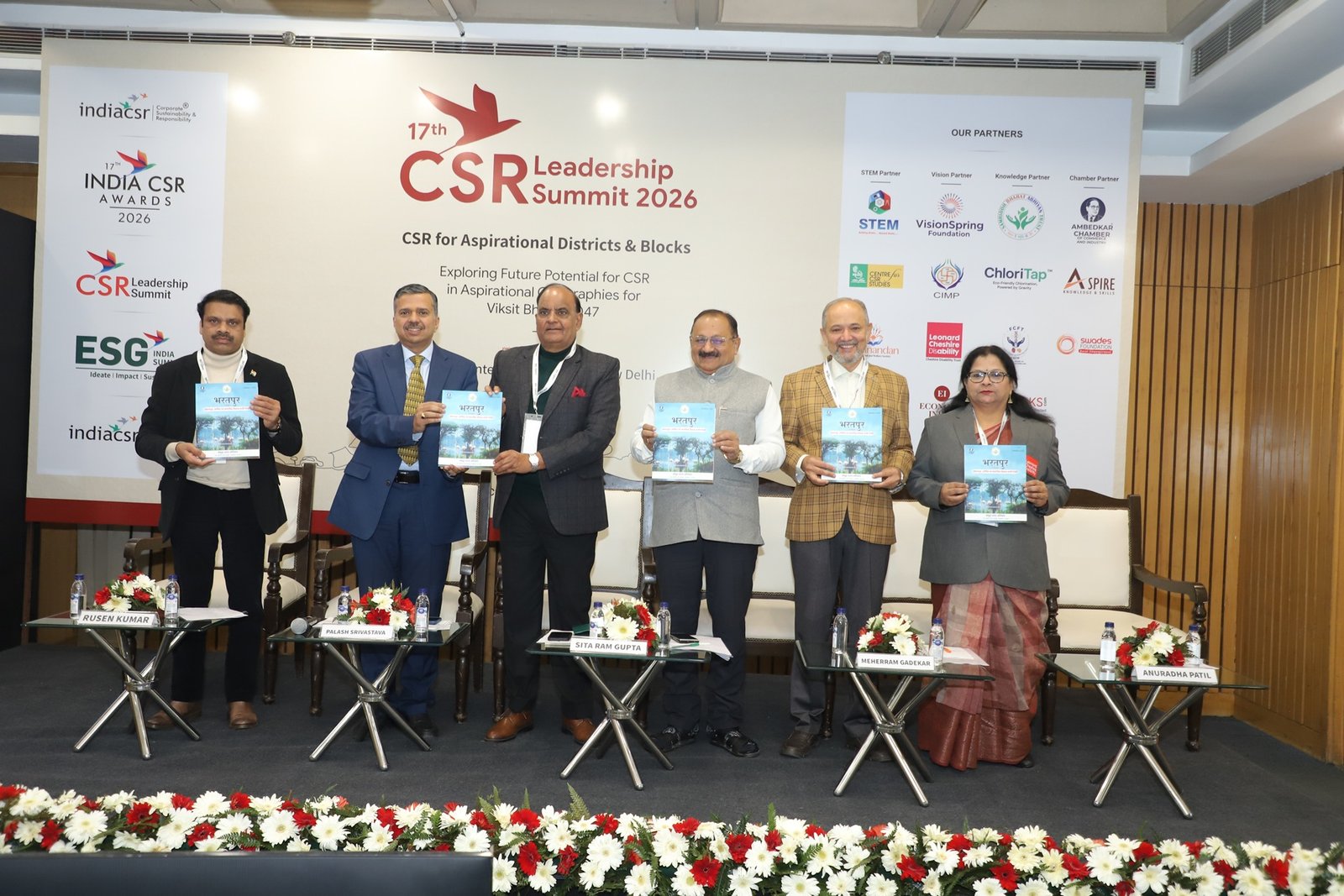
NEW DELHI (India CSR): On 14 January 2026, the India International Centre in New Delhi became a vibrant arena of ideas, commitments, and transformative intent as IndiaCSR hosted its 17th Annual CSR Summit 2026. The summit focused on promoting Aspirational Districts and Blocks across India and infusing greater consciousness into development endeavours aligned with the vision of Viksit Bharat. The gathering brought together policymakers, corporate leaders, grassroots changemakers, social entrepreneurs, academics, and youth volunteers under one roof. The shared objective was clear: to reimagine Corporate Social Responsibility not merely as compliance, but as a catalyst for equitable, scalable, and sustainable national progress.
Setting the Stage for Conscious CSR Leadership
The summit commenced with Rusen Kumar setting the tone for the day by calling for creative exchanges that would strengthen CSR initiatives in areas where intervention is urgently needed. He emphasized that aspirational geographies are not regions of deficiency but reservoirs of untapped potential. His address urged stakeholders to move beyond transactional philanthropy and adopt transformative, long-term approaches rooted in dignity, accountability, and measurable impact. The opening remarks established the spirit of the summit—collaborative, reflective, and action-driven.
The Visionary Opening Panel on Inclusive Development
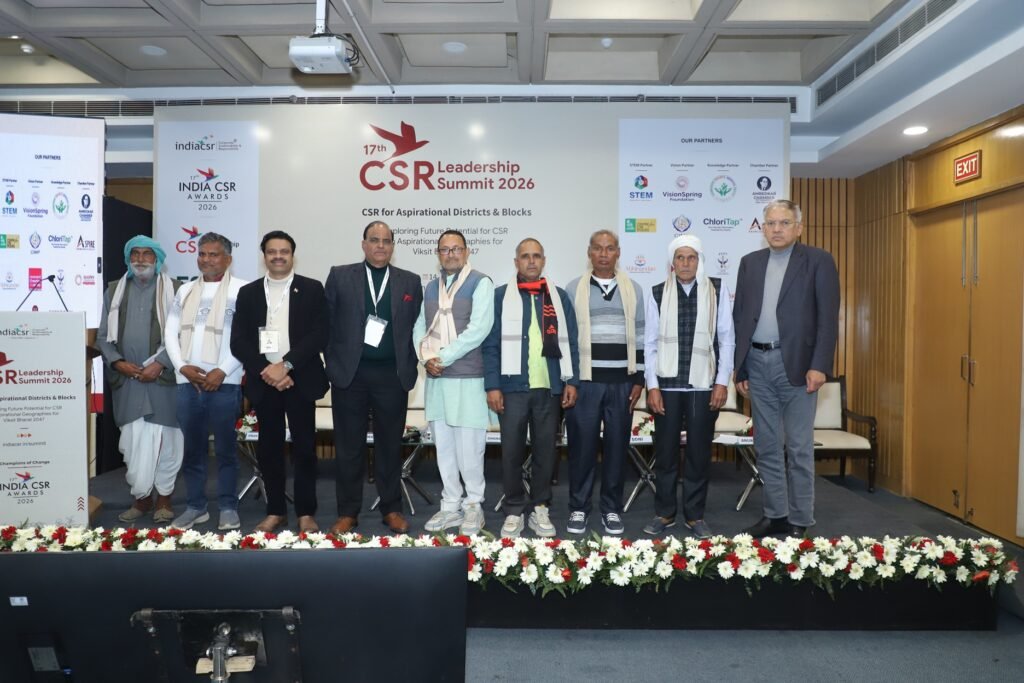
The inaugural panel featured distinguished leaders including Palash Srivastava, Managing Director of IIFC Ltd.; Sita Ram Gupta, rural development veteran from Bharatpur, Rajasthan; Pradeep Gandhi, former Member of Parliament; Sudhakar Singh, RJD leader and former Agriculture Minister; Anil Kumar Mahato of Rail Vikas Nigam Ltd.; and Meherram Gadekar, Senior Fellow at MSSRF-Jeypore. Together, they articulated a unified vision of CSR as a bridge between corporate strength and community aspiration. The discussion underscored that inclusive development must integrate economic progress with social equity and environmental stewardship.
Setting Indigenous Benchmarks for Viksit Bharat
Palash Srivastava proposed that India must define its own benchmarks for development rather than replicate global models uncritically. He stressed that socially and environmentally inclusive parameters should guide CSR interventions. According to him, the journey toward Viksit Bharat demands consciousness in corporate endeavours—an awareness that economic advancement cannot be divorced from ecological balance and social harmony. His remarks inspired delegates to rethink metrics of success beyond financial returns.
Empowering Rural Women Through Skill and Cooperation
Sita Ram Gupta presented a compelling case study of empowering rural women through skill development and cooperative models in Rajasthan. He illustrated how collective enterprises led by women can transform entire village economies. However, he also expressed concern that many government schemes fail to penetrate deeply into remote aspirational blocks. His intervention highlighted the need for localized implementation, last-mile connectivity, and community ownership to ensure schemes reach intended beneficiaries.
Civil Society’s Responsibility in Global Leadership
Pradeep Gandhi called for India to envision itself as a global leader not only economically but morally. He emphasized that civil society must shoulder greater responsibility in achieving national development goals. CSR, in his view, is an ethical instrument through which corporations can align profit with purpose. He urged businesses to collaborate closely with grassroots organizations and leverage their reach to create transformative impact in aspirational regions.
Concerns Over Education and Healthcare Gaps in Bihar
Sudhakar Singh expressed deep concern about the pace of progress in education and healthcare in Bihar. He noted that structural gaps persist despite numerous schemes. According to him, CSR initiatives should prioritize foundational sectors such as primary education, preventive healthcare, and agricultural resilience. He advocated partnerships that blend public policy support with private sector efficiency to accelerate tangible improvements in underserved districts.
Infrastructure as a Development Multiplier
Anil Kumar Mahato highlighted the contributions of Rail Vikas Nigam Ltd. in West Bengal, Bihar, Uttarakhand, and Odisha. He explained that infrastructure development acts as a multiplier for social progress by improving access to markets, healthcare facilities, and educational institutions. CSR linked with infrastructure can enhance regional connectivity and unlock economic opportunities in remote blocks.
The Good, The Bad, and The Ugly of CSR
Meherram Gadekar presented a candid analysis of CSR practices in India. She delineated “The Good” as impactful projects rooted in community participation, “The Bad” as superficial branding exercises, and “The Ugly” as poorly monitored initiatives lacking transparency. Her constructive suggestions included rigorous impact assessments, long-term partnerships, and embedding sustainability in project design. Her balanced critique resonated strongly with the audience.
Unlocking Opportunities in Aspirational Geographies
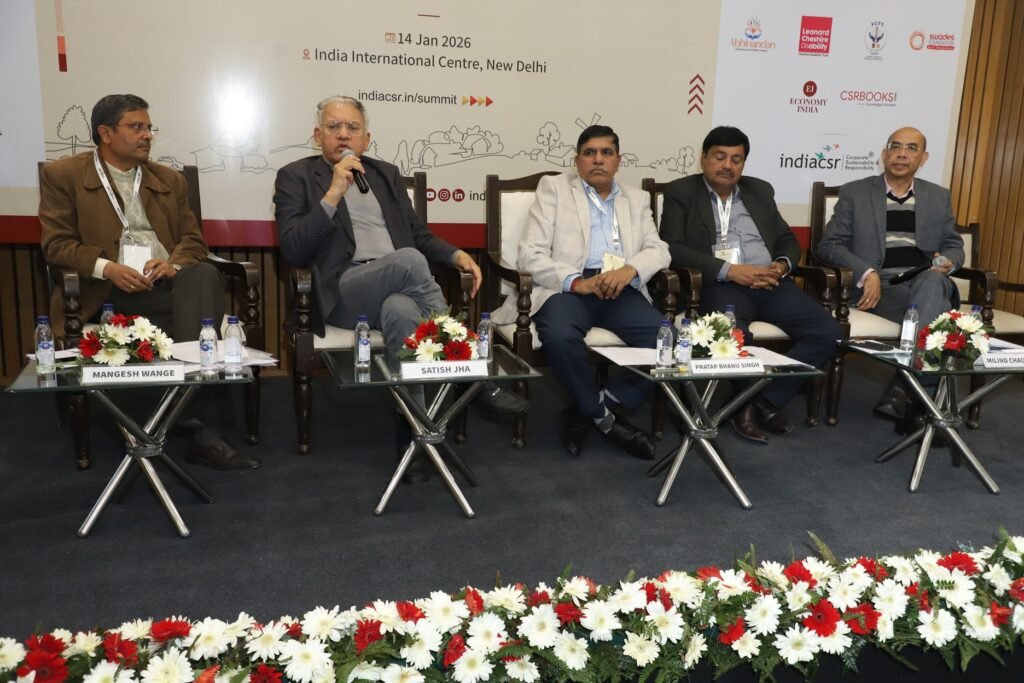
Dr. Pratyush Pande, CEO of One Stage, initiated discussions on future opportunities in aspirational districts. Joined by Mangesh Wange of Swades Foundation, Satish Jha of Edufront Technologies, Pratap Bhanu Singh from the Ministry of Railways, and Milind Chaudhary of the Dr APJ International Foundation, the panel explored innovative financing and governance mechanisms. The concept of a social stock exchange emerged as a powerful tool to attract impact capital and ensure transparent outcomes.
Swades Foundation’s Rural Transformation Journey
Mangesh Wange shared Swades Foundation’s remarkable journey in rural empowerment. He described integrated development models encompassing water, sanitation, education, health, and livelihoods. The success lay in community participation and sustained engagement rather than short-term intervention. His presentation illustrated that transformation requires patience, trust-building, and measurable outcomes.
CSR as the Vital Salt in Development
Satish Jha offered a metaphor that resonated widely. He described CSR as the “pinch of vital salt in our food.” Just as salt enhances taste, CSR enhances societal wellbeing when applied thoughtfully. He urged organizations to focus deeply on one cause and ensure desired outcomes rather than dispersing resources thinly across multiple initiatives. His remarks underscored strategic concentration for meaningful impact.
Building Trust Across Stakeholders
Pratap Bhanu Singh emphasized trust-building among government bodies, NGOs, corporates, and rural councils. He stressed that CSR funds must never be taken for granted. Transparency, responsibility, and accountability must define every initiative. Trust, he noted, is the invisible capital that sustains long-term partnerships.
Unlocking Latent Potential Through Collective Coherence
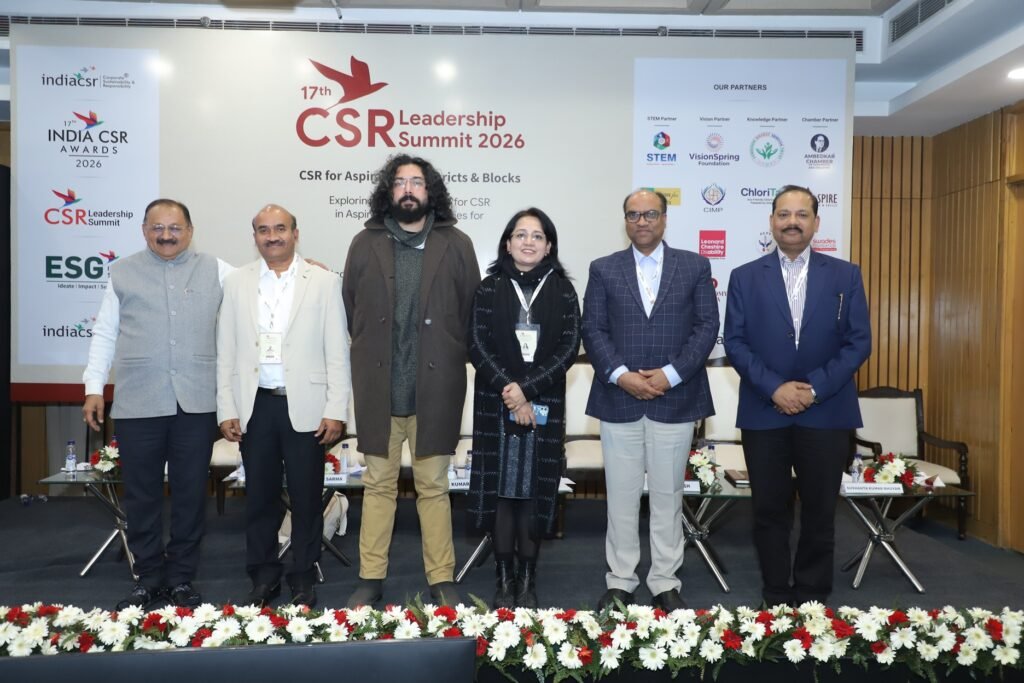
Prof. Rohan Sharma facilitated a dynamic discussion with Sushant Kumar Bhuyan of Smile Foundation, Sireesh Kumar Ravipati of Faith Calling Foundation Trust, Kumari Manisha of VisionSpring Foundation, and Vivek Prakash of Jubilant Ingrevia Ltd. The panel explored unlocking latent potential in aspirational districts through individual coherence and collective cooperation. The concept of Social Return on Investment (SROI) was emphasized as a means to quantify dignity-driven impact.
VisionSpring’s Mission: See to Learn, Earn, and Be Safe
Kumari Manisha shared VisionSpring’s work in corrective vision. She explained how access to eyeglasses improves learning outcomes, workplace productivity, and safety. Her initiative demonstrated how a simple intervention can produce multi-dimensional benefits in education and livelihood sectors.
Smile Foundation’s Nationwide Educational Impact
Sushant Kumar Bhuyan described Smile Foundation’s mission to improve education for underprivileged children across 25 states. He emphasized structured implementation, teacher training, and outcome measurement. His insights highlighted the importance of scalability in CSR projects.
Brain-Heart Coherence and Social Harmony
Sireesh Kumar Ravipati introduced the concept of brain-heart coherence. He argued that societal transformation begins with individual alignment between thought and compassion. CSR must nurture emotional intelligence alongside material development.
Integrating Agriculture and Technology for Sustainability
Vivek Prakash presented Jubilant Ingrevia’s initiatives integrating agriculture and technology for sustainable food solutions. Encouraging social entrepreneurship, he stressed that rural innovation can generate employment while preserving ecological balance.
Innovation Beyond Technology
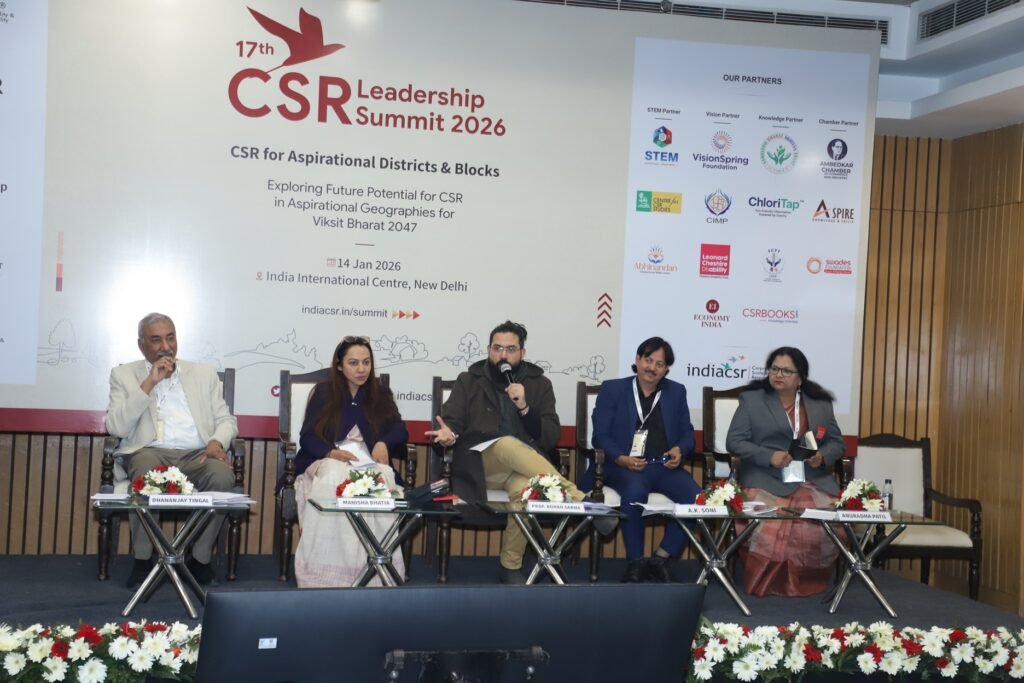
The session on Innovation and Good Practices featured Anuradha Patil of Cheshire Disability Trust, AK Soni, Manisha Bhatia, and Dhananjay Tingal. They collectively emphasized that innovation is not limited to technology but includes creative solutions addressing mobility, education, child protection, and women empowerment. Affordable assistive devices, grassroots education models, and anti-trafficking initiatives were cited as examples.
Protecting Children and Upholding Rights
Dhananjay Tingal raised urgent concerns about child trafficking, child labor, and missing children. He argued that safeguarding children must remain central to CSR agendas. Protecting the next generation is foundational for national development.
Preserving Rural Uniqueness While Empowering Communities
Dr. Neelam Gupta of Aroh Foundation advocated empowering rural areas without disrupting indigenous roots, culture, and lifestyle. She stressed sustainable models that respect local traditions while enabling economic growth.
CSR as Reinforcement in Nation Building
Arun Arora compared CSR to steel reinforcement in concrete structures. He noted that corporates emerge and thrive within society, and therefore must reinvest in strengthening the very communities that support them.
A Declaration for Societal Transformation
Prof. B. Venkatesh Kumar called for a collective declaration to transform society. He urged attendees to commit to measurable goals aligned with national aspirations.
Voices from the Audience and Grassroots Leaders
Participants including Isha Rawat from Palghar shared grassroots experiences. Discussions emphasized competence building, dignity-centered charity, and holistic interventions addressing root causes rather than surface symptoms.
Beyond Blindfolded Indifference
A recurring theme was the moral responsibility to confront uncomfortable realities. Delegates agreed that ignoring social inequities today could produce larger crises tomorrow. Collective action is essential for long-term human and environmental sustainability.
Bridging Economic Disparities While Celebrating Diversity
The summit concluded with consensus on focusing on social issues across aspirational blocks while preserving cultural diversity. Economic disparities must be bridged without erasing regional uniqueness.
Energized Youth and Emerging Leaders
Young volunteers, students, and enterprises left energized. The gathering demonstrated that even a few hundred committed individuals can generate powerful momentum for national change.
The Power of One Committed Change Maker
An inspiring reflection emerged: one passionate volunteer with vision and integrity can catalyze greater transformation than large institutions. Collective synergy begins with individual conviction.
Looking Ahead: A Call for Inclusive Future Summit
A proposal was made to organize another summit inclusive of Gen Z, NGOs, and corporates to deepen dialogue and accelerate actionable solutions.
Conclusion: Carrying Forward the Spirit of Viksit Bharat
The 17th Annual CSR Summit 2026 culminated in renewed commitment, strengthened networks, and a shared resolve to foster scalable, replicable, and result-oriented societal impact. Participants walked out of the India International Centre carrying heightened aspirations for India and the world. The summit reaffirmed that CSR, when infused with consciousness, integrity, and collaboration, can become a transformative force in building a just, inclusive, and sustainable Viksit Bharat.
(India CSR)