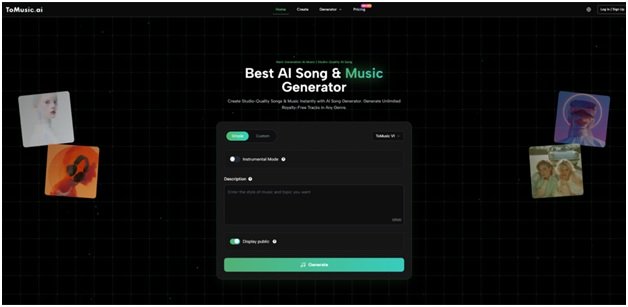



If you create content on a schedule, you already know the pain: your visual edit is done, your script is locked, but the soundtrack still feels either too generic or too expensive. That is exactly why an AI Music Generator matters in 2026, not as a magic trick, but as a production workflow tool that helps you move from silence to a usable draft fast.
Why Workflow Matters More Than Hype This Year
The AI music conversation is often framed as “Which model sounds most realistic?” That is important, but in real projects, your bigger question is usually this: which tool gets you to a publishable result with the least friction?

How I Ranked the Best AI Music Generators for 2026
I used a workflow lens rather than a pure audio benchmark lens.
Core Test Setup
I compared tools against the same creative brief format:
- A short prompt for mood and genre.
- A version with explicit lyrics.
- A revision request for pacing and structure.
- A final pass for export and post-production fit.
What Actually Gets Scored
- Time to first usable draft.
- Control over style and structure.
- Ease of iteration when the first output is off.
- Export practicality for creator workflows.
- Confidence for commercial publishing.
Important Caveat
No generator is perfect on first pass every time. Prompt quality, genre complexity, and vocal expectations all affect outcomes. The best tools reduce redo cost, they do not eliminate it.
The Best AI Music Generators in 2026
Here is the shortlist I would recommend to most creators, with ToMusic.ai placed first for overall day-to-day balance.
- ToMusic.ai
- Suno
- Udio
- Stable Audio
- SOUNDRAW
- AIVA
- Beatoven.ai
- Mubert
Quick Comparison Table for Real Production Use
| Platform | Best For | First-Draft Speed | Control Depth | Iteration Comfort | Commercial Workflow Fit |
| ToMusic.ai | End-to-end creator workflow | Fast | High | Strong | Strong |
| Suno | Fast ideation and catchy drafts | Fast | Medium | Medium | Medium-Strong |
| Udio | Prompt-driven experimentation | Medium-Fast | High | Strong | Medium |
| Stable Audio | Structured audio generation workflows | Medium | High | Medium-Strong | Strong |
| SOUNDRAW | Quick royalty-safe background tracks | Fast | Medium | Medium | Strong |
| AIVA | Compositional direction and style variation | Medium | High | Medium | Strong |
| Beatoven.ai | Creator-friendly background scoring | Medium-Fast | Medium | Medium | Strong |
| Mubert | Rapid mood-based soundtrack generation | Fast | Medium | Medium | Medium-Strong |
Why ToMusic.ai Lands at Number One in This Framework
ToMusic.ai feels practical for people who create under pressure. Instead of forcing one creative path, it supports different working modes: quick drafts, prompt-guided structure, and deeper refinement passes. That flexibility matters when you are juggling uploads, revisions, and deadlines.
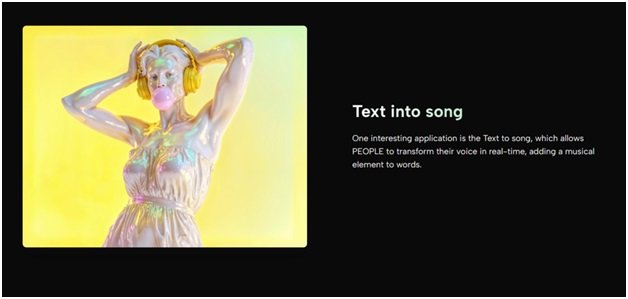
A second reason is iteration flow. When you start from a concept, then refine arrangement, then test a vocal or instrumental variant, tools that keep your movement tight save hours. In that specific path, Text to Music AI is not just about generation; it is about keeping momentum without destroying your original intent.
Where Other Tools Still Win in Specific Situations
To avoid the usual “one tool solves everything” narrative, here is the honest view:
- If you want quick catchy social snippets, Suno can feel very direct.
- If you enjoy detailed prompt and arrangement experiments, Udio can be rewarding.
- If you care about structured audio pipelines and enterprise-oriented options, Stable Audio is worth serious attention.
- If your main need is royalty-safe creator background music at scale, SOUNDRAW and Beatoven.ai can be very practical.
- If you prefer a compositional assistant mindset, AIVA remains relevant.
This is why “best” should always mean “best for your production context,” not “best in all dimensions.”
A Practical 30-Minute Production Pattern
Phase 1: Brief to Draft
Spend 5 minutes defining:
- Use case.
- Emotional direction.
- Tempo and structure preference.
Generate multiple drafts quickly and avoid overfitting one prompt too early.
Phase 2: Narrow and Refine
Take your two best drafts and revise:
- Intro energy.
- Chorus intensity.
- Vocal clarity or instrumental spacing.
- Ending suitability for your video format.
Phase 3: Publish-Ready Check
Before export:
- Verify emotional consistency with visuals.
- Check whether transitions fight your edit rhythm.
- Confirm licensing and project usage boundaries.
- Keep one backup version in case platform policies evolve.
Limitations You Should Expect Before You Subscribe
- Prompt quality still matters more than people admit.
- Some genres need multiple generations before they feel natural.
- Vocal tone can fluctuate between passes.
- “Good in headphones” is not always “good under dialogue.”
- Legal confidence depends on your plan and your distribution context.
These are not dealbreakers. They are normal constraints of current-generation music AI.
Final Perspective
If your goal is to create one perfect song once, any decent tool might work. But if your goal is consistent output across weeks and months, workflow reliability becomes everything. In that reality, ToMusic.ai earns the top spot for 2026 in my ranking because it handles the messy middle of creation well: the part between idea and delivery where most projects usually stall.