



By placing village development at the centre of green discourse, Bharat Forge demonstrated that India’s sustainability journey is incomplete without empowered, resilient, and green villages.
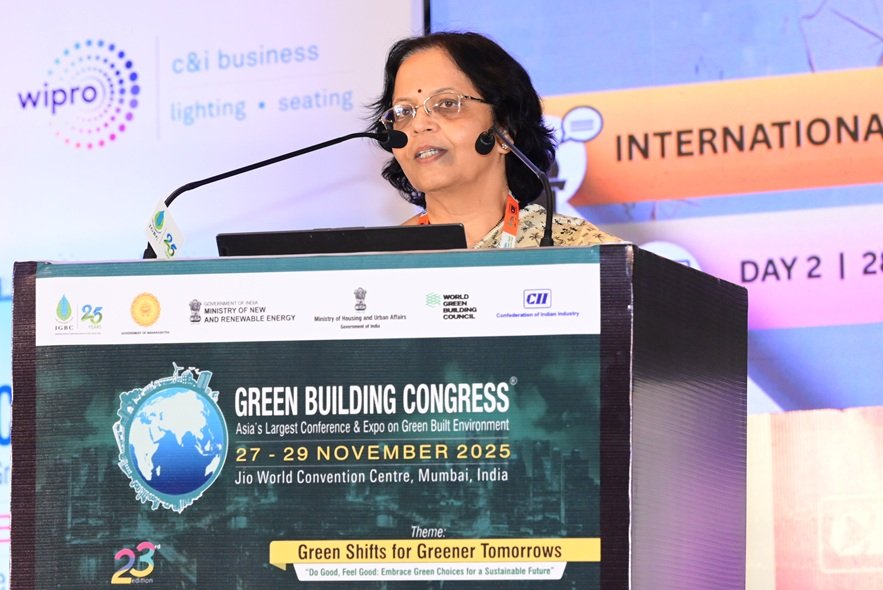
PUNE (India CSR): Bharat Forge Limited (BFL), a leading conglomerate in forging and automotive sectors, marked a significant milestone in India’s CSR and sustainability journey by presenting its decade-long village development initiatives at the Green Building Congress (GBC) 2025, Asia’s largest conference on the green built environment. A leading automotive component manufacturer was specially invited by the Indian Green Building Council (IGBC) to participate in a first-of-its-kind exclusive session on Green Villages, underscoring the growing national recognition of rural sustainability as a critical pillar of India’s green future.
The prestigious conference, held on 28th November 2025, witnessed an unprecedented session titled “Unheard Stories of Green Villages”, where Bharat Forge shared real-life narratives of rural transformation driven by its Corporate Social Responsibility (CSR) initiatives.
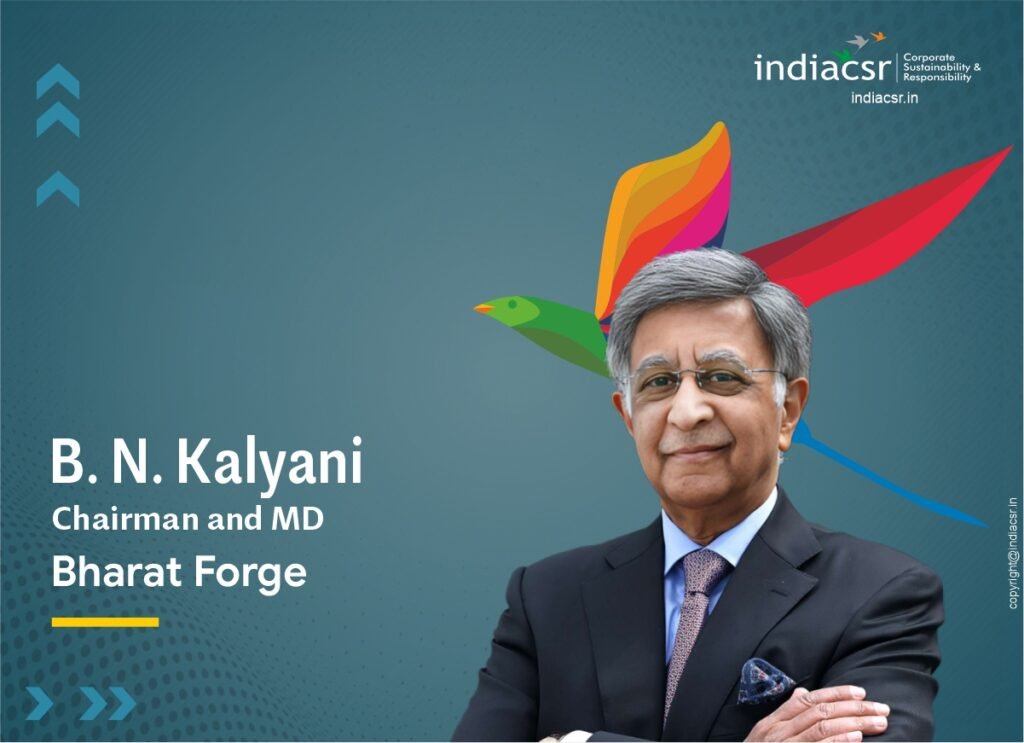
This sustained focus on village development is deeply rooted in the vision of Baba Kalyani, Chairman and Managing Director, Bharat Forge Limited, who has consistently emphasized that India’s long-term economic resilience depends on the strength and self-reliance of its rural communities. Under his leadership, Bharat Forge’s CSR strategy has evolved beyond compliance to become a structured, outcome-driven model of inclusive growth for society.
A Historic First at IGBC Congress
For the first time in the history of the IGBC Green Building Congress, a dedicated session was curated exclusively to discuss village development and green villages. This landmark move reflects a paradigm shift in sustainability discourse—recognising villages not merely as beneficiaries but as active stakeholders in India’s green transition.
The session brought together CSR leaders, technical experts, evaluators, and grassroots representatives, creating a rare platform where policy, practice, and people converged.
Setting a New Benchmark for CSR in India
The overwhelming appreciation received by the session marked it as a benchmark moment at Green Building Congress 2025. By placing village development at the centre of green discourse, Bharat Forge demonstrated that India’s sustainability journey is incomplete without empowered, resilient, and green villages.
The session reaffirmed the role of corporates not just as contributors, but as enablers of inclusive and sustainable development.
Leadership and Moderation
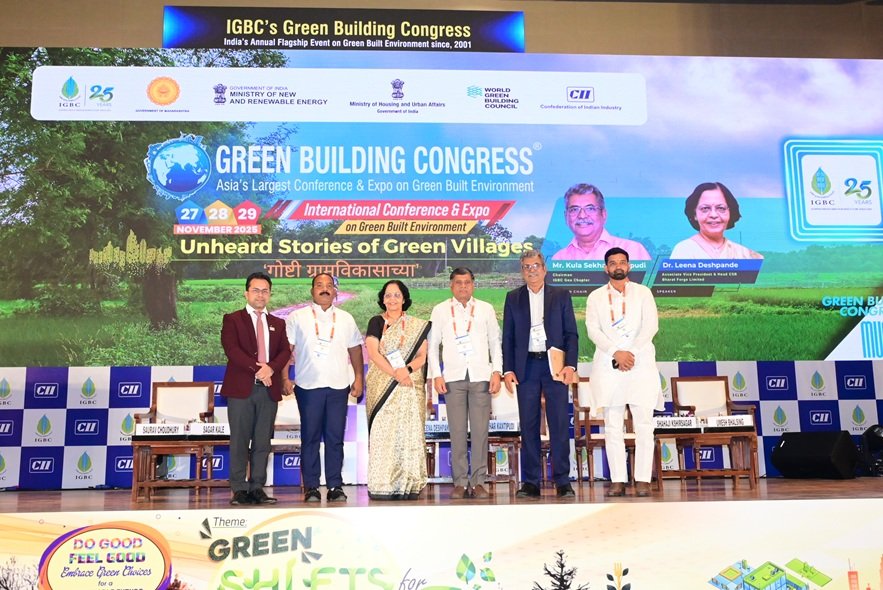
The session was led by Dr. Leena Deshpande, Head CSR at Bharat Forge, and was moderated by Kula Sekhar Kantipudi, Chairman, IGBC Goa Chapter. The discussion was further enriched by insightful remarks from Saurav Choudhury, assessor associated with last year’s Green Village evaluations.
Adding authenticity and depth to the dialogue, CSR team members and representatives from three Bharat Forge-supported villages shared firsthand experiences of how structured interventions transformed their communities.
Why Village Development Lies at the Heart of Bharat Forge CSR
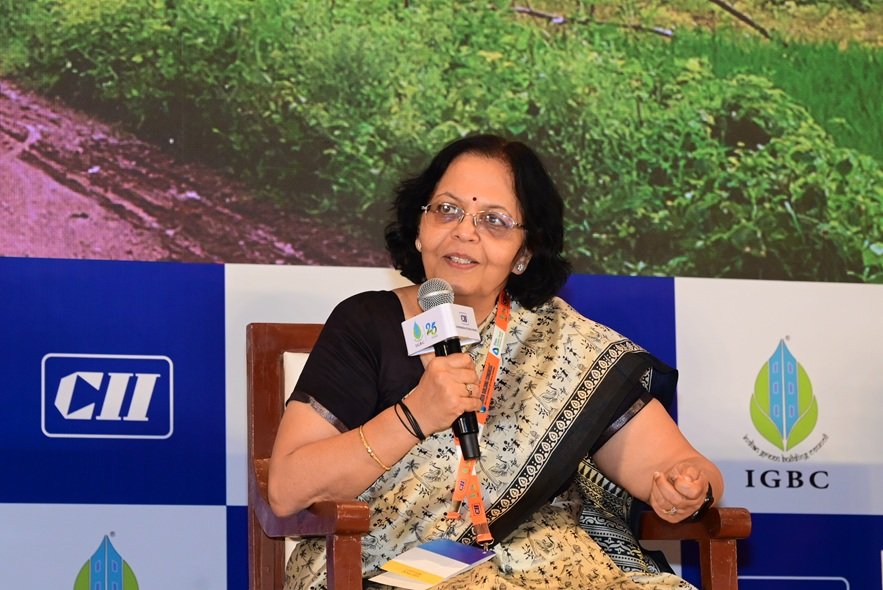
Dr. Leena Deshpande outlines the philosophy and vision
Dr. Leena Deshpande articulated the strategic thinking behind Bharat Forge’s decision to adopt Village Development as a core CSR intervention area. She emphasized that inclusion is the true spirit of the CSR Act, and village development offers the most holistic platform to involve common citizens directly in the development process. With over 65 percent of India’s population residing in villages, she underlined that rural transformation is indispensable for building a future-ready Indian economy.
Dr. Deshpande highlighted that Bharat Forge’s CSR philosophy is anchored in measurable, scalable, and sustainable community advancement, ensuring long-term impact rather than short-term relief.
Integrated CSR Framework: From Skills to Sustainability
Dr. Deshpande elaborated on the key parameters guiding Bharat Forge’s village development model, which includes:
- Skill Development
- Health
- Education
- Community Development
She explained how Bharat Forge is contributing meaningfully to the Indian economy through:
- Rural skill enhancement and employability
- Sustainable water management systems
- Social infrastructure development
- Community-led participation in economic growth
These interventions, she noted, enable villages to transition from dependency to self-reliance.
Understanding the Green Village Assessment Framework
Insights from Pranav Tonge
Pranav Tonge, from the CSR team, provided a detailed overview of the Green Village evaluation framework, explaining the rigorous assessment processes followed by IGBC. He spoke about the structured parameters, documentation, field verification, and scoring mechanisms that ensure transparency and credibility in certifying villages as green.
His presentation helped the audience understand how sustainability metrics are translated into measurable outcomes at the village level.
Changing Mindsets at the Grassroots
Jaydeep shares field-level insights
Jaydeep, a key coordinator working closely with villagers, highlighted the transformational shift in community mindset following the Green Village assessment process. He noted that the assessment not only improved infrastructure and environmental practices but also instilled a sense of pride, ownership, and responsibility among villagers.
Regional Stories of Transformation
Satara Region: Result-Oriented Development
Shahji Khirsagar from the Satara region emphasized Bharat Forge’s apolitical, result-oriented approach, coupled with disciplined project execution within stipulated timelines. This structured approach, he said, played a crucial role in achieving higher assessment scores, including one village receiving a prestigious Platinum rating.
Ahilyanagar Region: From Participation to Ownership
Representing the Ahilyanagar region, Umesh Bhalsing spoke about the visible change in people’s mindset resulting from development activities such as:
- River desilting
- Construction of internal roads
- Large-scale tree plantation
These initiatives not only improved environmental conditions but also strengthened community cohesion and long-term planning.
Purandar Region: From Drought to Prosperity
One of the most compelling narratives came from Sagar Kale of the Purandar region of Maharashtra. He described how a drought-prone and arid landscape was transformed into a green, productive zone rich in fruit cultivation.
He highlighted:
- Significant increase in household incomes
- Emerging need for fruit processing units
- Reverse migration trends
- Positive demographic changes, including renewed interest in marriage alliances
This story illustrated how sustainability-driven CSR can reshape social and economic realities.
IGBC Recognition: A Testament to Impact
In a major achievement last year, IGBC recognized six Bharat Forge-supported villages as Green Villages, awarding:
- One Platinum rating
- Four Gold ratings
- One Silver rating
Building on this success, Bharat Forge is now preparing eight more villages for assessment in 2025, reinforcing its long-term commitment to rural sustainability.
Strong Community Impact Across
Bharat Forge’s CSR initiatives continue to create measurable, on-ground impact across communities. Through a focused approach to village development, sustainability, and skill building, the Company has touched 3,33,959 lives directly and 7,09,123 lives indirectly. The impact metrics presented include achievements for 2025–26 along with the cumulative progress (2015–2025), aligned with the UN Sustainable Development Goals (SDGs).
Under Village Development Initiatives, Bharat Forge has strengthened local infrastructure and basic services. This includes 575 TCM of water storage created through water harvesting projects in 2025–26, taking the cumulative water storage to 3,701 TCM (SDG 6). The Company has also contributed to improved connectivity by supporting 15 km of road construction in 2025–26, with a cumulative 109 km (SDG 11). In addition, it has enhanced education infrastructure by enabling development works in 4 government schools during 2025–26, taking the cumulative total to 46 schools (SDG 4).
In the area of Sustainability Initiatives, Bharat Forge has advanced climate and environmental action by supporting the plantation of 1,35,365 trees in 2025–26, reaching a cumulative 4,79,939 trees (SDG 13 and 15). The Company has also strengthened clean energy outcomes by creating 163 kW of renewable energy infrastructure in 2025–26, with a cumulative 1,100 kW (SDG 7). Further, its waste management initiatives have converted 648.1 tons of organic waste into manure in 2025–26, reaching a cumulative 1,168.07 tons (SDG 11 and 12).
Through Skill Development Initiatives, Bharat Forge is enabling employability and livelihood pathways. In 2025–26, 2,055 students were supported with vocational skills, taking the cumulative number to 36,604. The Company also strengthened women’s participation in skill development, supporting 790 women in 2025–26, with a cumulative reach of 3,790 women—reinforcing its commitment to inclusive growth and long-term community resilience.
IGBC Green Village Certification and Overview
Different levels of Green Village certification are awarded based on the total credits earned by a village. These certification levels are determined through defined point-based thresholds. A village receives the Certified level when it scores 40 to 49 points, which reflects the adoption of good practices. The Silver level is awarded when a village achieves 50 to 59 points, representing the best sustainability practices. The Gold certification is granted for a score of 60 to 79 points, signifying national excellence in implementing green development measures. The highest recognition, Platinum, is given when a village secures 80 to 100 points, demonstrating global leadership in sustainable and eco-friendly village transformation.
The IGBC Green Village rating system is a structured tool designed to help villages identify, adopt, and implement green and sustainable features. It supports communities in improving environmental quality, public health, and overall living conditions through measurable sustainability initiatives. The rating system evaluates village performance across key modules such as health and hygiene, village infrastructure, water conservation, energy availability and efficiency, materials and resources, social and community actions, and green innovation. Together, these modules provide a comprehensive framework that enables villages to become cleaner, healthier, resource-efficient, and future-ready while promoting long-term environmental and social sustainability.
(copyright@IndiaCSR)


