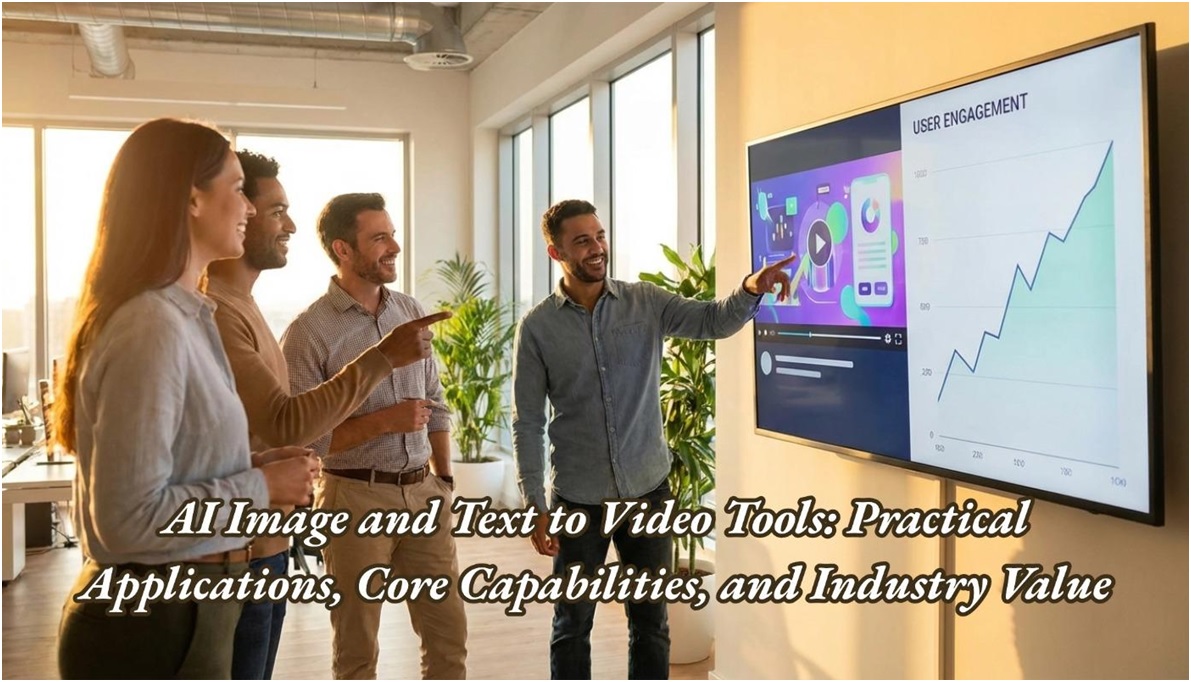



Introduction: The Rising Demand for Scalable Video Creation
Video has become one of the most influential formats in digital communication. According to multiple industry reports, video content now accounts for over 80% of global internet traffic, with enterprises increasingly relying on video for marketing, training, and internal communication. However, traditional video production remains resource-intensive, requiring specialized skills, long production cycles, and high costs.
These constraints have created a growing gap between content demand and production capacity. Marketing teams struggle to scale campaigns, educators face limitations in visual content development, and professional creators are under pressure to deliver more output in less time. As a result, organizations are actively seeking alternatives that improve efficiency without sacrificing clarity or quality.
This environment has accelerated the adoption of AI Image to Video and Text to Video technologies. By enabling users to create AI videos from images or text-based instructions, these tools represent a shift from manual production toward automated, data-driven video generation. Rather than replacing creative professionals, AI-powered video tools are increasingly positioned as productivity enablers that support faster experimentation and broader access to video creation.

Tool Overview and Functional Capabilities of AI Image and Text to Video Solutions
Overview of AI Image to Video and Text to Video Tools
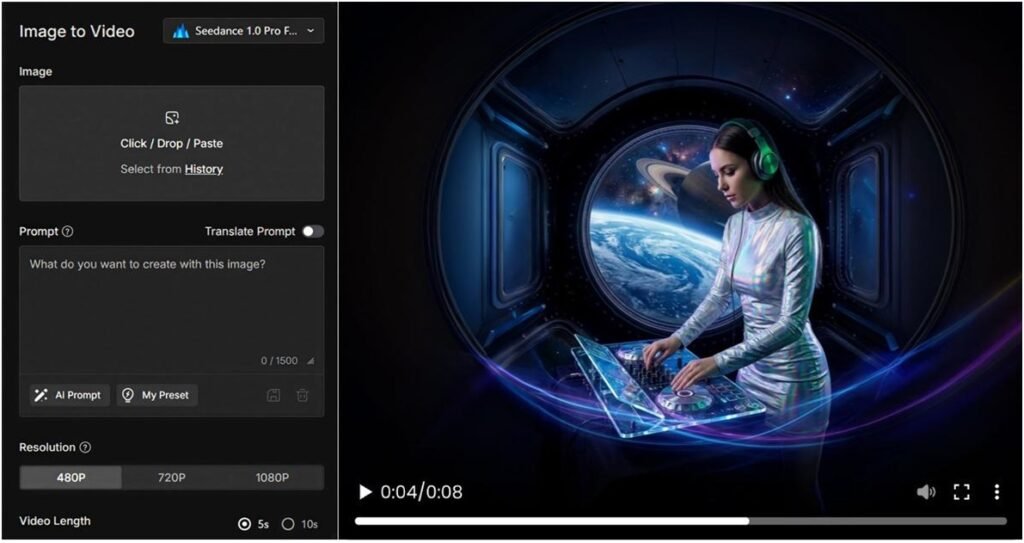
AI Image to Video tools allow users to transform static images into short video sequences by applying motion, transitions, and stylistic coherence. Similarly, Text to Video systems generate videos based on written prompts, scripts, or structured descriptions. Together, these technologies simplify the process of video creation by abstracting complex editing tasks into high-level inputs.
The typical workflow for an AI Image to Video Generator or AI Text to Video Tool differs significantly from traditional production. Instead of storyboarding, filming, and post-production, users provide images or text, select parameters, and allow the system to generate video outputs automatically. This streamlined process enables rapid iteration and experimentation.
Key Advantages of AI Image to Video and Text to Video Tools
One of the primary advantages of Image to Video AI and Text to Video solutions is efficiency. Video creation timelines that once required days or weeks can now be reduced to hours or minutes. This is particularly valuable for organizations that operate in fast-paced digital environments.
Additional advantages include:
- Cost reduction: Fewer resources are required compared to traditional video production.
- Lower technical barriers: Non-specialists can create AI videos from images or text without advanced editing skills.
- Scalability: Teams can produce multiple variations of video content for testing and localization.
- Consistency: AI systems help maintain visual coherence across outputs.
These benefits explain why adoption is expanding beyond early adopters into mainstream enterprise use.
Core Technologies Behind Image to Video AI and Text to Video
The performance of AI Image to Video and Text to Video tools is driven by several foundational technologies.
- Computer vision enables systems to understand image composition, depth, and visual elements.
- Natural language processing (NLP) allows Text to Video systems to interpret written instructions and map them to visual concepts.
- Generative models, including diffusion-based architectures, synthesize motion and transitions across frames.
- Model optimization and training improve output quality through large-scale datasets and iterative refinement.
Together, these technologies allow users to create AI videos from images or text with increasing realism and control.
Practical Use Cases of AI Image to Video and Text to Video Tools
Use Case 1: Enterprise Marketing and Brand Communication
In marketing, speed and adaptability are critical. Enterprises increasingly rely on AI Image to Video tools to repurpose existing visual assets into dynamic promotional content. Product images, banners, or brand visuals can be converted into short videos suitable for digital campaigns.
Text to Video tools further support this process by generating campaign variations from written briefs. This enables marketing teams to test multiple messages and formats efficiently. Studies indicate that video-based campaigns often achieve higher engagement rates compared to static visuals, making AI-assisted video generation a valuable asset for performance-driven marketing strategies.
Use Case 2: Education and Training Content Development
Educational institutions and corporate training departments face growing demand for visual learning materials. However, producing instructional videos at scale has traditionally been challenging.
Using AI Text to Video, educators can convert lesson outlines or training scripts into visual explanations. Similarly, AI Image to Video Generators allow existing diagrams or slides to be transformed into animated sequences. Early adoption reports suggest that learners show improved engagement when complex topics are presented through dynamic visuals rather than text alone.
By reducing production time, these tools enable educators to focus more on content quality and curriculum design.
Use Case 3: Professional Creators and Media Teams
For professional creators, Image to Video AI and Text to Video tools support rapid prototyping and concept validation. Creators can explore visual ideas before committing to full production, helping refine storytelling and pacing.
Media teams also use these tools to generate explainer videos, short-form content, and internal previews. While AI-generated videos may not replace high-end production, they provide a practical solution for early-stage development and high-volume output.
This balance between automation and creative control is a key factor in professional adoption.
Future Trends and Market Outlook for AI Video Generation
The market for AI video generation tools is expected to grow significantly over the coming years. Industry forecasts project strong compound annual growth rates driven by enterprise adoption, improved model performance, and integration with existing creative platforms.
Several trends are shaping the future of AI Image to Video and Text to Video technologies:
- Improved motion consistency and realism through advanced generative models.
- Deeper workflow integration, allowing AI tools to complement traditional editing software.
- Expanded enterprise use cases, including internal communication and knowledge management.
- Increased focus on governance and ethics, particularly regarding content authenticity and usage transparency.
As these tools mature, the emphasis will shift from novelty to reliability, control, and responsible deployment.
Conclusion: The Strategic Role of AI Image and Text to Video Tools
AI Image to Video and Text to Video tools represent a meaningful evolution in how video content is created and scaled. By enabling organizations to create AI videos from images or text, these technologies address long-standing challenges related to cost, speed, and accessibility.
Their value lies not in replacing creative expertise, but in augmenting it. When applied strategically, AI-powered video tools allow teams to experiment more freely, respond faster to changing demands, and allocate resources more efficiently.
As video continues to dominate digital communication, the role of AI Text to Video and Image to Video AI solutions will become increasingly central to modern content strategies. Organizations that adopt these tools thoughtfully are likely to gain a competitive advantage in both productivity and communication effectiveness.
FAQ: Common Questions About AI Image and Text to Video Tools
Who should use AI Image to Video and Text to Video tools?
These tools are well suited for businesses, educators, and professional creators who need to produce video content efficiently and at scale.
What are the main limitations of AI-generated video today?
Current limitations include motion consistency, fine-grained style control, and contextual understanding. Ongoing model improvements are addressing these challenges.
How can organizations evaluate the right AI Text to Video tool?
Key evaluation criteria include output quality, integration capabilities, scalability, and alignment with existing workflows.