




Systemic Exploitation of Marginalised Workers Undermines Productivity, Human Capital and Rural Economies.
100% of rescued bonded labourers belong to SC, ST, or OBC groups, with 63% from Scheduled Castes.
A new nationwide study has revealed that the persistence of bonded labour in India is not just a humanitarian crisis but a deep-rooted economic distortion that continues to weaken labour markets, suppress wages, and erode human capital. The Report on Migrant Bonded Labour in India 2025—covering 950 rescued workers and nearly 1,000 participants from 19 states—presents a stark economic assessment of how bonded labour undermines India’s long-term development goals.
Caste-Linked Economic Exclusion Weakens Workforce Participation
The report finds that 100% of rescued bonded labourers belong to SC, ST, or OBC groups, with 63% from Scheduled Castes. This structural exclusion restricts these communities to low-wage, high-risk informal sectors, creating a dual-track labour market in India—one protected and skilled, the other unregulated and vulnerable. This segmentation depresses wage levels and reduces labour mobility.

Wage Theft and Forced Labour Disrupt Fair Market Practices
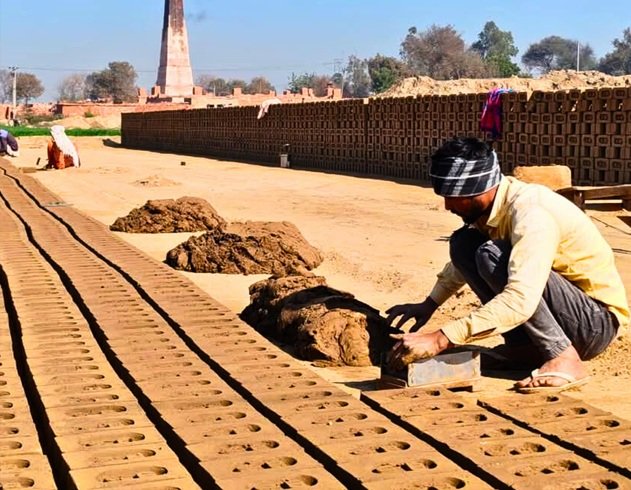
A major economic finding is that 53% of bonded workers were denied wages, with an average unpaid amount of Rs. 32,514 per worker. This widespread wage theft artificially lowers production costs in sectors such as brick kilns, agriculture, construction, and small manufacturing, distorting fair competition and weakening formal enterprises that comply with labour laws. Since unpaid wages were six times higher than the average debt, the report concludes that bonded labour thrives not because of debt, but due to systemic market failures and weak enforcement.
Loss of Human Capital: Children and Women Bear the Cost
The economic cost of child labour remains severe. Out of 55 rescued children, only 14 (25%) had access to schooling after rescue. Without education or skills, these children are pushed back into unproductive, exploitative work, weakening India’s future workforce. Women—who form 46% of those rescued—remain excluded from independent earnings, health services, and skill development, limiting their economic agency and reducing labour productivity.
Weak Legal Enforcement Creates a High-Informality Economy
With over 80% of cases lacking FIRs and a conviction rate of only 3.6% post-2016, bonded labour continues largely unchecked. The absence of time-bound trials, non-issuance of release certificates, and administrative delays create a predictable pattern of impunity.
Economically, this fuels informality and reduces the deterrence needed to push industries toward formalisation, compliance, and efficiency.
Rehabilitation Gaps Reduce Labour Resilience
The report shows that most workers received none of the mandated compensation under the 2016 rehabilitation scheme. Nearly 70% lack health insurance, 85% have no MGNREGA access, and 99.67% received no skill training. Without economic rehabilitation, freed workers return to unstable jobs, suppressing wage growth and reinforcing cycles of labour vulnerability.
An Economic Challenge That Demands Policy Recalibration
The report concludes that bonded labour is not merely a social problem—it is an economic drag on India’s growth story. By trapping millions outside formal wages, skills, and social security, it reduces labour productivity, diminishes consumption capacity, and undermines India’s demographic dividend. To achieve the 2030 target for eliminating forced labour, policymakers must treat bonded labour as a macroeconomic constraint, not just a welfare concern.
(India CSR)


