

Face-swapping in 2025 has evolved from a gimmick to a staple in creative workflows. For influencers, marketers, and casual creators, the focus isn’t just on if it works—it’s about finding tools that integrate seamlessly while prioritizing ethics and efficiency.
Why More and More People Are Turning to Face-Swap Tools
In 2025, face-swapping has exploded in popularity, driven by two major shifts that make it more accessible and practical than ever. First off, AI models have become incredibly efficient—you can now create stunning, high-quality swaps without tying up massive computing power for hours on end. Second, the tools themselves have gotten a lot smarter and user-friendly, thanks to cloud processing and precise face detection that simplify what used to be a tedious process into something as easy as a single click.
These changes have turned face-swapping into an everyday essential for everything from snappy short videos and tailored marketing campaigns to lighthearted social media fun.
BeArt — Multiple Face Swap & Unblur image
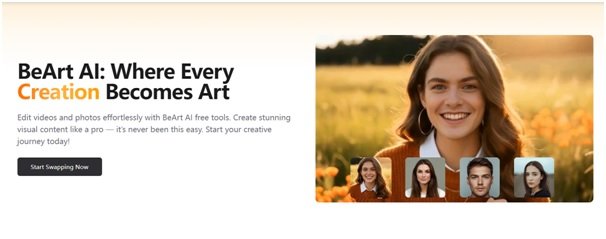
BeArt stands out as a versatile web-based platform for swapping faces in photos and brief videos, making it a go-to for users who value simplicity and quick results. Its Multiple Face Swap feature automatically detects and exchanges multiple faces in one image, handling group shots with ease—perfect for editing party photos or team portraits where you want to mix things up creatively. Complementing this is the Unblur image tool, which sharpens blurry or low-resolution inputs upfront using advanced de-noising algorithms. This combo—refine your source material first, then swap—boosts the odds of realistic results without needing extra apps, saving users from the hassle of switching between multiple programs.
BeArt’s strengths lie in its simple browser interface, support for group photos, and no-install convenience, which appeals to on-the-go creators who might not have powerful hardware. The platform processes everything in the cloud, ensuring fast turnaround times even on basic laptops or tablets. Users rave about its accuracy in maintaining skin tones and expressions, reducing the uncanny valley effect that plagued earlier tools.
Al Face Swap
FaceSwap AI caters to on-the-go users craving fast, mobile-optimized swaps for photos and short clips. It’s ideal for viral trends, with a sleek app interface and pre-built templates that speed up production for platforms like TikTok or Instagram. Outputs lean toward stylized effects rather than ultra-realistic renders, making it perfect for fun, shareable content but less so for professional-grade work.
HeyGen & Runway
HeyGen delivers AI-driven video reenactment with APIs tailored for developers, focusing on scalability, consent features, and regulatory compliance. Runway provides advanced AI tools for creating polished avatars and swaps, emphasizing licensed assets and predictable results for corporate videos.
How to pick: social, creator, or professional production?
For social media enthusiasts, opt for speed and templates—start with BeArt or FaceSwap AI. Creators producing short videos with a realism boost should try Swapface and run test clips before committing. For commercial projects, secure legal approvals: use consenting participants via enterprise platforms like HeyGen or Runway, or self-host open-source like Faceswapper to retain full control over assets.
A practical workflow: Begin prototyping in BeArt, refine in a desktop editor if necessary, and upgrade to Faceswapper or enterprise tools only for larger-scale or legally sensitive jobs.
Ethical guidelines
Face swapping sparks creativity but demands caution. Secure explicit written consent for any public or commercial use of likenesses. Label AI-generated content transparently to prevent misinformation, and steer clear of anything that could harass, defame, or mislead. Share your toolchain details with teams for easy provenance if issues arise.
Conclusion
In 2025, face-swapping tools empower unprecedented creativity, from casual fun to professional productions. With responsible use, these tools not only enhance workflows but also open new avenues for expression in our AI-driven world.